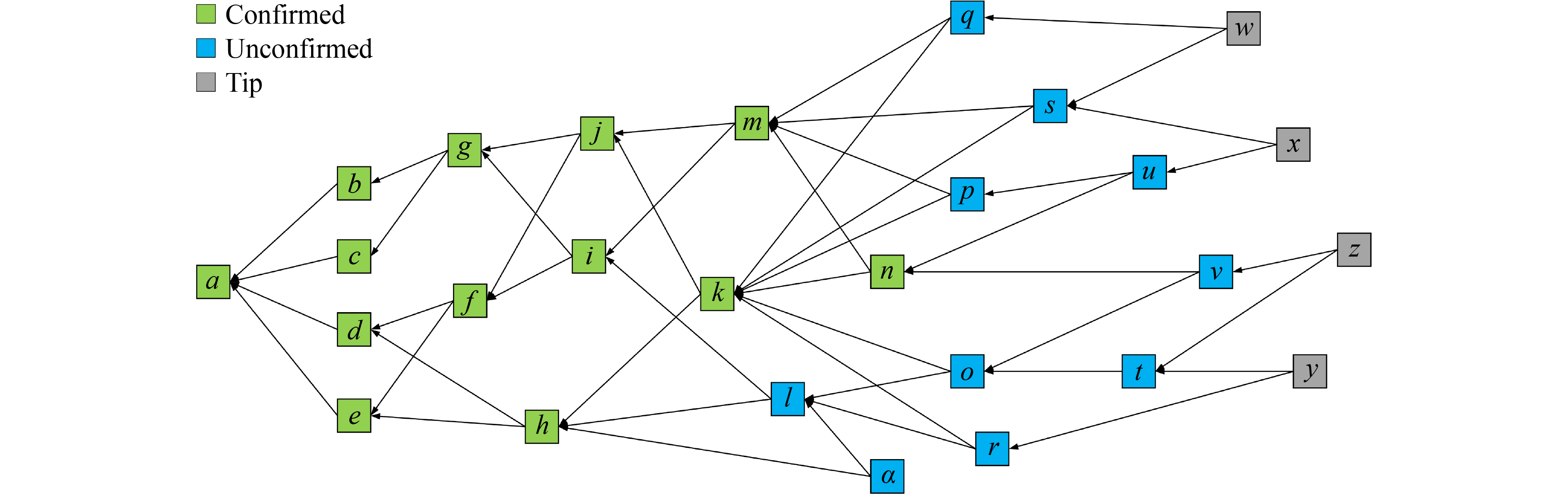
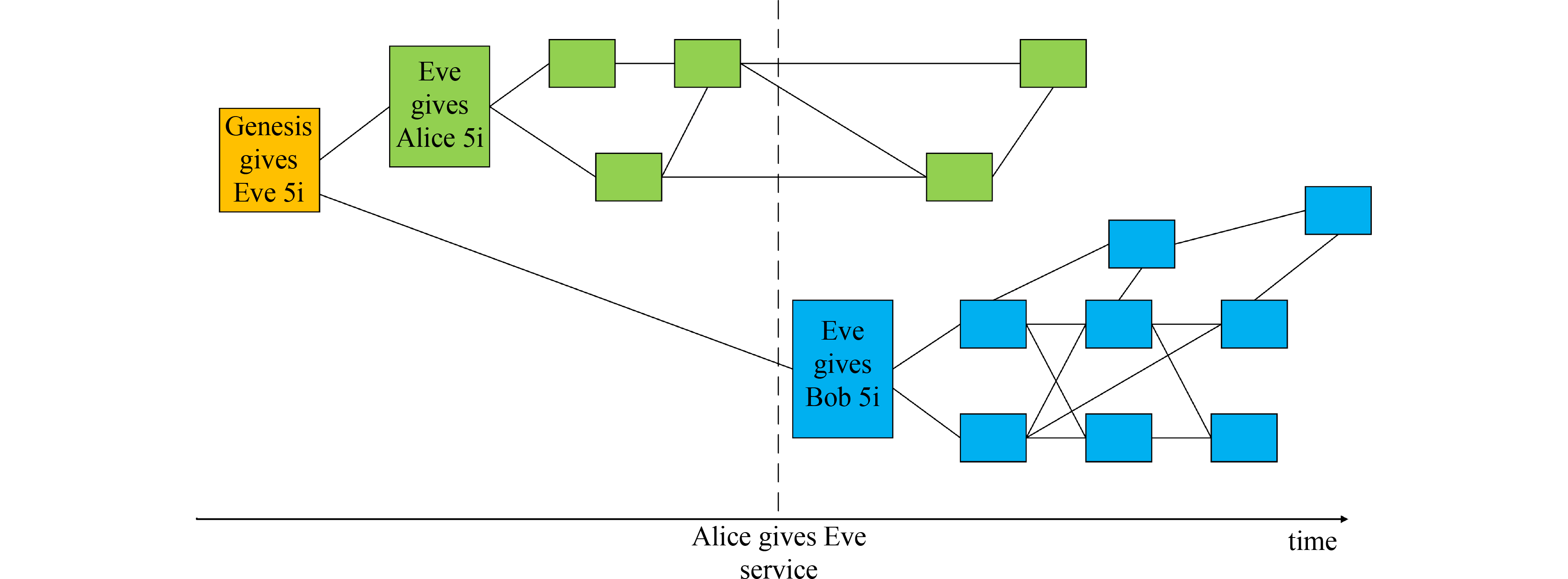
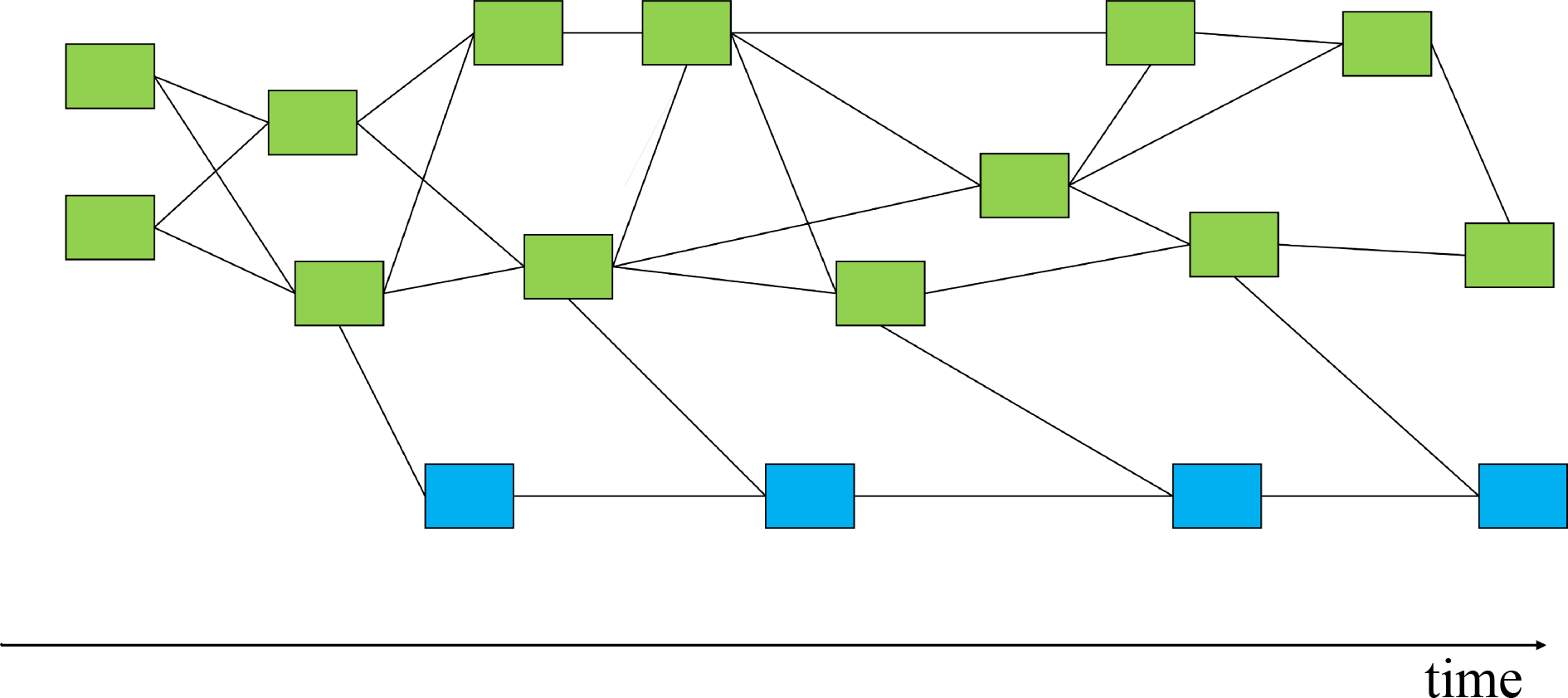
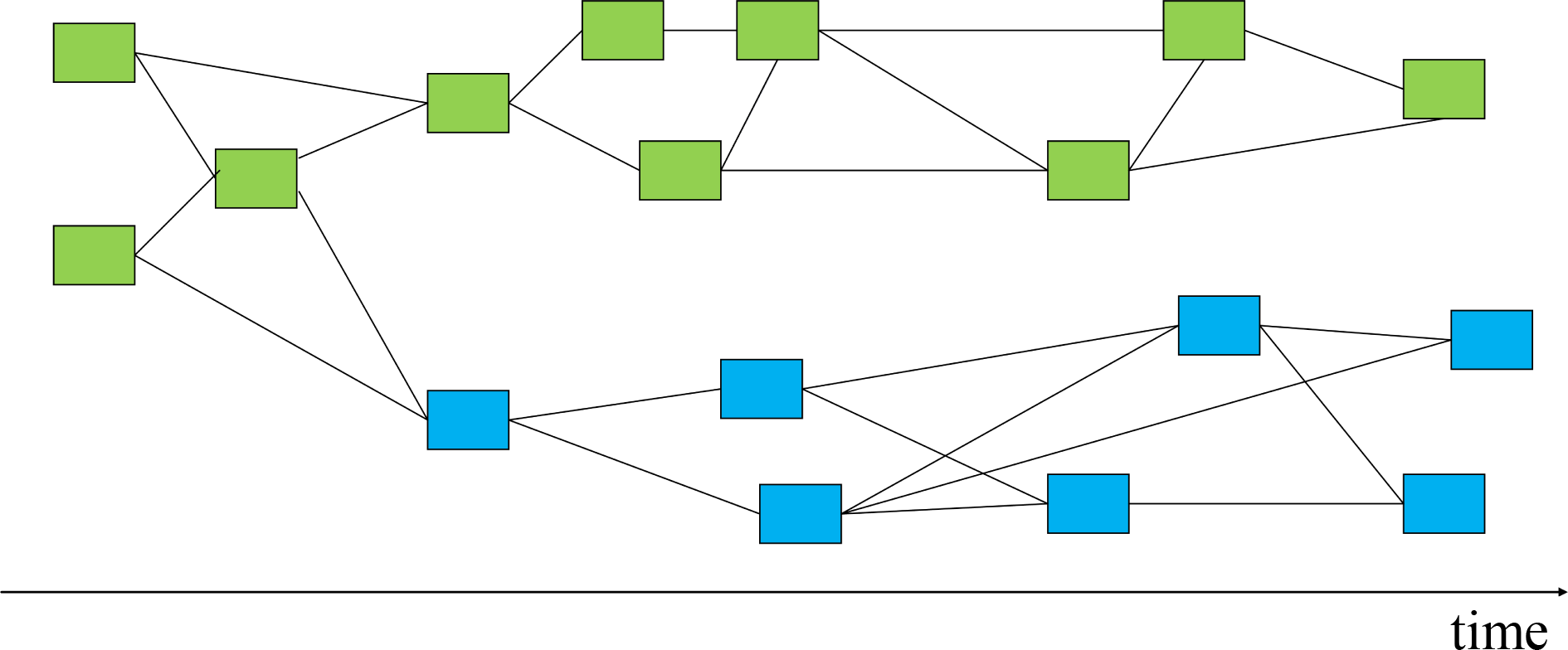
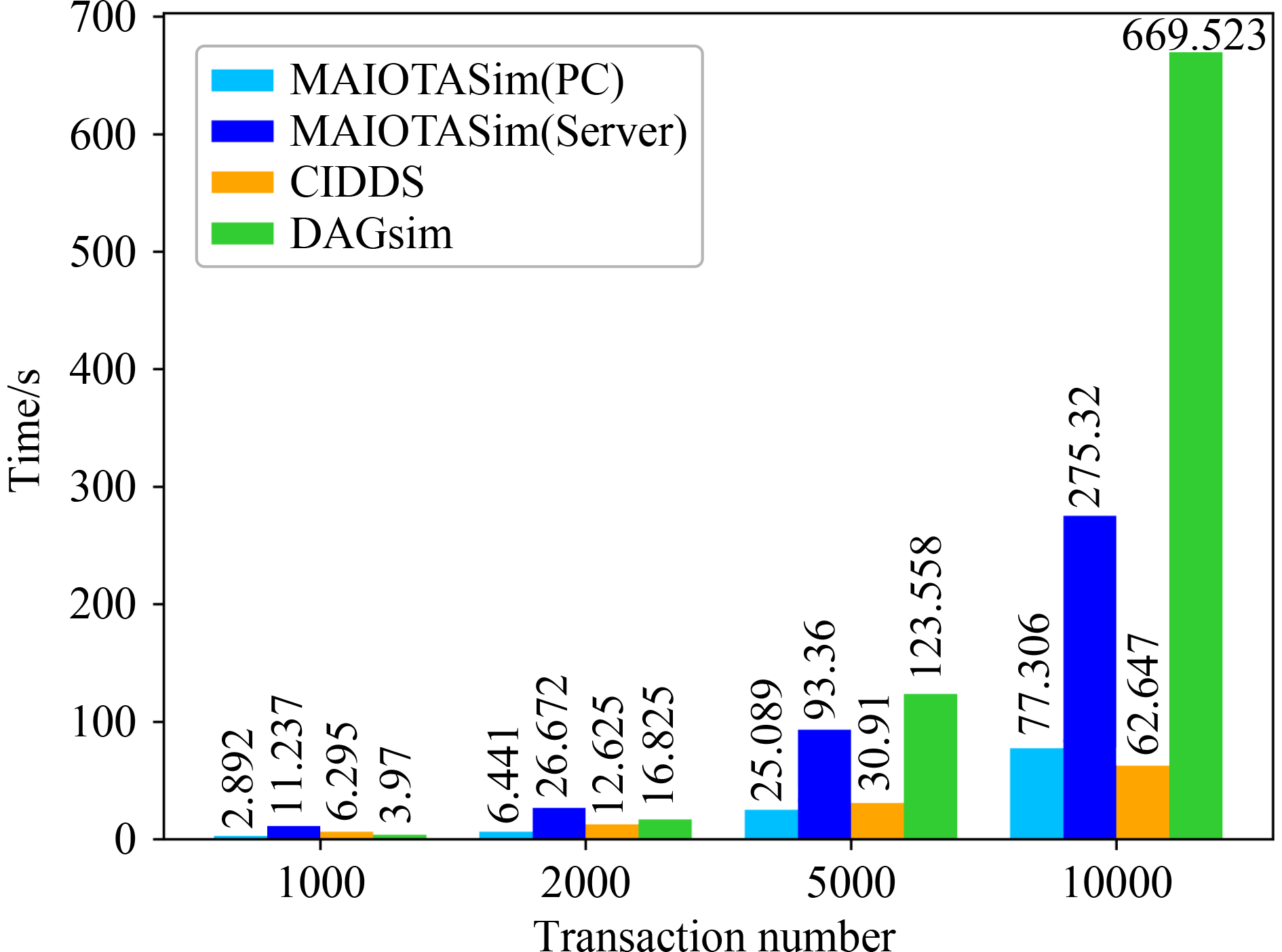
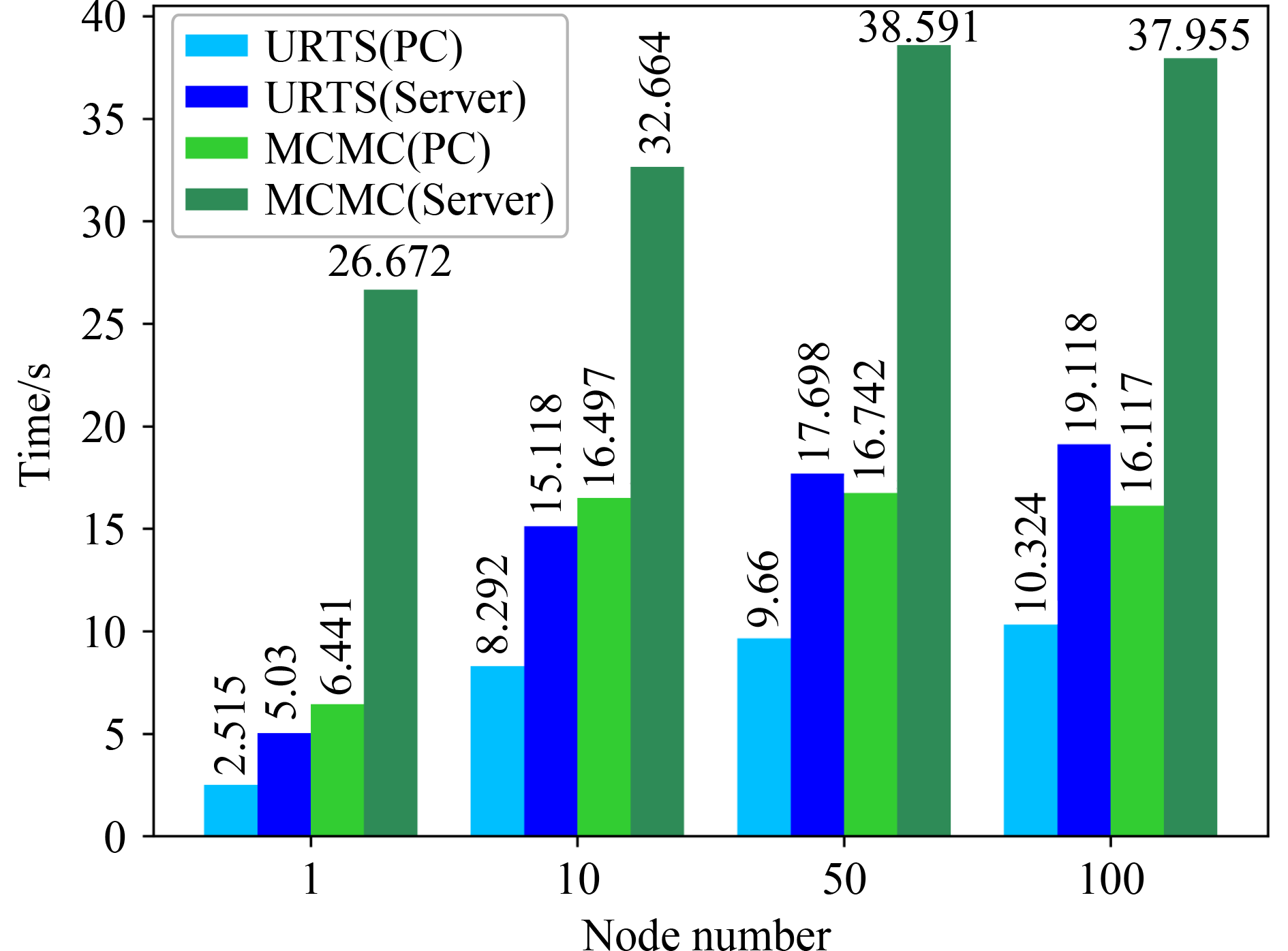
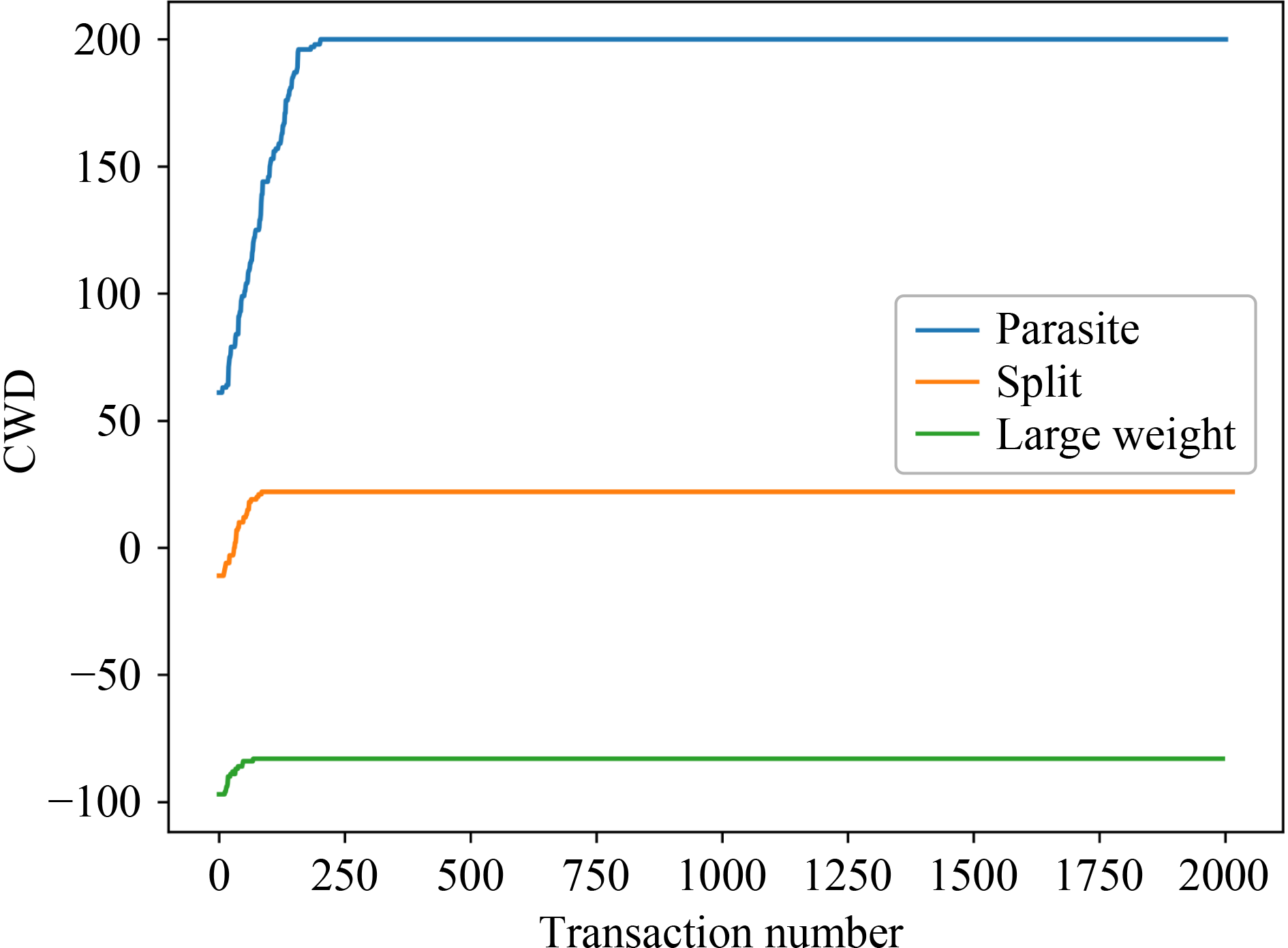
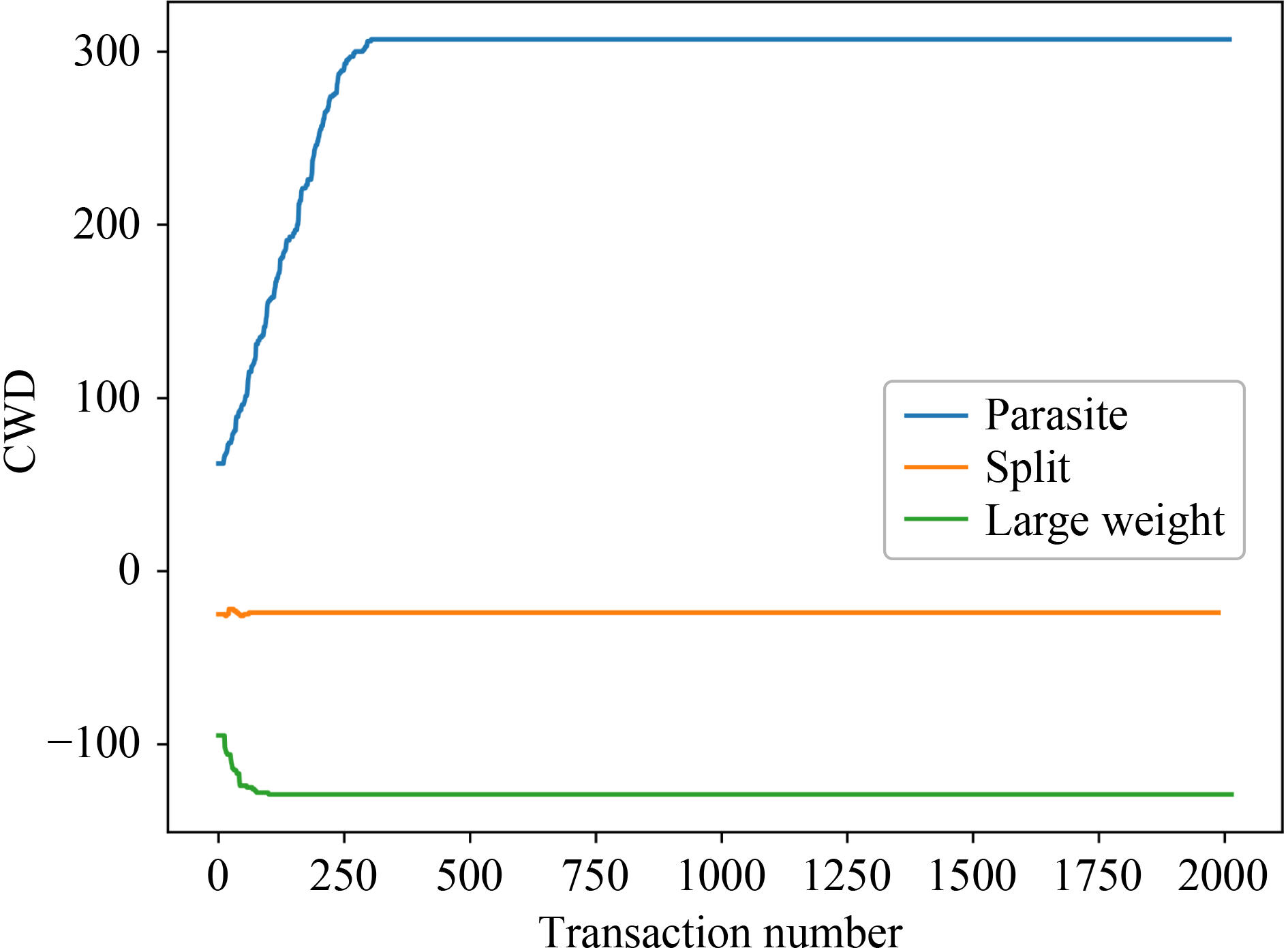
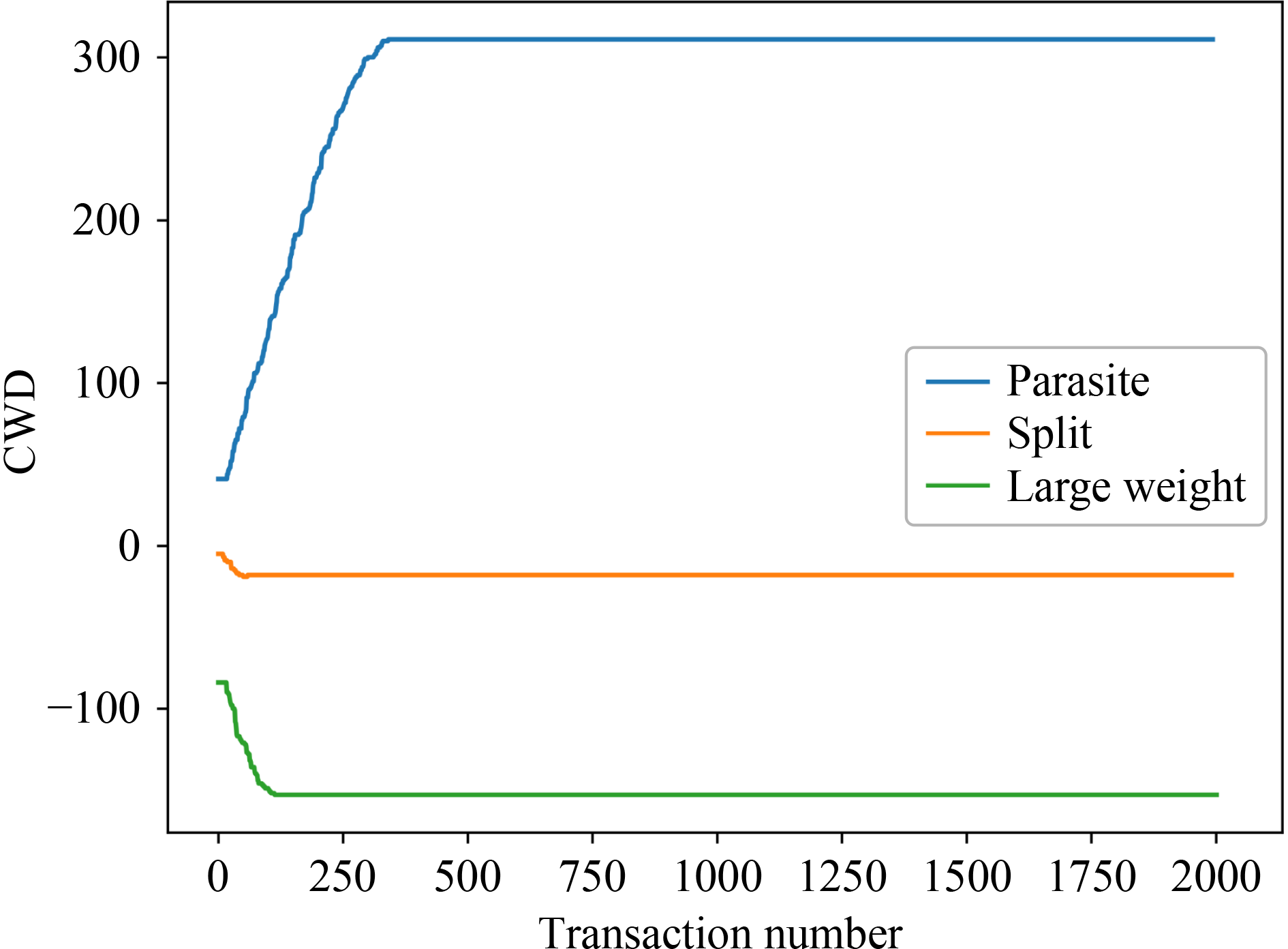
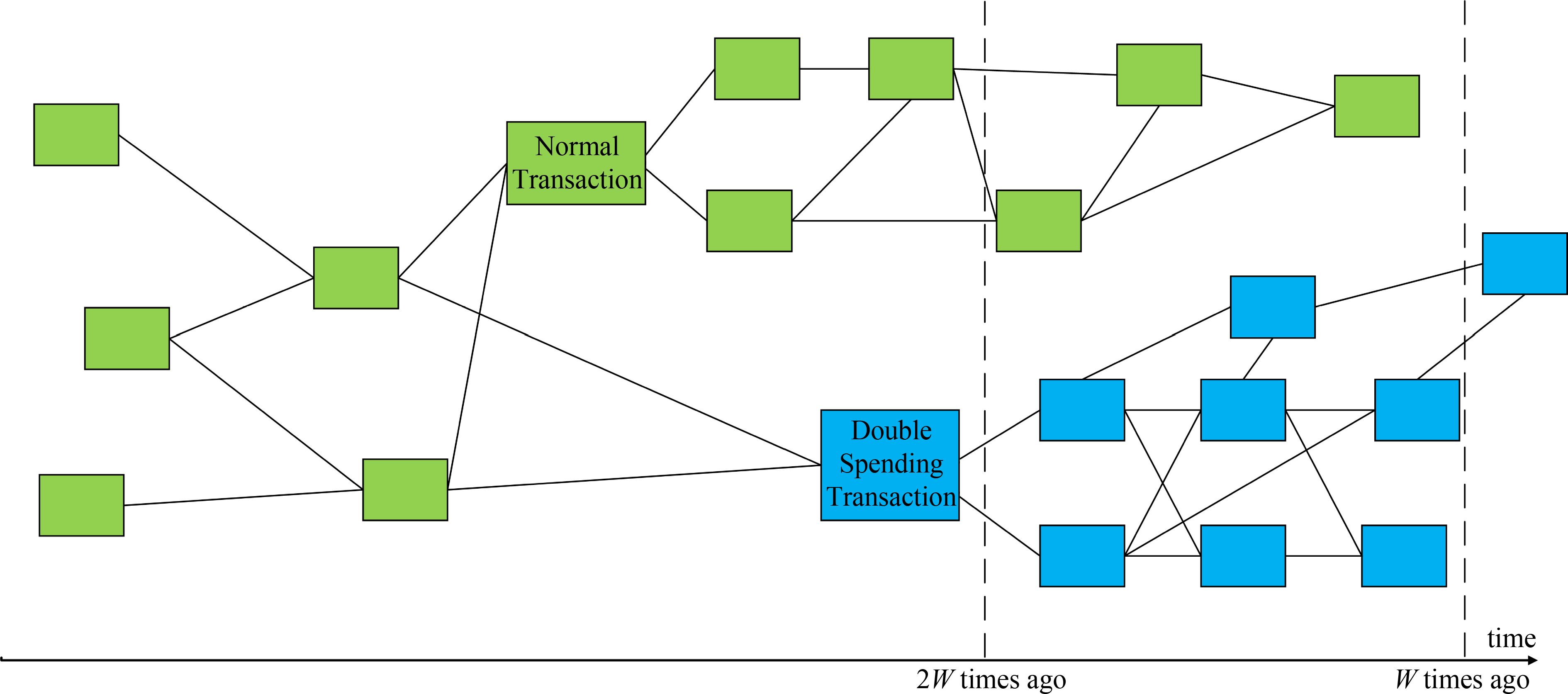
Due to the advantages of high volume of transactions and low resource consumption, Directed Acyclic Graph (DAG)-based Distributed Ledger Technology (DLT) has been considered a possible next-generation alternative to block-chain. However, the security of the DAG-based system has yet to be comprehensively understood. Aiming at verifying and evaluating the security of DAG-based DLT, we develop a Multi-Agent based IOTA Simulation platform called MAIOTASim. In MAIOTASim, we model honest and malicious nodes and simulate the configurable network environment, including network topology and delay. The double-spending attack is a particular security issue related to DLT. We perform the security verification of the consensus algorithms under multiple double-spending attack strategies. Our simulations show that the consensus algorithms can resist the parasite chain attack and partially resist the splitting attack, but they are ineffective under the large weight attack. We take the cumulative weight difference of transactions as the evaluation criterion and analyze the effect of different consensus algorithms with parameters under each attack strategy. Besides, MAIOTASim enables users to perform large-scale simulations with multiple nodes and tens of thousands of transactions more efficiently than state-of-the-art ones.
C, Fan S, Ghaemi H, Khazaei Y, Chen P Musilek . Performance analysis of the IOTA DAG-based distributed ledger. ACM Transactions on Modeling and Performance Evaluation of Computing Systems, 2021, 6( 3): 10
2
G Wang . SoK: applying blockchain technology in industrial internet of things. Cryptology ePrint Archive. See eprint.iacr.org/2021/776 website, 2021
3
M, Alshaikhli T, Elfouly O, Elharrouss A, Mohamed N Ottakath . Evolution of Internet of Things from blockchain to IOTA: a survey. IEEE Access, 2022, 10: 844–866
4
H, Rathore A, Mohamed M Guizani . Blockchain applications for healthcare. In: Mohamed A, ed. Energy Efficiency of Medical Devices and Healthcare Applications. Amsterdam: Elsevier, 2020, 153–166
5
M, Conti G, Kumar P, Nerurkar R, Saha L Vigneri . A survey on security challenges and solutions in the IOTA. Journal of Network and Computer Applications, 2022, 203: 103383
6
A, Albshri A, Alzubaidi B, Awaji E Solaiman . Blockchain simulators: a systematic mapping study. In: Proceedings of 2022 IEEE International Conference on Services Computing (SCC). 2022, 284–294
7
T T A, Dinh J, Wang G, Chen R, Liu B C, Ooi K L Tan . BLOCKBENCH: a framework for analyzing private blockchains. In: Proceedings of 2017 ACM International Conference on Management of Data. 2017, 1085–1100
8
L, Stoykov K, Zhang H A Jacobsen . VIBES: fast blockchain simulations for large-scale peer-to-peer networks. In: Proceedings of the 18th ACM/IFIP/USENIX Middleware Conference: Posters and Demos. 2017, 19–20
9
D K, Gouda S, Jolly K Kapoor . Design and validation of BlockEval, a blockchain simulator. In: Proceedings of 2021 International Conference on COMmunication Systems & NETworkS (COMSNETS). 2021, 281–289
10
M R A, Lathif P, Nasirifard H A Jacobsen . CIDDS: a configurable and distributed DAG-based distributed ledger simulation framework. In: Proceedings of the 19th International Middleware Conference (Posters). 2018, 7–8
11
A, Deshpande P, Nasirifard H A Jacobsen . eVIBES: configurable and interactive ethereum blockchain simulation framework. In: Proceedings of the 19th International Middleware Conference (Posters). 2018, 11–12
12
I, Eyal E G Sirer . Majority is not enough: bitcoin mining is vulnerable. In: Proceedings of the 18th International Conference on Financial Cryptography and Data Security. 2014, 436–454
13
A, Gervais G O, Karame K, Wüst V, Glykantzis H, Ritzdorf S Capkun . On the security and performance of proof of work blockchains. In: Proceedings of 2016 ACM SIGSAC Conference on Computer and Communications Security. 2016, 3–16
14
M, Zander T, Waite D Harz . DAGsim: Simulation of DAG-Based Distributed Ledger Protocols. ACM SIGMETRICS Performance Evaluation Review, 46(3), 118−121.
15
M, Wooldridge N R Jennings . Intelligent agents: theory and practice. The Knowledge Engineering Review, 1995, 10( 2): 115–152
16
F, Bruschi V, Rana L, Gentile D Sciuto . Mine with it or Sell it: the superhashing power dilemma. ACM SIGMETRICS Performance Evaluation Review, 2019, 46( 3): 127–130
17
E, Rosa G, D’Angelo S Ferretti . Agent-based simulation of blockchains. In: Proceedings of the 19th Asian Simulation Conference on Methods and Applications for Modeling and Simulation of Complex Systems. 2019, 115–126
18
L, Serena G, D’Angelo S Ferretti . Security analysis of distributed ledgers and blockchains through agent-based simulation. Simulation Modelling Practice and Theory, 2022, 114: 102413
19
R, Paulavičius S, Grigaitis E Filatovas . An overview and current status of blockchain simulators. In: Proceedings of 2021 IEEE International Conference on Blockchain and Cryptocurrency (ICBC). 2021, 1–3
20
Q, Wang J, Yu S, Chen Y Xiang . SoK: DAG-based blockchain systems. ACM Computing Surveys, 2023, 55( 12): 261
21
S D Lerner . DagCoin: a cryptocurrency without blocks. See prismic-io.s3.amazonaws.com/dagcoin/f4e531e1-a5db-43b6-930c-14bf705e65ee_Dagcoin_White_Paper.pdf website, 2015
22
S Popov . The tangle. See assets.ctfassets.net/r1dr6vzfxhev/2t4uxvsIqk0EUau6g2sw0g/45eae33637ca92f85dd9f4a3a218e1ec/iota1_4_3.pdf website, 2018
23
A Churyumov . Byteball: a decentralized system for storage and transfer of value. See obyte.org/Byteball.pdf website, 2016
24
Y, Sompolinsky A Zohar . Secure high-rate transaction processing in bitcoin. In: Proceedings of the 19th International Conference on Financial Cryptography and Data Security. 2015, 507–527
25
C LeMahieu . Nano: a feeless distributed cryptocurrency network. See nano.org website, 2018
26
L Baird . The Swirlds Hashgraph consensus algorithm: fair, fast, byzantine fault tolerance. See swirlds.com/downloads/SWIRLDS-TR-2016-01.pdf website, 2016
27
U W Chohan . The double spending problem and cryptocurrencies. DOI:10.2139/ssrn.3090174. 2017
28
D, Li H, Mei Y, Shen S, Su , ZhangW J, Wang M, Zu W Chen . ECharts: a declarative framework for rapid construction of web-based visualization. Visual Informatics, 2018, 2( 2): 136–146
29
J, Banks J S, Carson B L, Nelson D Nicol . Discrete-Event System Simulation. 5th ed. Upper Saddle River: Prentice Hall, 2010
30
Coordicide Team, IOTA Foundation. The coordicide. See files.iota.org/papers/20200120_Coordicide_WP.pdf website, 2019
31
C R, Harris K J, Millman Der Walt S J, Van R, Gommers P, Virtanen . et al.. Array programming with NumPy. Nature, 2020, 585( 7825): 357–362
32
A, Hagberg P, Swart Chult D S . Exploring network structure, dynamics, and function using NetworkX. Los Alamos: Technical Report, Los Alamos National Lab. 2008
33
Kusmierz B, Sanders W, Penzkofer A, Capossele A, Gal A. Properties of the tangle for uniform random and random walk tip selection. In: Proceedings of 2019 IEEE International Conference on Blockchain (Blockchain). 2019, 228–236
34
R S, Sutton A G Barto . Reinforcement Learning: An Introduction. 2nd ed. Cambridge: MIT Press, 2018