1. Zhejiang Provincial Key Laboratory of Organic Pollution Process and Control, Department of Environmental Science, Zhejiang University, Hangzhou 310058, China 2. Zhejiang Ecological Civilization Academy, Anji 313300, China
● A fine portrayal of organic pollutants in a retired industrial park is provided.
● Key factors affecting the spatial distribution of organic pollutants are unrevaled.
● Risk classification, grading, and management are reached based on risk assessment.
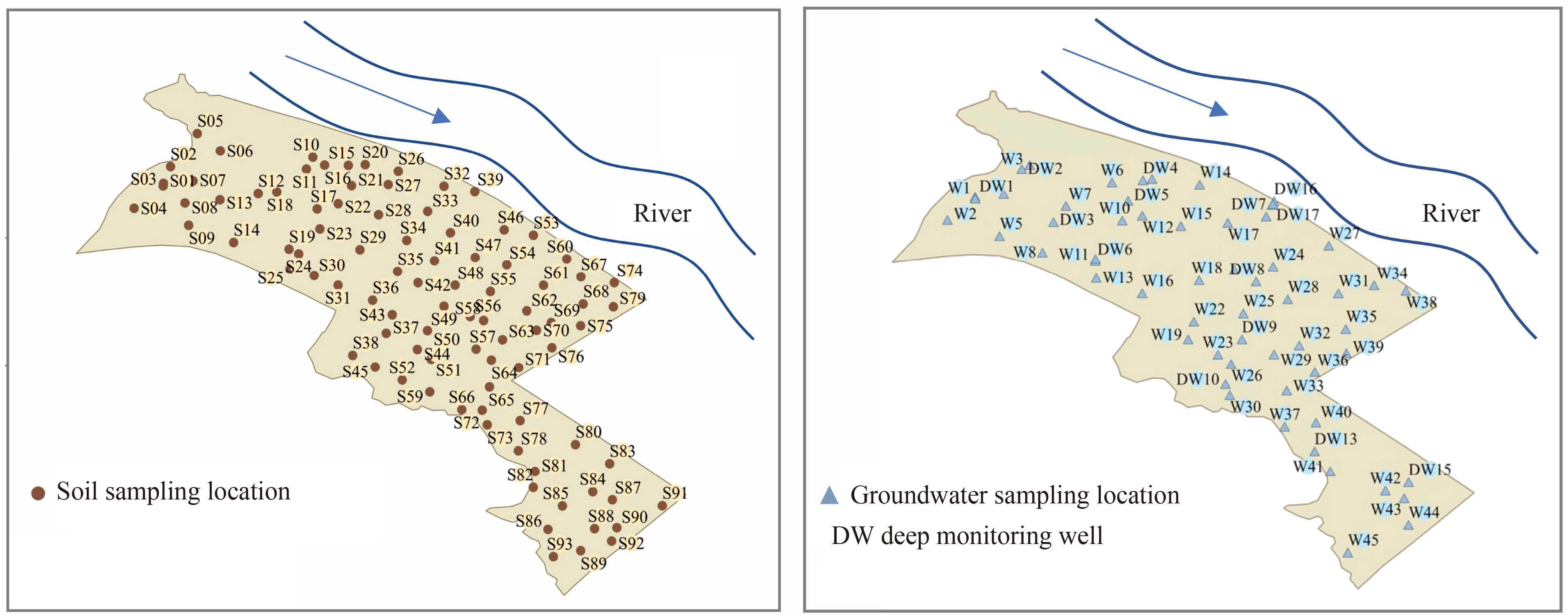
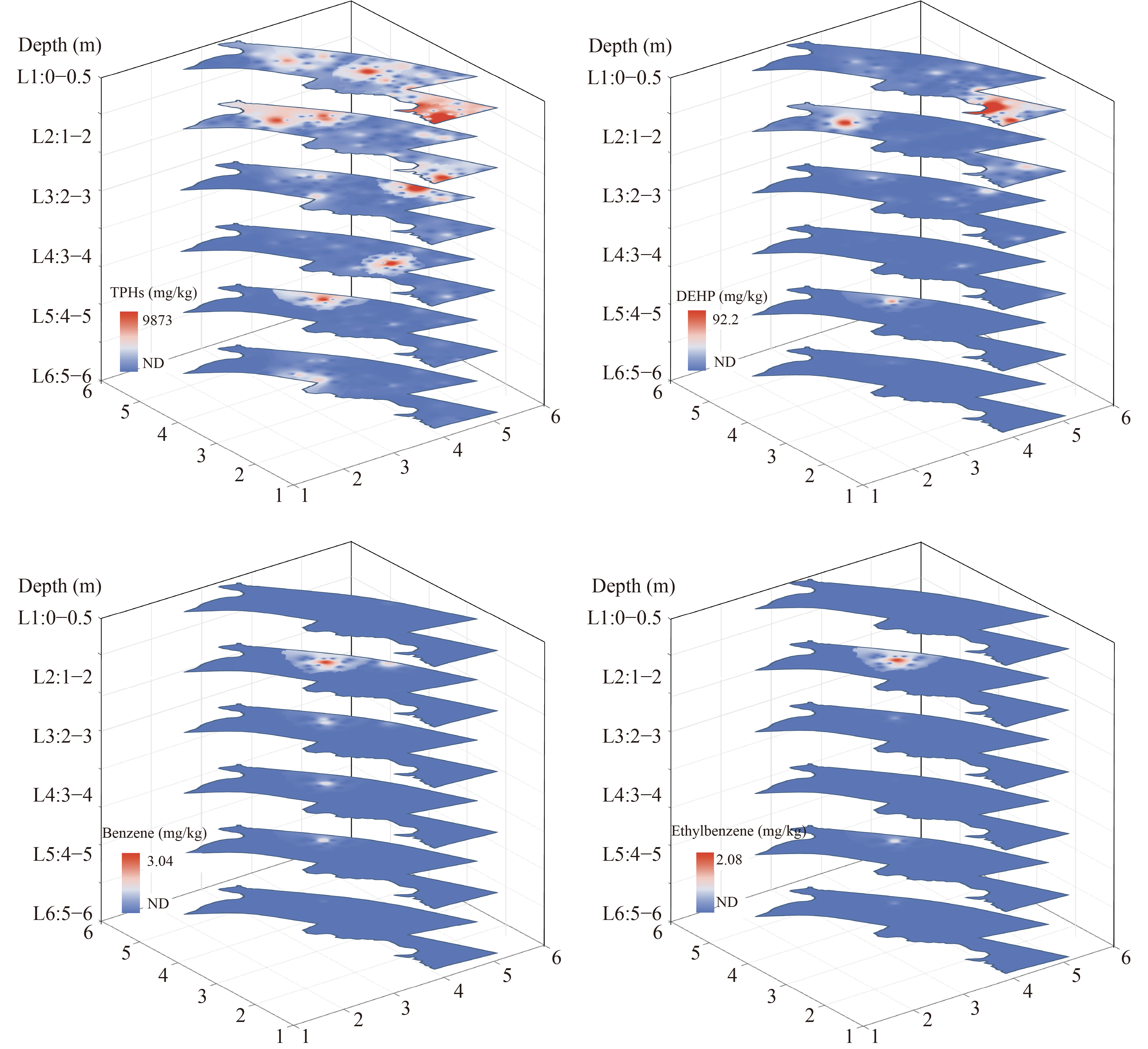
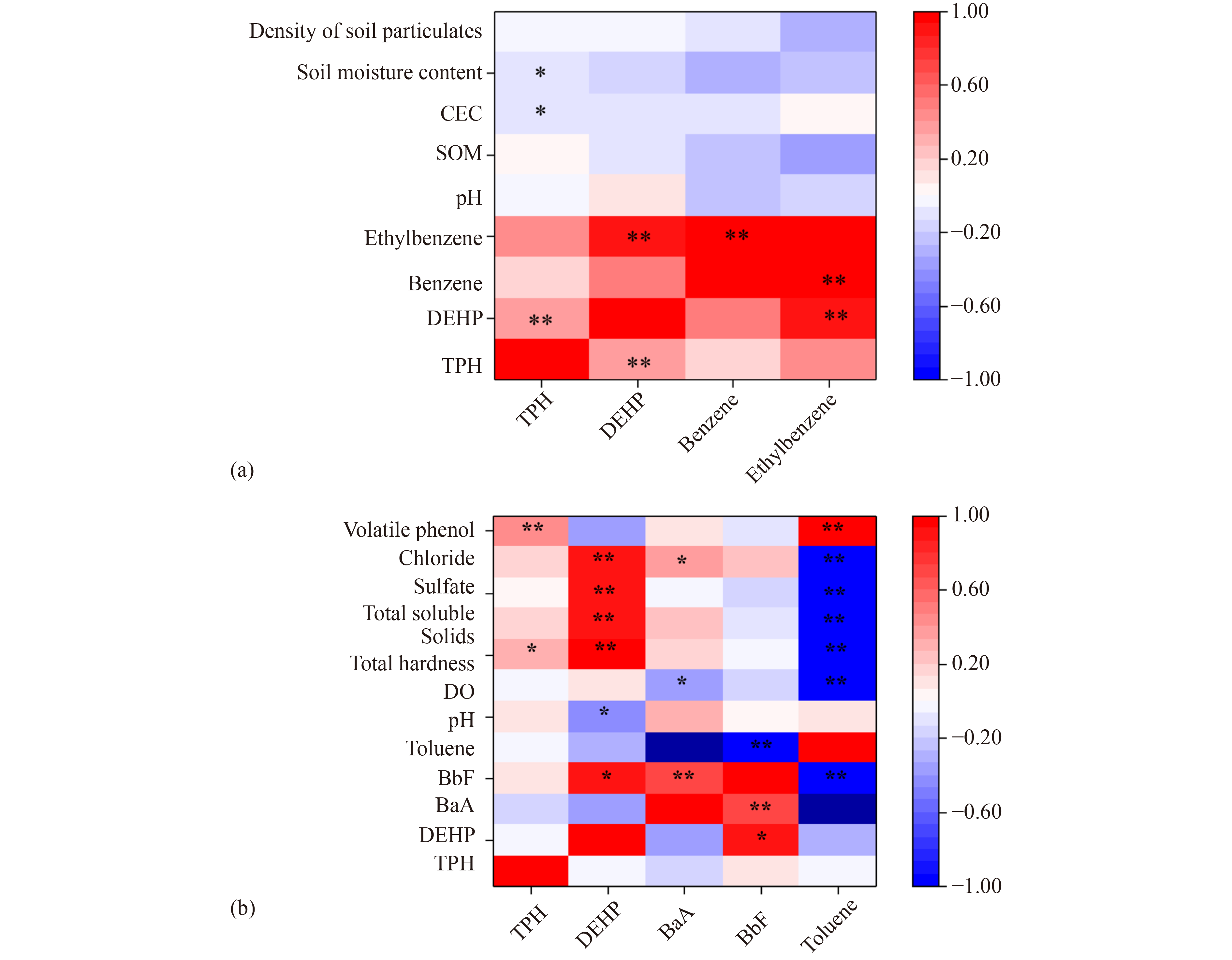
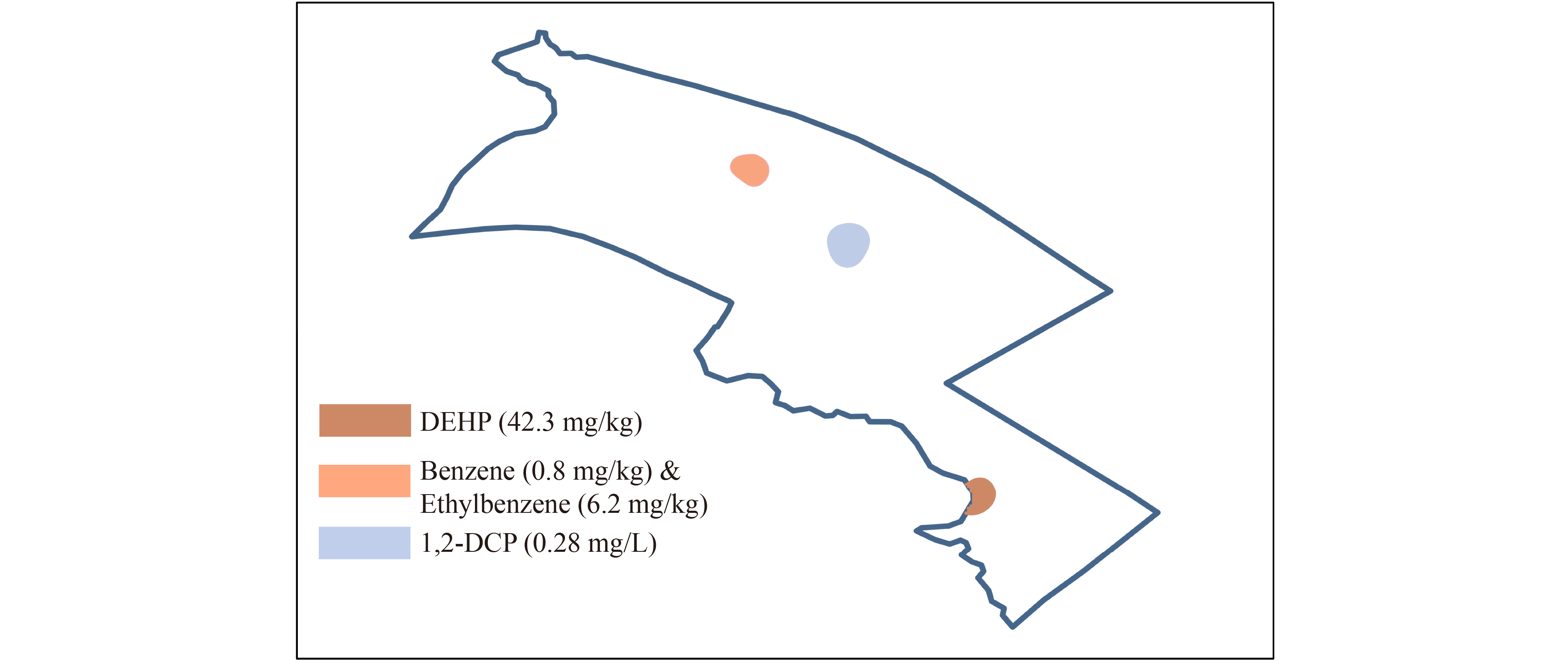
The overall cross-media risk evaluation of organic pollutants in retired industrial parks is insufficiently recognized. In this study, 11 semi-volatile organic compounds (SVOCs) and 27 volatile organic compounds (VOCs) were measured in 531 soil and groundwater samples taken from a retired industrial park by coast in Zhejiang Province, China. Total petroleum hydrocarbons (TPHs), Di (2-ethylhexyl) phthalate (DEHP), benzene, and ethylbenzene were identified as the critical pollutants in the soil, while TPHs, 1,2-dichloropropane (1,2-DCP), toluene, benzo[a]anthracene (BaA), and benzo[b]fluoranthene (BbF) were identified as critical pollutants in the groundwater for exceeding China national standards. The spatial correlation between the concentrations of organic pollutants in soil and groundwater was explored by employing the Geodetector model. Based on the results of spatial interpolation, high-risk hotspots regarding soil and groundwater pollution were identified. Moreover, the possible harm to human health of the critical pollutants were also under evaluation. Among various critical pollutants, benzene, ethylbenzene, and DEHP in soil, and 1,2-DCP in groundwater, were the main contributors to the overall health risk of multimedia pollution. This study developed a comprehensive approach to assess the risks posed by specific organic toxicants in various environmental media. The findings of this work can serve as a valuable reference for future management strategies in retired industrial parks.
N Ashjar, B Keshavarzi, F Moore, N Soltani, P S Hooda, M R Mahmoudi. (2021). TPH and PAHs in an oil-rich metropolis in SW Iran: Implication for source apportionment and human health. Human and Ecological Risk Assessment, 28(1): 58–78 https://doi.org/10.1080/10807039.2021.2015285
2
R Chen, T Li, C Huang, Y Yu, L Zhou, G Hu, F Yang, L Zhang. (2021). Characteristics and health risks of benzene series and halocarbons near a typical chemical industrial park. Environmental Pollution, 289: 117893 https://doi.org/10.1016/j.envpol.2021.117893
3
L Cheng, W Wei, A Guo, C Zhang, K Sha, R Wang, K Wang, S Cheng. (2022). Health risk assessment of hazardous VOCs and its associations with exposure duration and protection measures for coking industry workers. Journal of Cleaner Production, 379: 134919 https://doi.org/10.1016/j.jclepro.2022.134919
4
L Han, L Qian, J Yan, R Liu, Y Du, M Chen. (2016). A comparison of risk modeling tools and a case study for human health risk assessment of volatile organic compounds in contaminated groundwater. Environmental Science and Pollution Research International, 23(2): 1234–1245 https://doi.org/10.1007/s11356-015-5335-4
5
W Han, G Gao, J Geng, Y Li, Y Wang. (2018). Ecological and health risks assessment and spatial distribution of residual heavy metals in the soil of an e-waste circular economy park in Tianjin, China. Chemosphere, 197: 325–335 https://doi.org/10.1016/j.chemosphere.2018.01.043
6
D Hou, A Al-Tabbaa, D O’Connor, Q Hu, Y G Zhu, L Wang, N Kirkwood, S Ok Y, C Tsang D, N S Bolan. et al.. (2023a). Sustainable remediation and redevelopment of brownfield sites. Nature Reviews Earth & Environment, 4: 271–286 https://doi.org/10.1038/s43017-023-00404-1
7
Y HouY Li H TaoH Cao X LiaoX Liu (2023b). Three-dimensional distribution characteristics of multiple pollutants in the soil at a steelworks mega-site based on multi-source information. Journal of Hazardous Materials, 448: 130934
8
G Hu, H Liu, C Chen, J Li, H Hou, K Hewage, R Sadiq. (2021). An integrated geospatial correlation analysis and human health risk assessment approach for investigating abandoned industrial sites. Journal of Environmental Management, 293: 112891 https://doi.org/10.1016/j.jenvman.2021.112891
9
F G Jenks. (1967). The data model concept in statistical mapping. International Yearbook of Cartography, 7: 186–190
10
Y Jiang, S Chao, J Liu, Y Yang, Y Chen, A Zhang, H Cao. (2017). Source apportionment and health risk assessment of heavy metals in soil for a township in Jiangsu Province, China. Chemosphere, 168: 1658–1668 https://doi.org/10.1016/j.chemosphere.2016.11.088
11
Y Jiang, Y Sun, L Zhang, X Wang. (2020). Influence factor analysis of soil heavy metal Cd based on the GeoDetector. Stochastic Environmental Research and Risk Assessment, 34(6): 921–930 https://doi.org/10.1007/s00477-020-01806-z
12
M Junaid, P P Jia, Y M Tang, W X Xiong, H Y Huang, P R Strauss, W G Li, D S Pei. (2018). Mechanistic toxicity of DEHP at environmentally relevant concentrations (ERCs) and ecological risk assessment in the Three Gorges Reservoir Area, China. Environmental Pollution, 242: 1939–1949 https://doi.org/10.1016/j.envpol.2018.07.067
13
B Kang, D Wang, S Du. (2017). Source identification and degradation pathway of multiple persistent organic pollutants in groundwater at an abandoned chemical site in Hebei, China. Exposure and Health, 9(2): 135–141 https://doi.org/10.1007/s12403-016-0228-4
14
S D Katz, H Chen, D M Fields, E C Beirne, P Keyes, G T Drozd, C Aeppli. (2022). Changes in chemical composition and copepod toxicity during petroleum photo-oxidation. Environmental Science & Technology, 56(9): 5552–5562 https://doi.org/10.1021/acs.est.2c00251
15
M A I Khan, B Biswas, E Smith, R Naidu, M Megharaj. (2018). Toxicity assessment of fresh and weathered petroleum hydrocarbons in contaminated soil- a review. Chemosphere, 212: 755–767 https://doi.org/10.1016/j.chemosphere.2018.08.094
16
S T Lee, C T Vu, C Lin, K S Chen. (2018). High occurrence of BTEX around major industrial plants in Kaohsiung, Taiwan (China). Environmental Forensics, 19(3): 206–216 https://doi.org/10.1080/15275922.2018.1475432
17
J Li, B Xi, W Cai, Y Yang, Y Jia, X Li, Y Lv, N Lv, H Huan, J Yang. (2017). Identification of dominating factors affecting vadose zone vulnerability by a simulation method. Scientific Reports, 7(1): 45955 https://doi.org/10.1038/srep45955
18
J Liao, X Qian, F Liu, S Deng, H Lin, X Liu, C Wei. (2021). Multiphase distribution and migration characteristics of heavy metals in typical sandy intertidal zones: insights from solid-liquid partitioning. Ecotoxicology and Environmental Safety, 208: 111674 https://doi.org/10.1016/j.ecoenv.2020.111674
19
C Lin, C J Lee, W M Mao, F Nadim. (2009). Identifying the potential sources of di-(2-ethylhexyl) phthalate contamination in the sediment of the Houjing River in southern Taiwan (China). Journal of Hazardous Materials, 161(1): 270–275 https://doi.org/10.1016/j.jhazmat.2008.03.082
20
MEEPRC (2014). National Soil Contamination Survey Report. Beijing: MEEPRC (in Chinese)
21
MEEPRC (2019). Technical Guidelines for Risk Assessment of Soil Contamination of Land for Construction. Beijing: MEEPRC (in Chinese)
22
Y Meng, W Liu, H Fiedler, J Zhang, X Wei, X Liu, M Peng, T Zhang. (2021). Fate and risk assessment of emerging contaminants in reclaimed water production processes. Frontiers of Environmental Science & Engineering, 15(5): 104 https://doi.org/10.1007/s11783-021-1392-8
23
R Olawoyin. (2013). Exploration of the spatial-Composite Risk Index (CRI) for the characterization of toxicokinetics in petrochemical active areas. Chemosphere, 92(9): 1207–1213 https://doi.org/10.1016/j.chemosphere.2013.04.045
24
L Pizzol, A Critto, P Agostini, A Marcomini. (2011). Regional risk assessment for contaminated sites. Part 2: Ranking of potentially contaminated sites. Environment International, 37(8): 1307–1320 https://doi.org/10.1016/j.envint.2011.05.010
25
W Qiao, R Li, T Tang, A A Zuh. (2021). Removal, distribution and plant uptake of perfluorooctane sulfonate (PFOS) in a simulated constructed wetland system. Frontiers of Environmental Science & Engineering, 15(2): 20 https://doi.org/10.1007/s11783-020-1312-3
26
H Ren, P Su, W Kang, X Ge, S Ma, G Shen, Q Chen, Y Yu, T An. (2022). Heterologous spatial distribution of soil polycyclic aromatic hydrocarbons and the primary influencing factors in three industrial parks. Environmental Pollution, 310: 119912 https://doi.org/10.1016/j.envpol.2022.119912
27
M O Rivett, G P Wealthall, R A Dearden, T A McAlary (2011). Review of unsaturated-zone transport and attenuation of volatile organic compound (VOC) plumes leached from shallow source zones. Journal of Contaminant Hydrology, 123(3–4): 130–156 https://doi.org/10.1016/j.jconhyd.2010.12.013
28
State Council PRC (2016). State Council of China Soil Pollution Prevention and Cleanup Action Plan. Beijing: MEEPRC (in Chinese)
29
C Su, J Meng, Y Zhou, R Bi, Z Chen, J Diao, Z Huang, Z Kan, T Wang. (2022). Heavy metals in soils from intense industrial areas in South China: spatial distribution, source apportionment, and risk assessment. Frontiers in Environmental Science, 10: 820536 https://doi.org/10.3389/fenvs.2022.820536
30
Y Sun, A Ding, X Zhao, W Chang, L Ren, Y Zhao, Z Song, D Hao, Y Liu, N Jin, D Zhang. (2022). Response of soil microbial communities to petroleum hydrocarbons at a multi-contaminated industrial site in Lanzhou, China. Chemosphere, 306: 135559 https://doi.org/10.1016/j.chemosphere.2022.135559
31
Y Teng, Q Zhou, X Miao, Y Chen. (2015). Assessment of soil organic contamination in a typical petrochemical industry park in China. Environmental Science and Pollution Research International, 22(13): 10227–10234 https://doi.org/10.1007/s11356-015-4219-y
32
U C Ugochukwu, A Ochonogor, C M Jidere, C Agu, F Nkoloagu, J Ewoh, V U Okwu-Delunzu. (2018). Exposure risks to polycyclic aromatic hydrocarbons by humans and livestock (cattle) due to hydrocarbon spill from petroleum products in Niger-delta wetland. Environment International, 115: 38–47 https://doi.org/10.1016/j.envint.2018.03.010
33
USEPA (2001). Risk Assessment Guidance for Superfund: Vol. III−Part A: Process for Conducting Probabilistic Risk Assessment. Washington, DC: US Environmental Protection Agency
I Verginelli, R Baciocchi. (2013). Role of natural attenuation in modeling the leaching of contaminants in the risk analysis framework. Journal of Environmental Management, 114: 395–403 https://doi.org/10.1016/j.jenvman.2012.10.035
37
M Wang, X Li, M Lei, L Duan, H Chen. (2022a). Human health risk identification of petrochemical sites based on extreme gradient boosting. Ecotoxicology and Environmental Safety, 233: 113332 https://doi.org/10.1016/j.ecoenv.2022.113332
38
Q Wang, J Bian, D Ruan, C Zhang. (2022b). Adsorption of benzene on soils under different influential factors: an experimental investigation, importance order and prediction using artificial neural network. Journal of Environmental Management, 306: 114467 https://doi.org/10.1016/j.jenvman.2022.114467
39
Q Wang, K N Lv, A T Wang, X Liu, G Yin, J Wang, X Du, J Li, G Yuan. (2022c). Release of phthalate esters from a local landfill in the Tibetan Plateau: importance of soil particle-size specific association. Science of the Total Environment, 806: 151281 https://doi.org/10.1016/j.scitotenv.2021.151281
40
Y Wang, S Wang, L Jiang, L Ma, X Li, M Zhong, W Zhang (2022d). Does the geographic difference of soil properties matter for setting up the soil screening levels in large countries like China? Environmental Science & Technology, 56(9): 5684–5693 https://doi.org/10.1021/acs.est.1c08771
41
E Wcisło, J Bronder, A Bubak, E Rodríguez-Valdés, J L R Gallego. (2016). Human health risk assessment in restoring safe and productive use of abandoned contaminated sites. Environment International, 94: 436–448 https://doi.org/10.1016/j.envint.2016.05.028
42
B Wu, S Guo, L Zhang, S Wang, D Liu, Z Cheng, N Shi. (2022). Spatial variation of residual total petroleum hydrocarbons and ecological risk in oilfield soils. Chemosphere, 291: 132916 https://doi.org/10.1016/j.chemosphere.2021.132916
43
S Wu, S Zhou, H Bao, D Chen, C Wang, B Li, G Tong, Y Yuan, B Xu. (2019). Improving risk management by using the spatial interaction relationship of heavy metals and PAHs in urban soil. Journal of Hazardous Materials, 364: 108–116 https://doi.org/10.1016/j.jhazmat.2018.09.094
44
L Xu, H Dai, L Skuza, S Wei. (2021). Comprehensive exploration of heavy metal contamination and risk assessment at two common smelter sites. Chemosphere, 285: 131350 https://doi.org/10.1016/j.chemosphere.2021.131350
45
W Zeng, X Wan, M Lei, G Gu, T Chen. (2022). Influencing factors and prediction of arsenic concentration in Pteris vittata: a combination of geodetector and empirical models. Environmental Pollution, 292: 118240 https://doi.org/10.1016/j.envpol.2021.118240
46
C Zhang, W Kuang, J Wu, J Liu, H Tian. (2021). Industrial land expansion in rural China threatens environmental securities. Frontiers of Environmental Science & Engineering, 15(2): 29 https://doi.org/10.1007/s11783-020-1321-2
47
F Zhang, Y Wang, X Liao. (2022). Recognition method for the health risks of potentially toxic elements in a headwater catchment. Science of the Total Environment, 839: 156287 https://doi.org/10.1016/j.scitotenv.2022.156287
48
S Zheng, J Wang, Y Zhuo, D Yang, R Liu. (2022). Spatial distribution model of DEHP contamination categories in soil based on Bi-LSTM and sparse sampling. Ecotoxicology and Environmental Safety, 229: 113092 https://doi.org/10.1016/j.ecoenv.2021.113092
49
M Zolfaghari, P Drogui, B Seyhi, S K Brar, G Buelna, R Dubé. (2014). Occurrence, fate and effects of di-(2-ethylhexyl) phthalate in wastewater treatment plants: a review. Environmental Pollution, 194: 281–293 https://doi.org/10.1016/j.envpol.2014.07.014
50
R Zuo, K Han, D Xu, Q Li, J Liu, Z Xue, X Zhao, J Wang. (2022). Response of environmental factors to attenuation of toluene in vadose zone. Journal of Environmental Management, 302: 113968 https://doi.org/10.1016/j.jenvman.2021.113968