From nanoparticles via microtemplates and milliparticles to deep-sea nodules: biogenically driven mineral formation
From nanoparticles via microtemplates and milliparticles to deep-sea nodules: biogenically driven mineral formation
Xiao-Hong WANG1(), Ute SCHLO?MACHER2, Shun-Feng WANG1, Heinz C. SCHR?DER2, Matthias WIENS2, Renato BATEL3, Werner E. G. MüLLER2()
1. National Research Center for Geoanalysis, Chinese Academy of Geological Sciences, 26 Baiwanzhuang Dajie, Beijing 100037, China; 2. ERC Advanced Grant Research Group at the Institute for Physiological Chemistry, University Medical Center of the Johannes Gutenberg University Mainz, Duesbergweg 6, D-55128 Mainz, Germany; 3. Ru?er Bo?kovi? Institute, Center for Marine Research, Giordano Paliaga 5, HR-52210 Rovinj, Croatia
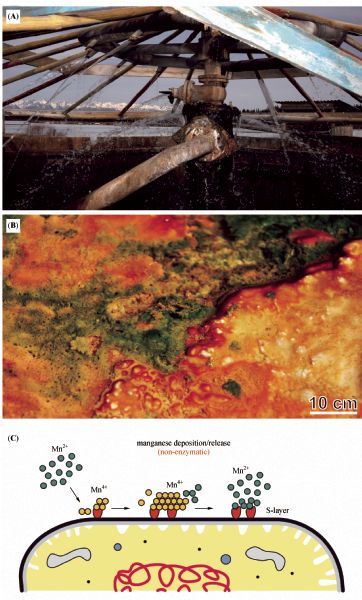
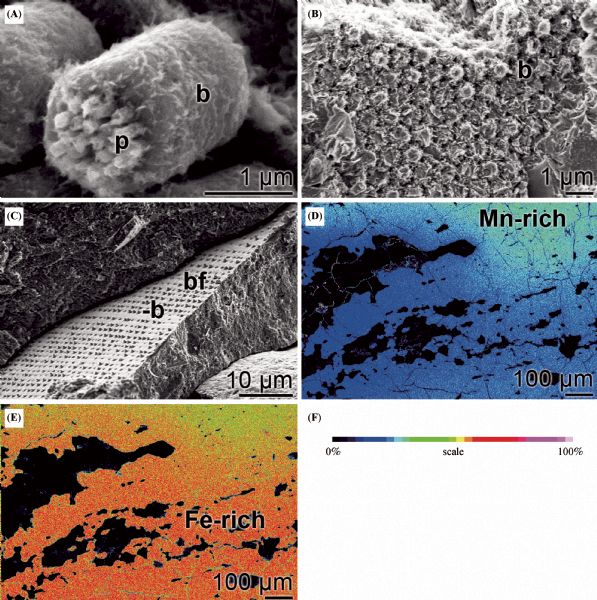
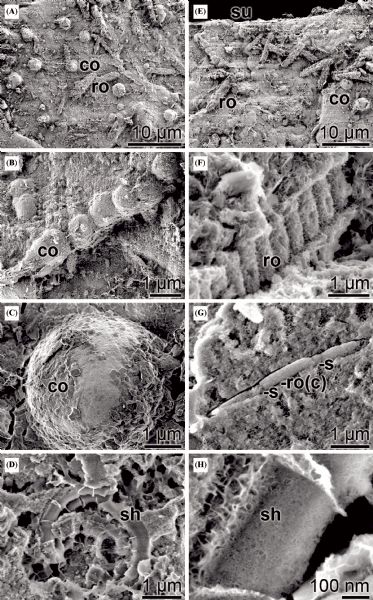
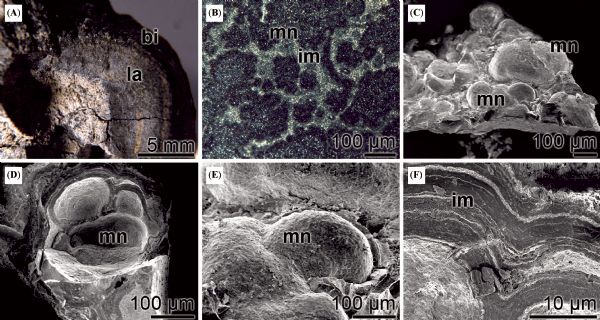
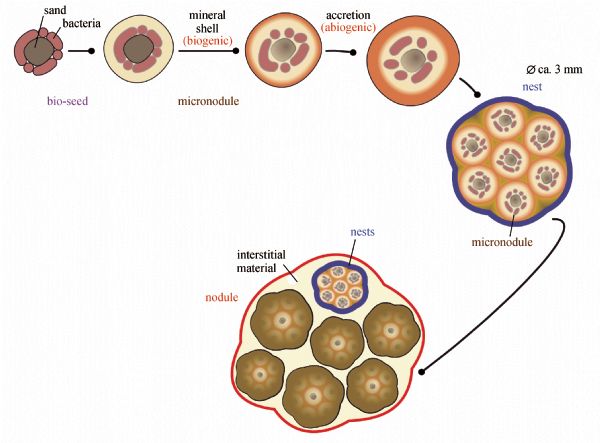
Deep-sea minerals in polymetallic nodules and seamount Co-rich crusts are not only formed by mineralization but also by biologically driven processes involving microorganisms (biomineralization). Within the polymetallic nodules, free-living and biofilm-forming bacteria provide the matrix for manganese deposition, and in seamount Co-rich crusts, coccolithophores represent the dominant organisms that act as bio-seeds for an initial manganese deposition. These (bio)minerals are economically important: manganese is an important alloying component and cobalt forms part of special steels in addition to being used, along with other rare metals, in plasma screens, hard-disk magnets and hybrid car motors. Recent progress in our understanding of the participation of the organic matrices in the enrichment of these metals might provide the basis for feasibility studies of biotechnological applications.
Corresponding Author(s):
WANG Xiao-Hong,Email:wxh0408@hotmail.com (X.H.W.); MüLLER Werner E. G.,Email:wmueller@uni-mainz.de (W.E.G.M.)
引用本文:
. From nanoparticles via microtemplates and milliparticles to deep-sea nodules: biogenically driven mineral formation[J]. Frontiers of Materials Science, 0, (): 97-115.
Xiao-Hong WANG, Ute SCHLO?MACHER, Shun-Feng WANG, Heinz C. SCHR?DER, Matthias WIENS, Renato BATEL, Werner E. G. MüLLER. From nanoparticles via microtemplates and milliparticles to deep-sea nodules: biogenically driven mineral formation. Front Mater Sci, 0, (): 97-115.
Mero J. Ocean-floor manganese nodules. Economic Geology and the Bulletin of the Society of Economic Geologists , 1962, 57(5): 747-767
2
Schrope M. Digging deep. Nature , 2007, 447(7142): 246-247
3
Murray J. Report on the Scientific Results of the Voyage of H. M. S. Challenger during the Years 1873-76-Deep Sea Deposits. London: H. M. S. Stationery Office, 1891
4
Murray J, Philippi E. Die Grundproben der Deutschen Tiefsee-Expedition, 1898-99 auf dem Dampfer. In: Valdivia Wiss. Ergeb. Deutschen Tiefsee-Expedition . Jena: Gustav Fischer, 1908, Vol. 10: 77-207 (in German)
5
Francheteau J, Needham H D, Choukroune P, . Massive deep-sea sulphide ore deposits discovered on the East Pacific Rise? Nature , 1979, 277(5697): 523-528
6
Lowenstam H A, Weiner S. On Biomineralization. Oxford: Oxford University Press, 1989
7
Müller W E G, ed. Silicon Biomineralization: Biology, Biochemistry, Molecular Biology, Biotechnology. Berlin-Heidelberg: Springer-Verlag, 2003
8
Gilbert P U P A, Abrecht M, Frazer B H. The organic–mineral interface in biominerals. Reviews in Mineralogy and Geochemistry , 2005, 59(1): 157-185
9
Amy P S, Caldwell B A, Soeldner A H, . Microbial activity and ultrastructure of mineral-based marine snow from Howe Sound, British Columbia. Canadian Journal of Fisheries and Aquatic , 1987, 44(6): 1135-1142
10
Herndl G J. Ecology of amorphous aggregations (marine snow) in the Northern Adriatic Sea. . Microbial density and activity in marine snow and its implication to overall pelagic processes. Marine Ecology Progress Series , 1988, 48: 265-275
11
Müller W E G, Riemer S, Kurelec B, . Chemosensitizers of the multixenobiotic resistance in amorphous aggregates (marine snow): etiology of mass killing on the benthos in the Northern Adriatic? Environmental Toxicology and Pharmacology , 1998, 6(4): 229-238
12
Leppard G G. Structure/function/activity relationships in marine snow. Current understanding and suggested research thrusts. Annali dell'Istituto Superiore di Sanità , 1999, 35(3): 389-395
13
Cottrell M T, Mannino A, Kirchman D L. Aerobic anoxygenic phototrophic bacteria in the Mid-Atlantic Bight and the North Pacific Gyre. Applied and Environmental Microbiology , 2006, 72(1): 557-564
14
Persson A E, Schoeman B J, Sterte J, . Synthesis of stable suspensions of discrete colloidal zeolite (Na, TPA)ZSM-5 crystals. Zeolites , 1995, 15(7): 611-619
15
Müller W E G, Wang X H, Belikov S I, . Formation of siliceous spicules in demosponges: example Suberites domuncula. In: B?uerleinE, ed. Handbook of Biomineralization, Vol. 1: Biological Aspects and Structure Formation . Weinheim: Wiley-VCH, 2007, 59-82
16
Schr?der H C, Wang X H, Tremel W, . Biofabrication of biosilica-glass by living organisms. Natural Product Reports , 2008, 25(3): 455-474
17
Cha J N, Shimizu K, Zhou Y, . Silicatein filaments and subunits from a marine sponge direct the polymerization of silica and silicones in vitro. Proceedings of the National Academy of Sciences of the United States of America , 1999, 96(2): 361-365
18
Morse D E. Silicon biotechnology: harnessing biological silica production to construct new materials. Trends in Biotechnology , 1999, 17(6): 230-232
19
Krasko A, Lorenz B, Batel R, . Expression of silicatein and collagen genes in the marine sponge Suberites domuncula is controlled by silicate and myotrophin. European Journal of Biochemistry , 2000, 267(15): 4878-4887
20
Müller W E G, Schlo?macher U, Wang X H, . Poly(silicate)-metabolizing silicatein in siliceous spicules and silicasomes of demosponges comprises dual enzymatic activities (silica polymerase and silica esterase). FEBS Journal , 2008, 275(2): 362-370
21
Müller W E G, Rothenberger M, Boreiko A, . Formation of siliceous spicules in the marine demosponge Suberites domuncula. Cell and Tissue Research , 2005, 321(2): 285-297
22
Müller W E G, Eckert C, Kropf K, . Formation of giant spicules in the deep-sea hexactinellid Monorhaphis chuni (Schulze 1904): electron-microscopic and biochemical studies. Cell and Tissue Research , 2007, 329(2): 363-378
23
Wang X H, Boreiko A, Schlo?macher U, . Axial growth of hexactinellid spicules: Formation of cone-like structural units in the giant basal spicules of the hexactinellid Monorhaphis. Journal of Structural Biology , 2008, 164(3): 270-280
24
Müller W E G, Wang X H, Kropf K, . Bioorganic/inorganic hybrid composition of sponge spicules: Matrix of the giant spicules and of the comitalia of the deep sea hexactinellid Monorhaphis. Journal of Structural Biology , 2008, 161(2): 188-203
25
Somayajulu B L K. Growth rates of oceanic manganese nodules: Implications to their genesis, palaeo-earth environment and resource potential. Current Science , 2000, 78(3): 300-308
26
Kerr R A. Manganese Nodules Grow by Rain from Above: The rain of plant and animal remains falling into the deep sea not only provides metals to nodules but also determines nodule growth rates and composition. Science , 1984, 223(4636): 576-577
27
Glasby G P. Manganese: predominant role of nodules and crusts. In: Schulz H D, Zabel M, eds. Marine Geochemistry (2nd ed). Berlin: Springer-Verlag, 2006
28
Wang X H, Schlossmacher U, Wiens M, . Biogenic origin of polymetallic nodules from the Clarion-Clipperton Zone in the Eastern Pacific Ocean: electron microscopic and EDX evidence. Marine Biotechnology , 2009, 11(1): 99-108
29
Halbach P, Friedrich G, Stackelberg U v. The Manganese Nodule Belt of the Pacific Ocean: Geological Environment, Nodule Formation, and Mining Aspects. Stuttgart: Enke Verlag, 1988
30
Cronan D S, ed. Handbook of Marine Mineral Deposits. Boca Raton: CRC Press, 2000
31
Zhamoida V A, Butylin W P, Glasby G P, . The nature of ferromanganese concretions from the eastern gulf of Finland, Baltic Sea. Marine Georesources and Geotechnology , 1996, 14(2): 161-176
32
Anufriev G, Boltenkov B S. Ferromanganese nodules of the Baltic Sea: Composition, helium isotopes, and growth rate. Lithology and Mineral Resources , 2007, 42(3): 240-245
33
Kawamoto H. Japan’s policies to be adopted on rare metal resources. Quarterly Review , 2008, (27): 57-76
34
Thijssen T, Glasby G P, Friedrich G, . Manganese nodules in the Central Peru Basin. Chemie der Erde , 1985, 44: 1-12
35
Kester D R. Dissolved gases other than CO2. In: RileyJ P, SkirrowG, eds. Chemical Oceanography (2nd edition). London: Academic Press, 1975, 498-556
36
Bruland K W, Orians K J, Cowen J P. Reactive trace metals in the stratified central North Pacific. Geochimica et Cosmochimica Acta , 1994, 58(15): 3171-3182
37
Glasby G P. Mechanism of incorporation of manganese and associated trace elements in marine manganese nodules. Oceanography and Marine Biology: An Annual Review , 1974, 12: 11-40
38
Murray J W, Brewer P G. Mechanism of removal of manganese, iron and other trace metals from seawater. In: GlasbyG P, ed. Marine Manganese Deposits . Amsterdam: Elsevier, 1977, 291-325
39
Chukhrov F V, Zvyagin B B, Yermilova L P, . Mineralogical criteria in the origin of marine iron-manganese nodules. Mineralium Deposita , 1976, 11(1): 24-32
40
Hastings D, Emerson M. Oxidation of manganese by spores of a marine bacillus: kinetics and thermodynamic considerations. Geochimica et Cosmochimica Acta , 1986, 50(8): 1819-1824
41
Ehrlich H L. Geomicrobiology. New York: Marcel Dekker, 2002, 768
42
Dymond J, Eklund W. A microprobe study of metalliferous sediment components. Earth and Planetary Science Letters , 1978, 40(2): 243-251
43
Post J E. Manganese oxide minerals: crystal structures and economic and environmental significance. Proceedings of the National Academy of Sciences of the United States of America , 1999, 96(7): 3447-3454
44
Koschinsky A, Halbach P. Sequential leaching of marine ferromanganese precipitates: Genetic implications. Geochimica et Cosmochimica Acta , 1995, 59(24): 5113-5132
45
Bonatti E, Nayudu Y R. The origin of the manganese nodules on the seafloor. American Journal of Science , 1965, 263(1): 17-39
46
Moore W S, Ku T-L, Macdougall J D, . Fluxes of metals to a manganese nodule radiochemical, chemical, structural, and mineral studies. Earth and Planetary Science Letters , 1981, 52(1): 151-171
47
Wang X H, Müller W E G. Marine biominerals: perspectives and challenges for polymetallic nodules and crusts. Trends in Biotechnology , 2009, 27(6): 375-383
48
Wang X H, Schr?der H C, Schlo?macher U, . Organized bacterial assemblies in manganese nodules: evidence for a role of S-layers in metal deposition. Geo-Marine Letters , 2009, 29(2): 85-91
49
Sleytr U B, Messner P. Crystalline surface layers on bacteria. Annual Review of Microbiology , 1983, 37(1): 311-339
50
Sleytr U B, Messner P, Pum D, . Crystalline bacterial cell surface layers (S layers): from supramolecular cell structure to biomimetics and nanotechnology. Angewandte Chemie International Edition , 1999, 38(8): 1034-1054
51
Wang X H, Schlo?macher U, Natalio F, . Evidence for biogenic processes during formation of ferromanganese crusts from the Pacific Ocean: implications of biologically induced mineralization. Micron , 2009, 40(5-6): 526-535
52
Wang X H, Schr?der H C, Wiens M, . Manganese/polymetallic nodules: Micro-structural characterization of exolithobiontic and endolithobiontic microbial biofilms by scanning electron microscopy. Micron , 2009, 40(3): 350-358
53
Wang X H, Gan L, Wiens M, . Distribution of microfossils within polymetallic nodules: Biogenic clusters within manganese layers. Marine Biotechnology , 2012, 14(1): 96-105
54
Ryan K J, Ray C G, eds. Sherris Medical Microbiology (4th ed). New York: McGraw Hill, 2004
55
Szeto J, Ramirez-Arcos S, Raymond C, . Gonococcal MinD affects cell division in Neisseria gonorrhoeae and Escherichia coli and exhibits a novel self-interaction. Journal of Bacteriology , 2001, 183(21): 6253-6264
56
Stackelberg U v. Manganese nodules of the Peru Basin. In: CronanD S, ed. Handbook of Marine Mineral Deposits . Boca Raton: CRC Press, 2000, 197-238
57
Novikov G V, Murdmaa I O. Ion exchange properties of oceanic ferromanganese nodules and enclosing pelagic sediments. Lithology and Mineral Resources , 2007, 42(2): 137-167
58
Jedwab J. Cosmic dust in manganese nodules: pictures from the Report on “Deep-sea deposits” of the H.M.S. Challenger’s Expedition. Internet (http://www.ulb.ac.be/sciences/cosmicdust.pdf), 2011
59
Mengele R, Sumper M. Drastic differences in glycosylation of related S-layer glycoproteins from moderate and extreme halophiles. The Journal of Biological Chemistry , 1992, 267(12): 8182-8185
60
Schultze-Lam S, Thompson J B, Beveridge T J. Metal ion immobilization by bacterial surfaces in fresh water environments. Water Pollution Research Journal of Canada , 1993, 28: 51-81
61
Schultze-Lam S, Beveridge T J. Physicochemical characteristics of the mineral-forming S-layer from the cyanobacterium synechococcus strain GL24. Canadian Journal of Microbiology , 1994, 40(3): 216-223
62
Fortin D, Ferris F G, Beveridge T J. Surface-mediated mineral development by bacteria. Reviews in Mineralogy and Geochemistry , 1997, 35: 161-180
63
Wang X H, Wiens M, Divekar M, . Isolation and characterization of a Mn(II)-oxidizing Bacillus strain from the demosponge Suberites domuncula. Marine Drugs , 2011, 9(1): 1-28
64
Bargar J R, Tebo B M, Villinski J E. In situ characterization of Mn(II) oxidation by spores of the marine Bacillus sp. strain SG-1. Geochimica et Cosmochimica Acta , 2000, 64(16): 2775-2778
65
Müller W E G, Wang X H, Cui F Z, . Sponge spicules as blueprints for the biofabrication of inorganic-organic composites and biomaterials. Applied Microbiology and Biotechnology , 2009, 83(3): 397-413
66
Dupraz C, Visscher P T. Microbial lithification in marine stromatolites and hypersaline mats. Trends in Microbiology , 2005, 13(9): 429-438
67
Ehrlich H L. Ocean manganese nodules: biogenesis and bioleaching. In: KawatraS K, NatarajanK A, eds. Mineral Biotechnology: Microbial Aspects of Mineral Beneficiation, Metal Extraction, and Environmental Control . Littleton: American Technical Publishers Ltd., 2001, 239-252
68
Rodi D J, Makowski L. Phage-display technology — finding a needle in a vast molecular haystack. Current Opinion in Biotechnology , 1999, 10(1): 87-93
69
Coligan J E, Dunn B M, Ploegh H L, . Current Protocols in Protein Science. Chichester , USA: John Wiley & Sons, 2000, 2.0.1-2.8.17
70
Wiens M, Schr?der H C, Korzhev M, . Inducible ASABF-type antimicrobial peptide from the sponge Suberites domuncula: microbicidal and hemolytic activity in vitro and toxic effect on molluscs in vivo. Marine Drugs , 2011, 9(10): 1969-1994
71
Schladt T D, Schneider K, Shukoor M I, . Highly soluble multifunctional MnO nanoparticles for simultaneous optical and MRI imaging and cancer treatment using photodynamic therapy. Journal of Materials Chemistry , 2010, 20(38): 8297-8304