1. Institute of Ocean and Earth Sciences (IOES), Universiti Malaya, 50603 Kuala Lumpur, Malaysia 2. Institute for Advanced Studies, Universiti Malaya, 50603 Kuala Lumpur, Malaysia 3. Department of Physical Chemistry, School of Chemistry, Madurai Kamaraj University, Madurai 625021, Tamil Nadu, India 4. Faculty of Applied Sciences, UCSI University, 56000 Kuala Lumpur, Malaysia
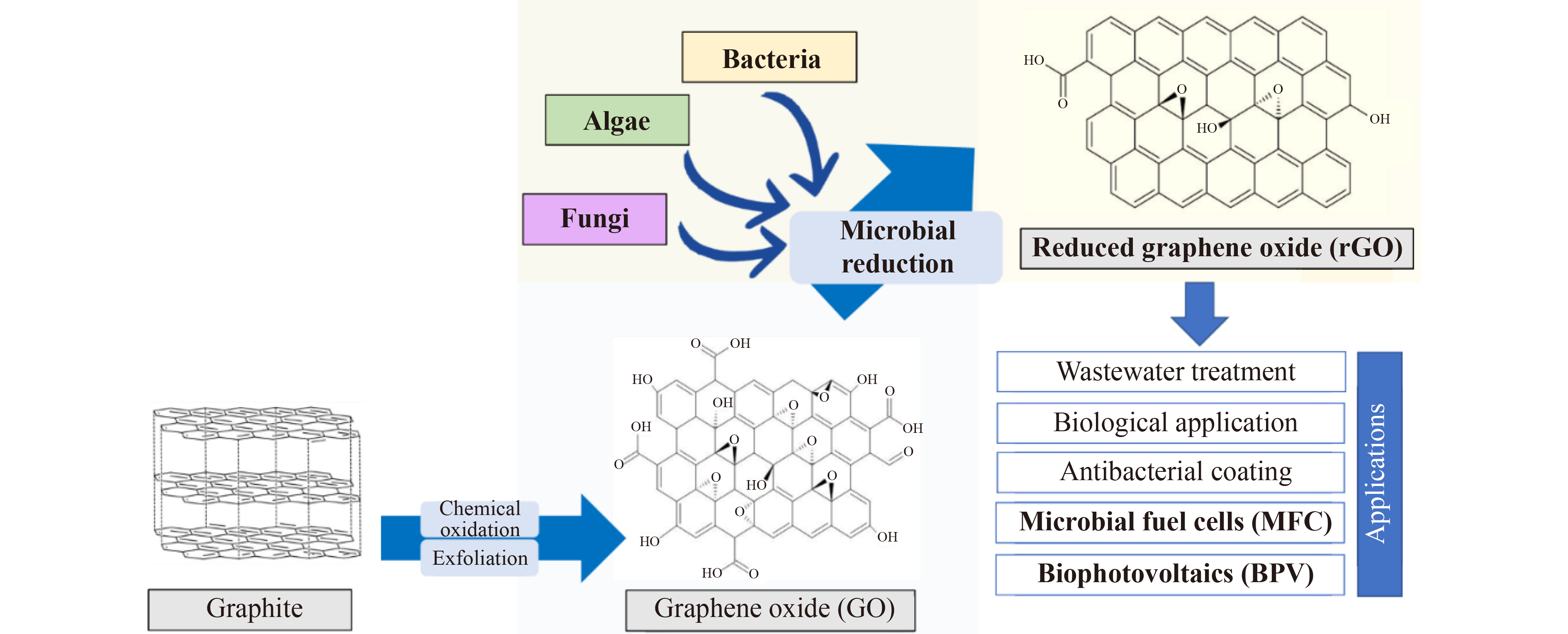
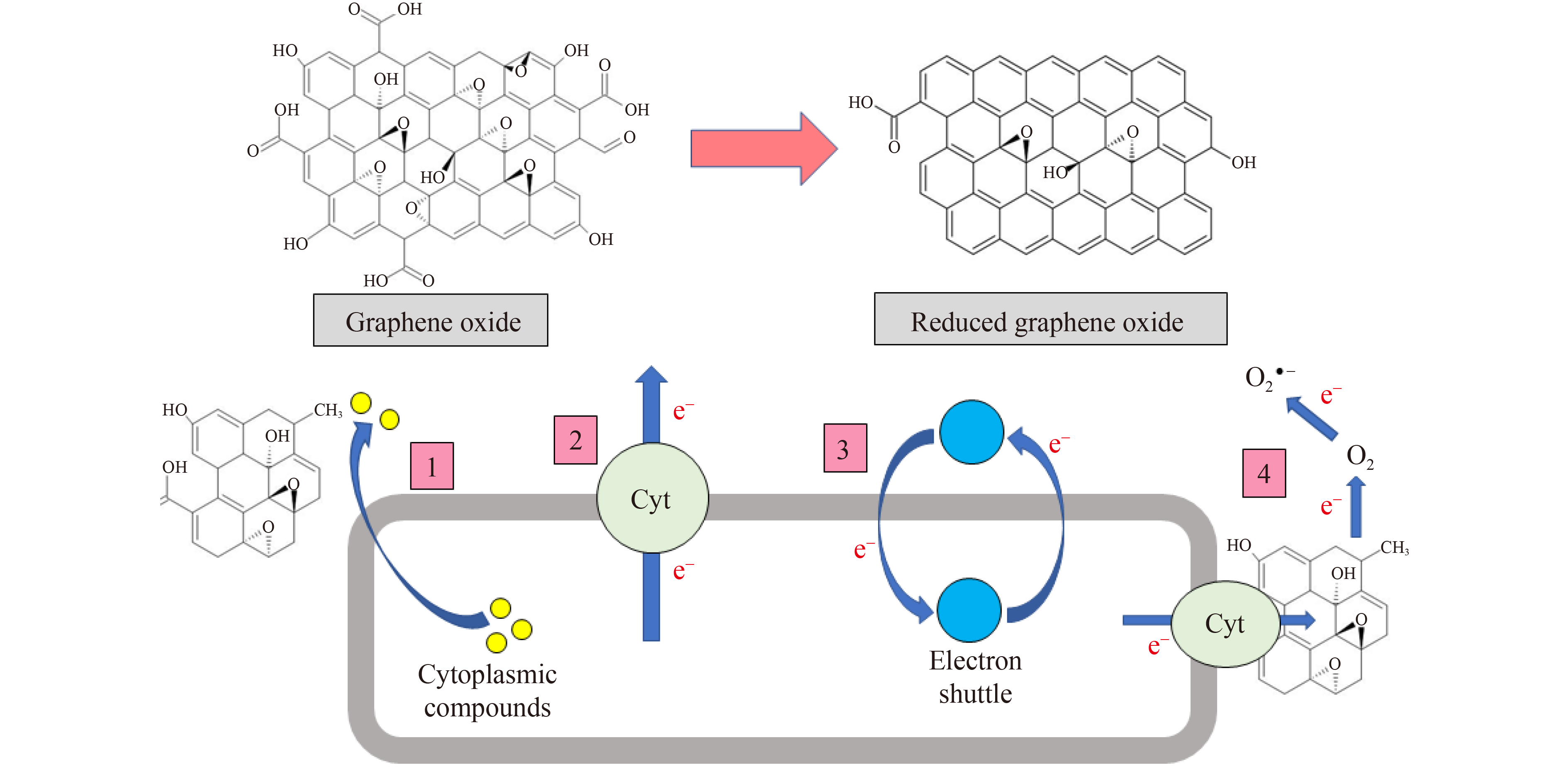
Despite more than a decade of study, there are still significant obstacles to overcome before graphene can be successfully produced on a large scale for commercial use. Chemical oxidation of graphite to produce graphene oxide (GO), followed by a subsequent reduction process to synthesize reduced graphene oxide (rGO), is considered the most practical method for mass production. Microorganisms, which are abundant in nature and inexpensive, are one of the potential green reductants for rGO synthesis. However, there is no recent review discussing the reported microbial reduction of GO in detail. To address this, we present a comprehensive review on the reduction of GO by a range of microorganisms and compared their efficacies and reaction conditions. Also, presented were the mechanisms by which microorganisms reduce GO. We also reviewed the recent advancements in using microbially reduced GO as the anode and cathode material in the microbial fuel cell (MFC) and algal biophotovoltaics (BPV), as well as the challenges and future directions in microbial fuel cell research.
K S, Novoselov A K, Geim S V, Morozov et al.. Electric field effect in atomically thin carbon films.Science, 2004, 306(5696): 666–669 https://doi.org/10.1126/science.1102896
pmid: 15499015
3
R, Kumar S, Sahoo E, Joanni et al.. Recent progress in the synthesis of graphene and derived materials for next generation electrodes of high performance lithium ion batteries.Progress in Energy and Combustion Science, 2019, 75: 100786 https://doi.org/10.1016/j.pecs.2019.100786
4
J, Peña-Bahamonde H N, Nguyen S K, Fanourakis et al.. Recent advances in graphene-based biosensor technology with applications in life sciences.Journal of Nanobiotechnology, 2018, 16(1): 75 https://doi.org/10.1186/s12951-018-0400-z
pmid: 30243292
5
T, Radsar H, Khalesi V Ghods . Graphene properties and applications in nanoelectronic.Optical and Quantum Electronics, 2021, 53(4): 178 https://doi.org/10.1007/s11082-021-02839-6
6
G, Reina J M, González-Domínguez A, Criado et al.. Promises, facts and challenges for graphene in biomedical applications.Chemical Society Reviews, 2017, 46(15): 4400–4416 https://doi.org/10.1039/C7CS00363C
pmid: 28722038
7
Y, Hernandez V, Nicolosi M, Lotya et al.. High-yield production of graphene by liquid-phase exfoliation of graphite.Nature Nanotechnology, 2008, 3(9): 563–568 https://doi.org/10.1038/nnano.2008.215
pmid: 18772919
8
K, Parvez Z S, Wu R, Li et al.. Exfoliation of graphite into graphene in aqueous solutions of inorganic salts.Journal of the American Chemical Society, 2014, 136(16): 6083–6091 https://doi.org/10.1021/ja5017156
pmid: 24684678
9
K S, Kim Y, Zhao H, Jang et al.. Large-scale pattern growth of graphene films for stretchable transparent electrodes.Nature, 2009, 457(7230): 706–710 https://doi.org/10.1038/nature07719
pmid: 19145232
10
K V, Emtsev A, Bostwick K, Horn et al.. Towards wafer-size graphene layers by atmospheric pressure graphitization of silicon carbide.Nature Materials, 2009, 8(3): 203–207 https://doi.org/10.1038/nmat2382
pmid: 19202545
11
M, Cossutta J, McKechnie S J Pickering . A comparative LCA of different graphene production routes.Green Chemistry, 2017, 19(24): 5874–5884 https://doi.org/10.1039/C7GC02444D
12
O C, Compton S T Nguyen . Graphene oxide, highly reduced graphene oxide, and graphene: versatile building blocks for carbon-based materials.Small, 2010, 6(6): 711–723 https://doi.org/10.1002/smll.200901934
pmid: 20225186
13
S C Ray . Application and uses of graphene oxide and reduced graphene oxide. In: Ray S C, ed. Applications of Graphene and Graphene-Oxide based Nanomaterials. Oxford: William Andrew Publishing, 2015, 39–55
14
W S, Hummers R E Offeman . Preparation of graphitic oxide.Journal of the American Chemical Society, 1958, 80(6): 1339 https://doi.org/10.1021/ja01539a017
15
S, Stankovich D A, Dikin R D, Piner et al.. Synthesis of graphene-based nanosheets via chemical reduction of exfoliated graphite oxide.Carbon, 2007, 45(7): 1558–1565 https://doi.org/10.1016/j.carbon.2007.02.034
16
C K, Chua M Pumera . Chemical reduction of graphene oxide: a synthetic chemistry viewpoint.Chemical Society Reviews, 2014, 43(1): 291–312 https://doi.org/10.1039/C3CS60303B
pmid: 24121318
17
M, Agharkar S, Kochrekar S, Hidouri et al.. Trends in green reduction of graphene oxides, issues and challenges: a review.Materials Research Bulletin, 2014, 59: 323–328 https://doi.org/10.1016/j.materresbull.2014.07.051
V, Agarwal P B Zetterlund . Strategies for reduction of graphene oxide ― a comprehensive review.Chemical Engineering Journal, 2021, 405: 127018 https://doi.org/10.1016/j.cej.2020.127018
20
B A E, Lehner V A E C, Janssen E M, Spiesz et al.. Creation of conductive graphene materials by bacterial reduction using Shewanella Oneidensis.ChemistryOpen, 2019, 8(7): 888–895 https://doi.org/10.1002/open.201900186
pmid: 31312588
21
E C, Salas Z, Sun A, Lüttge et al.. Reduction of graphene oxide via bacterial respiration.ACS Nano, 2010, 4(8): 4852–4856 https://doi.org/10.1021/nn101081t
pmid: 20731460
22
G, Wang F, Qian C W, Saltikov et al.. Microbial reduction of graphene oxide by Shewanella.Nano Research, 2011, 4(6): 563–570 https://doi.org/10.1007/s12274-011-0112-2
T S, Song W M, Tan J Xie . Bio-reduction of graphene oxide using sulfate-reducing bacteria and its implication on anti-biocorrosion.Journal of Nanoscience and Nanotechnology, 2018, 18(8): 5770–5776 https://doi.org/10.1166/jnn.2018.15469
pmid: 29458638
25
P, Guo F, Xiao Q, Liu et al.. One-pot microbial method to synthesize dual-doped graphene and its use as high-performance electrocatalyst.Scientific Reports, 2013, 3(1): 3499 https://doi.org/10.1038/srep03499
pmid: 24336153
26
J, Yan W, Ye Z, Jian et al.. Enhanced sulfate and metal removal by reduced graphene oxide self-assembled Enterococcus avium sulfate-reducing bacteria particles.Bioresource Technology, 2018, 266: 447–453 https://doi.org/10.1016/j.biortech.2018.07.012
pmid: 29990761
27
S, Kalathil K P, Katuri A S, Alazmi et al.. Bioinspired synthesis of reduced graphene oxide-wrapped Geobacter sulfurreducens as a hybrid electrocatalyst for efficient oxygen evolution reaction.Chemistry of Materials, 2019, 31(10): 3686–3693 https://doi.org/10.1021/acs.chemmater.9b00394
28
Y, Lu L, Zhong L, Tang et al.. Extracellular electron transfer leading to the biological mediated production of reduced graphene oxide.Chemosphere, 2020, 256: 127141 https://doi.org/10.1016/j.chemosphere.2020.127141
pmid: 32470738
29
O, Akhavan E Ghaderi . Escherichia coli bacteria reduce graphene oxide to bactericidal graphene in a self-limiting manner.Carbon, 2012, 50(5): 1853–1860 https://doi.org/10.1016/j.carbon.2011.12.035
30
H, Zhao C, Zhang Y, Wang et al.. Self-damaging aerobic reduction of graphene oxide by Escherichia coli: role of GO-mediated extracellular superoxide formation.Environmental Science & Technology, 2018, 52(21): 12783–12791 https://doi.org/10.1021/acs.est.8b03753
pmid: 30277752
31
S, Gurunathan J W, Han V, Eppakayala et al.. Microbial reduction of graphene oxide by Escherichia coli: a green chemistry approach.Colloids and Surfaces B: Biointerfaces, 2013, 102: 772–777 https://doi.org/10.1016/j.colsurfb.2012.09.011
pmid: 23107955
32
S, Gurunathan J W, Han V, Eppakayala et al.. An environmentally friendly approach to the reduction of graphene oxide by Escherichia fergusoni.Journal of Nanoscience and Nanotechnology, 2013, 13(3): 2091–2098 https://doi.org/10.1166/jnn.2013.6738
pmid: 23755651
33
C, Vargas R, Simarro J A, Reina et al.. New approach for biological synthesis of reduced graphene oxide.Biochemical Engineering Journal, 2019, 151: 107331 https://doi.org/10.1016/j.bej.2019.107331
34
R S, Chouhan A, Pandey A, Qureshi et al.. Nanomaterial resistant microorganism mediated reduction of graphene oxide.Colloids and Surfaces B: Biointerfaces, 2016, 146: 39–46 https://doi.org/10.1016/j.colsurfb.2016.05.053
pmid: 27248463
35
M, Boutchich A, Jaffré D, Alamarguy et al.. Characterization of graphene oxide reduced through chemical and biological processes.Journal of Physics: Conference Series, 2013, 433: 012001 https://doi.org/10.1088/1742-6596/433/1/012001
36
G, Utkan T, Ozturk O, Duygulu et al.. Microbial reduction of graphene oxide by Lactobacillus plantarum.International Journal of Nanoscience and Nanotechnology, 2019, 15(2): 127–136
37
M, Fan C, Zhu Z Q, Feng et al.. Preparation of N-doped graphene by reduction of graphene oxide with mixed microbial system and its haemocompatibility.Nanoscale, 2014, 6(9): 4882–4888 https://doi.org/10.1039/c3nr06657f
pmid: 24667844
38
Y, Chen Y, Niu T, Tian et al.. Microbial reduction of graphene oxide by Azotobacter chroococcum.Chemical Physics Letters, 2017, 677: 143–147 https://doi.org/10.1016/j.cplett.2017.04.002
39
O Akhavan . Bacteriorhodopsin as a superior substitute for hydrazine in chemical reduction of single-layer graphene oxide sheets.Carbon, 2015, 81: 158–166 https://doi.org/10.1016/j.carbon.2014.09.044
40
Y, Jiao F, Qian Y, Li et al.. Deciphering the electron transport pathway for graphene oxide reduction by Shewanella oneidensis MR-1.Journal of Bacteriology, 2011, 193(14): 3662–3665 https://doi.org/10.1128/JB.00201-11
pmid: 21602337
41
T, Liu L L, Jiang M F, He et al.. Green synthesis of reduced graphene oxide by a GRAS strain Bacillus subtilis 168 with high biocompatibility to zebrafish embryos.RSC Advances, 2015, 5(74): 60024–60032 https://doi.org/10.1039/C5RA12304F
42
P, Khanra T, Kuila N H, Kim et al.. Simultaneous bio-functionalization and reduction of graphene oxide by baker’s yeast.Chemical Engineering Journal, 2012, 183: 526–533 https://doi.org/10.1016/j.cej.2011.12.075
43
A G, Nandgaonkar Q, Wang K, Fu et al.. A one-pot biosynthesis of reduced graphene oxide (RGO)/bacterial cellulose (BC) nanocomposites.Green Chemistry, 2014, 16(6): 3195–3201 https://doi.org/10.1039/C4GC00264D
44
P, Choudhary S K Das . Bio-reduced graphene oxide as a nanoscale antimicrobial coating for medical devices.ACS Omega, 2019, 4(1): 387–397 https://doi.org/10.1021/acsomega.8b02787
45
K, Muthoosamy R G, Bai I B, Abubakar et al.. Exceedingly biocompatible and thin-layered reduced graphene oxide nanosheets using an eco-friendly mushroom extract strategy.International Journal of Nanomedicine, 2015, 10: 1505–1519
pmid: 25759577
46
S, Gurunathan J, Han J H, Park et al.. An in vitro evaluation of graphene oxide reduced by Ganoderma spp.in human breast cancer cells (MDA-MB-231). International Journal of Nanomedicine, 2014, 9: 1783–1797 https://doi.org/10.2147/IJN.S57735
pmid: 24741313
47
S, Ahmad A, Ahmad S, Khan et al.. Algal extracts based biogenic synthesis of reduced graphene oxides (rGO) with enhanced heavy metals adsorption capability.Journal of Industrial and Engineering Chemistry, 2019, 72: 117–124 https://doi.org/10.1016/j.jiec.2018.12.009
48
M, Han B, Xu M, Zhang et al.. Preparation of biologically reduced graphene oxide-based aerogel and its application in dye adsorption.Science of the Total Environment, 2021, 783: 147028 https://doi.org/10.1016/j.scitotenv.2021.147028
pmid: 33872905
49
B, Xu S, Cheng M, Han et al.. The characteristic and performance of reduced graphene oxide by marine bacterium Pseudoalteromonas sp.CF10-13. Ceramics International, 2020, 46(13): 21699–21706 https://doi.org/10.1016/j.ceramint.2020.05.277
50
W, Wang J L, Mi Q C, Shen et al.. Shewanella oneidensis assisted biosynthesis of Pd/reductive-graphene-oxide nanocomposites for oxygen reduction reaction.ChemistrySelect, 2020, 5(11): 3179–3186 https://doi.org/10.1002/slct.202000530
51
S, Raveendran N, Chauhan Y, Nakajima et al.. Ecofriendly route for the synthesis of highly conductive graphene using extremophiles for green electronics and bioscience.Particle & Particle Systems Characterization, 2013, 30(7): 573–578 https://doi.org/10.1002/ppsc.201200126
52
S, Gurunathan J W, Han V, Eppakayala et al.. Biocompatibility of microbially reduced graphene oxide in primary mouse embryonic fibroblast cells.Colloids and Surfaces B: Biointerfaces, 2013, 105: 58–66 https://doi.org/10.1016/j.colsurfb.2012.12.036
pmid: 23352948
53
S, Gurunathan J W, Han V, Eppakayala et al.. Green synthesis of graphene and its cytotoxic effects in human breast cancer cells.International Journal of Nanomedicine, 2013, 8(1): 1015–1027 https://doi.org/10.2147/IJN.S42047
pmid: 23687445
54
N K, Rathinam S, Berchmans R K, Sani et al.. Rewiring the microbe–electrode interfaces with biologically reduced graphene oxide for improved bioelectrocatalysis.Bioresource Technology, 2018, 256: 195–200 https://doi.org/10.1016/j.biortech.2018.02.001
pmid: 29438920
55
W Gao . Chapter 3: The chemistry of graphene oxide. In: Gao W, ed. Graphene Oxide: Reduction Recipes, Spectroscopy, and Applications. Switzerland: Springer, 2015, 61–95
56
Y, Tanizawa Y, Okamoto K, Tsuzuki et al.. Microorganism mediated synthesis of reduced graphene oxide films.Journal of Physics: Conference Series, 2012, 352: 012011 https://doi.org/10.1088/1742-6596/352/1/012011
57
P, Khanna A, Kaur D Goyal . Algae-based metallic nanoparticles: synthesis, characterization and applications.Journal of Microbiological Methods, 2019, 163: 105656 https://doi.org/10.1016/j.mimet.2019.105656
pmid: 31220512
58
S, Liu L, Wang J, Tian et al.. Aniline as a dispersing and stabilizing agent for reduced graphene oxide and its subsequent decoration with Ag nanoparticles for enzymeless hydrogen peroxide detection.Journal of Colloid and Interface Science, 2011, 363(2): 615–619 https://doi.org/10.1016/j.jcis.2011.07.083
pmid: 21855890
59
B E, Logan B, Hamelers R, Rozendal et al.. Microbial fuel cells: methodology and technology.Environmental Science & Technology, 2006, 40(17): 5181–5192 https://doi.org/10.1021/es0605016
pmid: 16999087
60
Z H Y, Tay F L, Ng T C, Ling et al.. The use of marine microalgae in microbial fuel cells, photosynthetic microbial fuel cells and biophotovoltaic platforms for bioelectricity generation.3 Biotech, 2022, 12(7): 148 https://doi.org/10.1007/s13205-022-03214-2
61
I, Gajda J, Greenman C, Melhuish et al.. Self-sustainable electricity production from algae grown in a microbial fuel cell system.Biomass and Bioenergy, 2015, 82: 87–93 https://doi.org/10.1016/j.biombioe.2015.05.017
62
F L, Ng S M, Phang C H, Thong et al.. Integration of bioelectricity generation from algal biophotovoltaic (BPV) devices with remediation of palm oil mill effluent (POME) as substrate for algal growth.Environmental Technology & Innovation, 2021, 21: 101280 https://doi.org/10.1016/j.eti.2020.101280
63
J M, Sonawane A, Yadav P C, Ghosh et al.. Recent advances in the development and utilization of modern anode materials for high performance microbial fuel cells.Biosensors & Bioelectronics, 2017, 90: 558–576 https://doi.org/10.1016/j.bios.2016.10.014
pmid: 27825877
64
L T, Wey P, Bombelli X, Chen et al.. The development of biophotovoltaic systems for power generation and biological analysis.ChemElectroChem, 2019, 6(21): 5375–5386 https://doi.org/10.1002/celc.201900997
pmid: 31867153
65
S, Li C, Cheng A Thomas . Carbon-based microbial-fuel-cell electrodes: from conductive supports to active catalysts.Advanced Materials, 2017, 29(8): 1602547 https://doi.org/10.1002/adma.201602547
pmid: 27991684
66
V, Periasamy M M, Jaafar K, Chandrasekaran et al.. Langmuir–Blodgett graphene-based films for algal biophotovoltaic fuel cells.Nanomaterials, 2022, 12(5): 840 https://doi.org/10.3390/nano12050840
pmid: 35269327
67
A T, Habte D W Ayele . Synthesis and characterization of reduced graphene oxide (rGO) started from graphene oxide (GO) using the tour method with different parameters.Advances in Materials Science and Engineering, 2019, 2019: 5058163 https://doi.org/10.1155/2019/5058163
68
Y, Yuan S, Zhou B, Zhao et al.. Microbially-reduced graphene scaffolds to facilitate extracellular electron transfer in microbial fuel cells.Bioresource Technology, 2012, 116: 453–458 https://doi.org/10.1016/j.biortech.2012.03.118
pmid: 22534371
69
W H, Zhu H X, Gao P, Li et al.. The interaction between microbes and electrodes decorated with bio-reduced graphene oxide — from an electrochemical point of view.Journal of Chemical Technology and Biotechnology, 2021, 96(1): 172–179 https://doi.org/10.1002/jctb.6524
70
Y, Goto N, Yoshida Y, Umeyama et al.. Enhancement of electricity production by graphene oxide in soil microbial fuel cells and plant microbial fuel cells.Frontiers in Bioengineering and Biotechnology, 2015, 3(42): 42 https://doi.org/10.3389/fbioe.2015.00042
pmid: 25883931
71
D, Paul M T, Noori P P, Rajesh et al.. Modification of carbon felt anode with graphene oxide–zeolite composite for enhancing the performance of microbial fuel cell.Sustainable Energy Technologies and Assessments, 2018, 26: 77–82 https://doi.org/10.1016/j.seta.2017.10.001
72
F L, Ng M M, Jaafar S M, Phang et al.. Reduced graphene oxide anodes for potential application in algae biophotovoltaic platforms.Scientific Reports, 2014, 4(1): 7562 https://doi.org/10.1038/srep07562
pmid: 25531093
73
L, Zhuang Y, Yuan G, Yang et al.. In situ formation of graphene/biofilm composites for enhanced oxygen reduction in biocathode microbial fuel cells.Electrochemistry Communications, 2012, 21: 69–72 https://doi.org/10.1016/j.elecom.2012.05.010
74
J, Chen Y, Hu W, Huang et al.. Enhanced electricity generation for biocathode microbial fuel cell by in situ microbial-induced reduction of graphene oxide and polarity reversion.International Journal of Hydrogen Energy, 2017, 42(17): 12574–12582 https://doi.org/10.1016/j.ijhydene.2017.03.012
75
J, Chen Y, Hu X, Tan et al.. Enhanced performance of microbial fuel cell with in situ preparing dual graphene modified bioelectrode.Bioresource Technology, 2017, 241: 735–742 https://doi.org/10.1016/j.biortech.2017.06.020
pmid: 28628977
76
T S, Song Y, Jin J, Bao et al.. Graphene/biofilm composites for enhancement of hexavalent chromium reduction and electricity production in a biocathode microbial fuel cell.Journal of Hazardous Materials, 2016, 317: 73–80 https://doi.org/10.1016/j.jhazmat.2016.05.055
77
N, Yoshida Y, Miyata K, Doi et al.. Graphene oxide-dependent growth and self-aggregation into a hydrogel complex of exoelectrogenic bacteria.Scientific Reports, 2016, 6(1): 21867 https://doi.org/10.1038/srep21867
pmid: 26899353
78
N, Yoshida Y, Goto Y Miyata . Selective growth of and electricity production by marine exoelectrogenic bacteria in self-aggregated hydrogel of microbially reduced graphene oxide.C ― Journal of Carbon Research, 2016, 2(2): 15 https://doi.org/10.3390/c2020015
79
N, Yoshida Y, Miyata A, Mugita et al.. Electricity recovery from municipal sewage wastewater using a hydrogel complex composed of microbially reduced graphene oxide and sludge.Materials, 2016, 9(9): 742 https://doi.org/10.3390/ma9090742
pmid: 28773862
80
Y, Goto N Yoshida . Microbially reduced graphene oxide shows efficient electricity ecovery from artificial dialysis wastewater.The Journal of General and Applied Microbiology, 2017, 63(3): 165–171 https://doi.org/10.2323/jgam.2016.10.001
pmid: 28484115
81
F L, Ng S M, Phang V, Periasamy et al.. Algal biophotovoltaic (BPV) device for generation of bioelectricity using Synechococcus elongatus (Cyanophyta).Journal of Applied Phycology, 2018, 30(6): 2981–2988 https://doi.org/10.1007/s10811-018-1515-1
82
Y C, Yong Y Y, Yu X, Zhang et al.. Highly active bidirectional electron transfer by a self-assembled electroactive reduced-graphene-oxide-hybridized biofilm.Angewandte Chemie International Edition in English, 2014, 53(17): 4480–4483 https://doi.org/10.1002/anie.201400463
pmid: 24644059
83
L, Huang J M, Regan X Quan . Electron transfer mechanisms, new applications, and performance of biocathode microbial fuel cells.Bioresource Technology, 2011, 102(1): 316–323 https://doi.org/10.1016/j.biortech.2010.06.096
pmid: 20634062
84
J, Chen Y, Hu W, Huang et al.. Biodegradation of oxytetracycline and electricity generation in microbial fuel cell with in situ dual graphene modified bioelectrode.Bioresource Technology, 2018, 270: 482–488 https://doi.org/10.1016/j.biortech.2018.09.060
pmid: 30245318
85
kumar G, Gnana Z, Awan Nahm K, Suk et al.. Nanotubular MnO2/graphene oxide composites for the application of open air-breathing cathode microbial fuel cells.Biosensors and Bioelectronics, 2014, 53: 528–534 https://doi.org/10.1016/j.bios.2013.10.012
86
J, Yu H, Huang F, Bian et al.. Supercritical CO2-fluid-assisted synthesis of TiO2 quantum dots/reduced graphene oxide composites for outstanding sodium storage capability.ACS Applied Energy Materials, 2018, 1(12): 7213–7219 https://doi.org/10.1021/acsaem.8b01668
87
J, Yu H, Huang Y, Gan et al.. A new strategy for the construction of 3D TiO2 nanowires/reduced graphene oxide for high-performance lithium/sodium batteries.Journal of Materials Chemistry A: Materials for Energy and Sustainability, 2018, 6(47): 24256–24266 https://doi.org/10.1039/C8TA08214F
88
Y, Zhong X, Xia S, Deng et al.. Popcorn inspired porous macrocellular carbon: rapid puffing fabrication from rice and its applications in lithium–sulfur batteries.Advanced Energy Materials, 2018, 8(1): 1701110 https://doi.org/10.1002/aenm.201701110
89
W, Zhu H, Huang Y, Gan et al.. Mesoporous cobalt monoxide nanorods grown on reduced graphene oxide nanosheets with high lithium storage performance.Electrochimica Acta, 2014, 138: 376–382 https://doi.org/10.1016/j.electacta.2014.06.104
90
R, Kumar R K, Singh A R, Vaz et al.. Self-assembled and one-step synthesis of interconnected 3D network of Fe3O4/reduced graphene oxide nanosheets hybrid for high-performance supercapacitor electrode.ACS Applied Materials & Interfaces, 2017, 9(10): 8880–8890 https://doi.org/10.1021/acsami.6b14704
pmid: 28225588
91
F, Bian J, Yu W, Song et al.. A new magnesium hydride route to synthesize morphology-controlled Si/rGO nanocomposite towards high-performance lithium storage.Electrochimica Acta, 2020, 330: 135248 https://doi.org/10.1016/j.electacta.2019.135248