Novel hybrid models of ANFIS and metaheuristic optimizations (SCE and ABC) for prediction of compressive strength of concrete using rebound hammer field test
Dung Quang VU1, Fazal E. JALAL2, Mudassir IQBAL3, Dam Duc NGUYEN1, Duong Kien TRONG1, Indra PRAKASH4, Binh Thai PHAM1()
1. University of Transport Technology, Hanoi 100000, Vietnam 2. Department of Civil Engineering, Shanghai Jiao Tong University, Shanghai 200240, China 3. Department of Civil Engineering, University of Engineering and Technology, Peshawar 25120, Pakistan 4. DDG (R) Geological Survey of India, Gandhinagar 382010, India
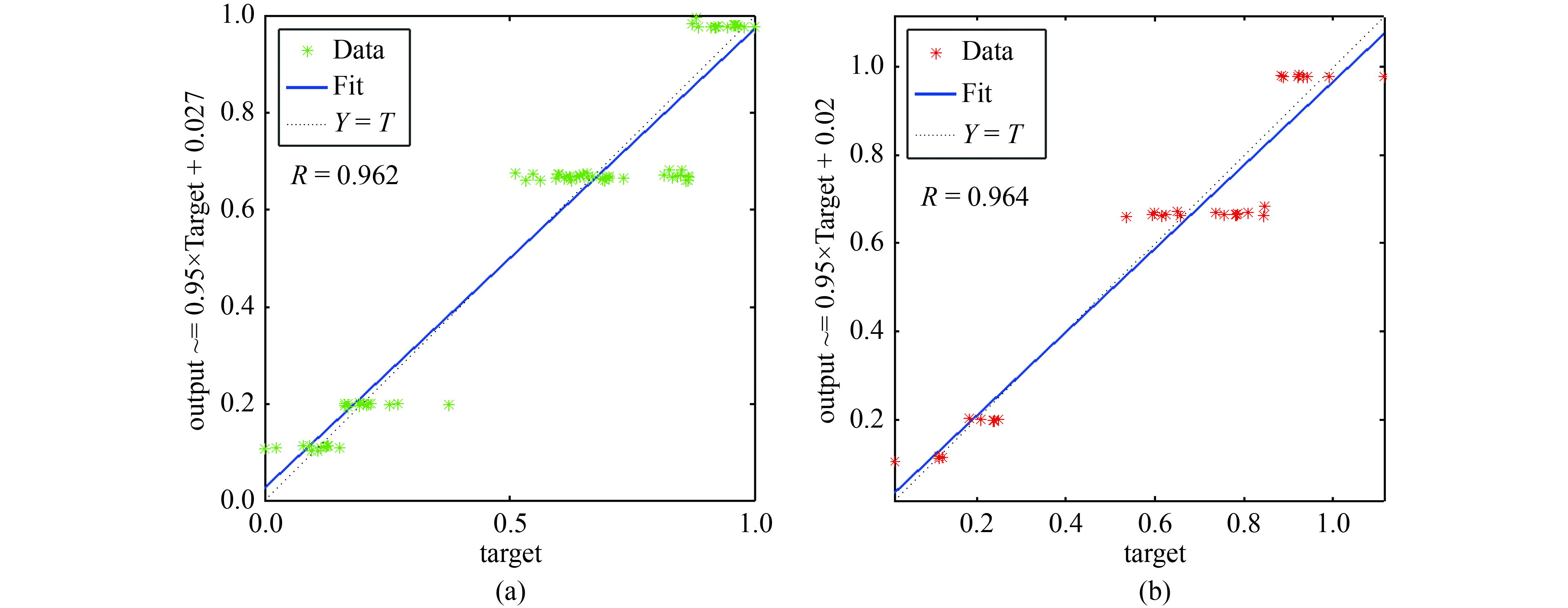
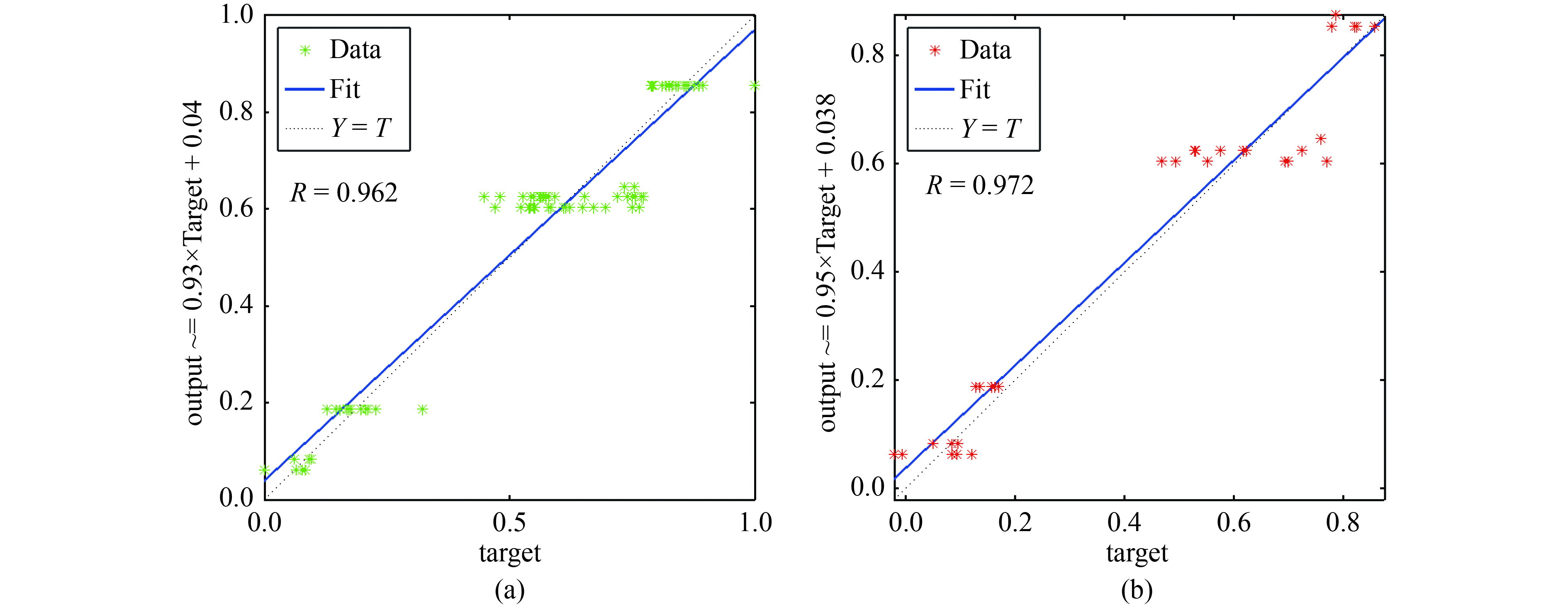
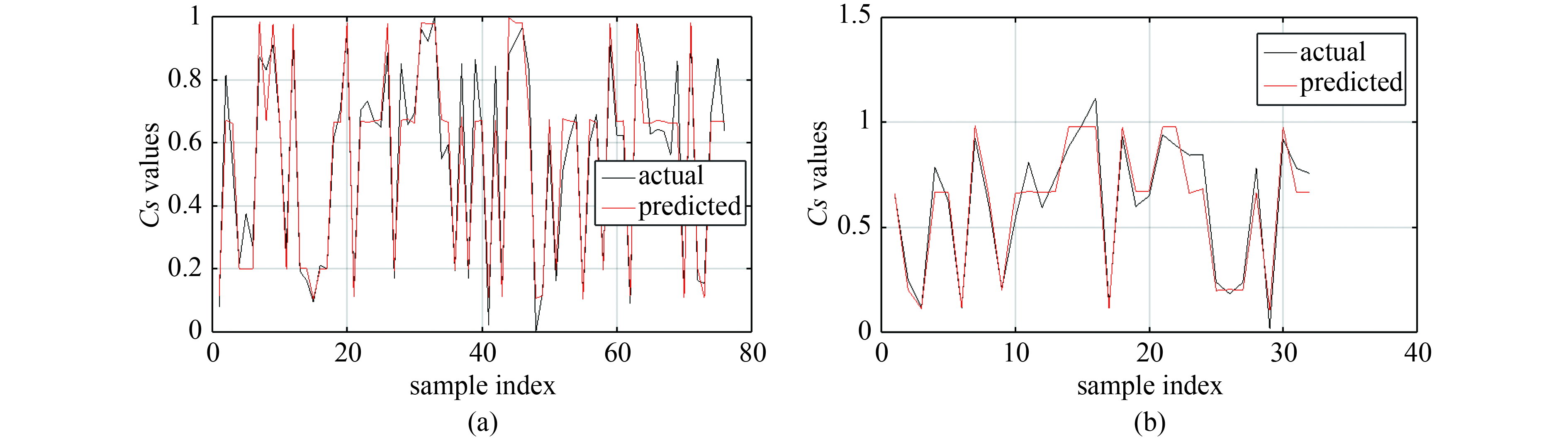
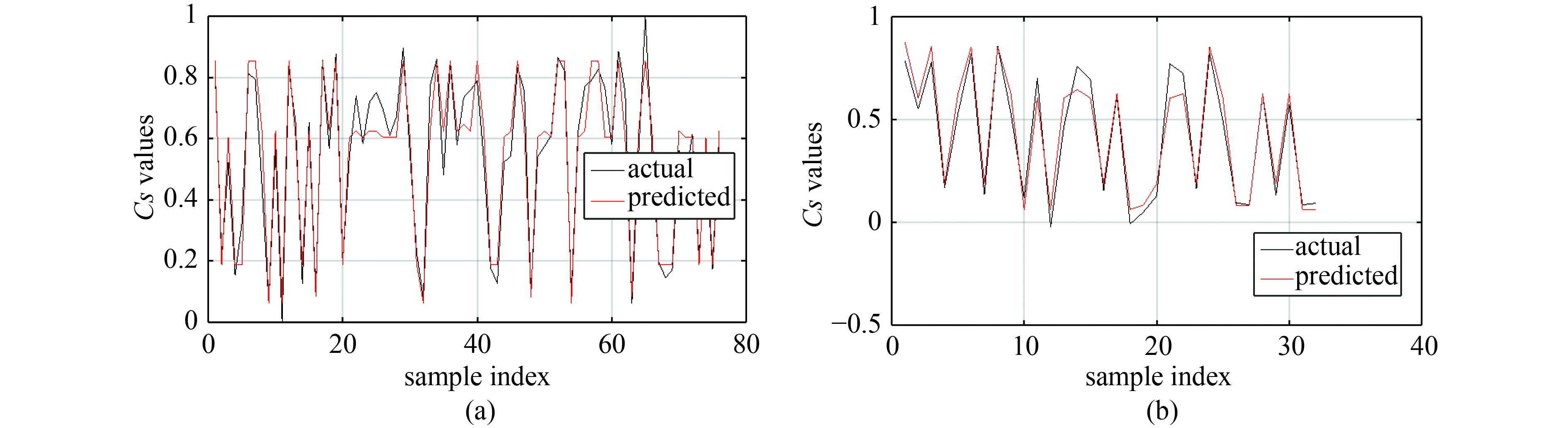
In this study, we developed novel hybrid models namely Adaptive Neuro Fuzzy Inference System (ANFIS) optimized by Shuffled Complex Evolution (SCE) on the one hand and ANFIS with Artificial Bee Colony (ABC) on the other hand. These were used to predict compressive strength (Cs) of concrete relating to thirteen concrete-strength affecting parameters which are easy to determine in the laboratory. Field and laboratory tests data of 108 structural elements of 18 concrete bridges of the Ha Long-Van Don Expressway, Vietnam were considered. The dataset was randomly divided into a 70:30 ratio, for training (70%) and testing (30%) of the hybrid models. Performance of the developed fuzzy metaheuristic models was evaluated using standard statistical metrics: Correlation Coefficient (R), Root Mean Square Error (RMSE) and Mean Absolute Error (MAE). The results showed that both of the novel models depict close agreement between experimental and predicted results. However, the ANFIS-ABC model reflected better convergence of the results and better performance compared to that of ANFIS-SCE in the prediction of the concrete Cs. Thus, the ANFIS-ABC model can be used for the quick and accurate estimation of compressive strength of concrete based on easily determined parameters for the design of civil engineering structures including bridges.
. [J]. Frontiers of Structural and Civil Engineering, 2022, 16(8): 1003-1016.
Dung Quang VU, Fazal E. JALAL, Mudassir IQBAL, Dam Duc NGUYEN, Duong Kien TRONG, Indra PRAKASH, Binh Thai PHAM. Novel hybrid models of ANFIS and metaheuristic optimizations (SCE and ABC) for prediction of compressive strength of concrete using rebound hammer field test. Front. Struct. Civ. Eng., 2022, 16(8): 1003-1016.
compressive strength of Portland cement mortar at an age of 28 d
PC
X13
MPa
43.09
43.83
43.418
0.265
compressive strength of concrete
Cs
Y
MPa
35.11
56.78
46.343
6.041
Tab.1
Fig.4
Fig.5
Fig.6
No
hyper-parameters
models
ANFIS
ANFIS-SCE
ANFIS-ABC
1
input membership function type
Gaussian
–
–
2
number of parameters per membership function
3
–
–
3
number of membership function per input
10
–
–
4
output membership function type
linear
–
–
5
number of total parameters
108
–
–
6
population size
–
50
50
7
complex size
–
20
–
8
number of complexes
–
10
–
9
number of parents
–
75
–
10
number of off springs
–
3
–
11
maximum number of iterations
–
5
–
12
acceleration coefficient upper bound
–
–
30
13
acceleration coefficient lower bound
–
–
1
14
stopping iteration
–
1000
1000
Tab.2
STT
models
RMSE
MAE
1
ANFIS-SCE
0.084633
0.061924
2
ANFIS-ABC
0.072634
0.056623
Tab.3
STT
models
RMSE
MAE
1
ANFIS-SCE
0.08348
0.067697
2
ANFIS-ABC
0.072272
0.059358
Tab.4
Fig.7
Fig.8
Fig.9
Fig.10
Fig.11
Fig.12
1
K C Onyelowe, M Iqbal, F E Jalal, M E Onyia, I C Onuoha. Application of 3-algorithm ANN programming to predict the strength performance of hydrated-lime activated rice husk ash treated soil. Multiscale and Multidisciplinary Modeling, Experiments and Design, 2021, 4(4): 259–274
2
M Najimi, N Ghafoori, M Nikoo. Modeling chloride penetration in self-consolidating concrete using artificial neural network combined with artificial bee colony algorithm. Journal of Building Engineering, 2019, 22: 216–226 https://doi.org/10.1016/j.jobe.2018.12.013
3
H Ghasemi, P Kerfriden, S P Bordas, J Muthu, G Zi, T J C S Rabczuk. Interfacial shear stress optimization in sandwich beams with polymeric core using non-uniform distribution of reinforcing ingredients. Composite Structures, 2015, 120: 221–230
4
H Ghasemi, R Brighenti, X Zhuang, J Muthu, T J S Rabczuk, M Optimization. Optimal fiber content and distribution in fiber-reinforced solids using a reliability and NURBS based sequential optimization approach. Structural and Multidisciplinary Optimization, 2015, 51(1): 99–112
5
H Ghasemi, R Brighenti, X Zhuang, J Muthu, T J C M S Rabczuk. Optimization of fiber distribution in fiber reinforced composite by using NURBS functions. Computational Materials Science, 2014, 83: 463–473
6
Y Zhao, H Moayedi, M Bahiraei, L K Foong. Employing TLBO and SCE for optimal prediction of the compressive strength of concrete. Smart Structures and Systems, 2020, 26(6): 753–763
7
F E Jalal, Y Xu, M Iqbal, M F Javed, B Jamhiri. Predictive modeling of swell-strength of expansive soils using artificial intelligence approaches: ANN, ANFIS and GEP. Journal of Environmental Management, 2021, 289: 112420 https://doi.org/10.1016/j.jenvman.2021.112420
8
A H Alavi, A H Gandomi, H C Nejad, A Mollahasani, A Rashed. Design equations for prediction of pressuremeter soil deformation moduli utilizing expression programming systems. Neural Computing & Applications, 2013, 23(6): 1771–1786 https://doi.org/10.1007/s00521-012-1144-6
9
B T Pham, C Luu, T Van Phong, H D Nguyen, H Van Le, T Q Tran, H T Ta, I Prakash. Flood risk assessment using hybrid artificial intelligence models integrated with multi-criteria decision analysis in Quang Nam Province, Vietnam. Journal of Hydrology (Amsterdam), 2021, 592: 125815 https://doi.org/10.1016/j.jhydrol.2020.125815
10
C Anitescu, E Atroshchenko, N Alajlan, T Rabczuk. Artificial neural network methods for the solution of second order boundary value problems. Computers, Materials & Continua, 2019, 59(1): 345–359 https://doi.org/10.32604/cmc.2019.06641
11
K GopalakrishnanH Ceylan. Application of Shuffled Complex Evolution Optimization Approach to Concrete Pavement Backanalysis. Iowa State University Digital Repository, 2010
12
H GuoX Zhuang T Rabczuk. A deep collocation method for the bending analysis of Kirchhoff plate. 2021, arXiv:2102.02617
13
E Samaniego, C Anitescu, S Goswami, V M Nguyen-Thanh, H Guo, K Hamdia, X Zhuang, T Rabczuk. An energy approach to the solution of partial differential equations in computational mechanics via machine learning: Concepts, implementation and applications. Computer Methods in Applied Mechanics and Engineering, 2020, 362: 112790 https://doi.org/10.1016/j.cma.2019.112790
14
X Zhuang, H Guo, N Alajlan, H Zhu, T Rabczuk. Deep autoencoder based energy method for the bending, vibration, and buckling analysis of Kirchhoff plates with transfer learning. European Journal of Mechanics. A, Solids, 2021, 87: 104225 https://doi.org/10.1016/j.euromechsol.2021.104225
15
A Tapao, R Cheerarot. Optimal parameters and performance of artificial bee colony algorithm for minimum cost design of reinforced concrete frames. Engineering Structures, 2017, 151: 802–820 https://doi.org/10.1016/j.engstruct.2017.08.059
16
H Jahangir, D Rezazadeh Eidgahee. A new and robust hybrid artificial bee colony algorithm—ANN model for FRP-concrete bond strength evaluation. Composite Structures, 2021, 257: 113160 https://doi.org/10.1016/j.compstruct.2020.113160
17
M Iqbal, K C Onyelowe, F E Jalal. Smart computing models of California bearing ratio, unconfined compressive strength, and resistance value of activated ash-modified soft clay soil with adaptive neuro-fuzzy inference system and ensemble random forest regression techniques. Multiscale and Multidisciplinary Modeling, Experiments and Design, 2021, 4(3): 207–225
18
M R Naeini, B Analui, H V Gupta, Q Duan, S Sorooshian. Three decades of the Shuffled Complex Evolution (SCE-UA) optimization algorithm: Review and applications. Scientia Iranica, 2019, 26(4): 2015–2031
19
S Zheng, Z Lyu, L K Foong. Early prediction of cooling load in energy-efficient buildings through novel optimizer of shuffled complex evolution. Engineering with Computers, 2020, 1–15
20
W Chen, M Panahi, H R Pourghasemi. Performance evaluation of GIS-based new ensemble data mining techniques of adaptive neuro-fuzzy inference system (ANFIS) with genetic algorithm (GA), differential evolution (DE), and particle swarm optimization (PSO) for landslide spatial modelling. Catena, 2017, 157: 310–324 https://doi.org/10.1016/j.catena.2017.05.034
21
S V R Termeh, A Kornejady, H R Pourghasemi, S Keesstra. Flood susceptibility mapping using novel ensembles of adaptive neuro fuzzy inference system and metaheuristic algorithms. Science of the Total Environment, 2018, 615: 438–451 https://doi.org/10.1016/j.scitotenv.2017.09.262
22
A Jaafari, E K Zenner, M Panahi, H Shahabi. Hybrid artificial intelligence models based on a neuro-fuzzy system and metaheuristic optimization algorithms for spatial prediction of wildfire probability. Agricultural and Forest Meteorology, 2019, 266: 198–207 https://doi.org/10.1016/j.agrformet.2018.12.015
23
H Hong, M Panahi, A Shirzadi, T Ma, J Liu, A X Zhu, W Chen, I Kougias, N Kazakis. Flood susceptibility assessment in Hengfeng area coupling adaptive neuro-fuzzy inference system with genetic algorithm and differential evolution. Science of the Total Environment, 2018, 621: 1124–1141 https://doi.org/10.1016/j.scitotenv.2017.10.114
24
W Chen, M Panahi, P Tsangaratos, H Shahabi, I Ilia, S Panahi, S Li, A Jaafari, B B Ahmad. Applying population-based evolutionary algorithms and a neuro-fuzzy system for modeling landslide susceptibility. Catena, 2019, 172: 212–231 https://doi.org/10.1016/j.catena.2018.08.025
25
A Z Zangeneh, M Mansouri, M Teshnehlab, A K Sedigh. Training ANFIS system with DE algorithm. In: The Fourth International Workshop on Advanced Computational Intelligence. Wuhan: IEEE, 2011, 308–314
26
H R Pourghasemi, S V Razavi-Termeh, N Kariminejad, H Hong, W Chen. An assessment of metaheuristic approaches for flood assessment. Journal of Hydrology (Amsterdam), 2020, 582: 124536 https://doi.org/10.1016/j.jhydrol.2019.124536
27
F Cus, J Balic, U Zuperl. Hybrid ANFIS-ants system based optimisation of turning parameters. Journal of Achievements in Materials and Manufacturing Engineering, 2009, 36(1): 79–86
28
H B Ly, B T Pham, D V Dao, V M Le, L M Le, T T Le. Improvement of ANFIS model for prediction of compressive strength of manufactured sand concrete. Applied Sciences (Basel, Switzerland), 2019, 9(18): 3841 https://doi.org/10.3390/app9183841
29
A Nazari, J G Sanjayan. Modelling of compressive strength of geopolymer paste, mortar and concrete by optimized support vector machine. Ceramics International, 2015, 41(9): 12164–12177 https://doi.org/10.1016/j.ceramint.2015.06.037
30
H Kibar, T Ozturk. Determination of concrete quality with destructive and non-destructive methods. Computers and Concrete, 2015, 15(3): 473–484 https://doi.org/10.12989/cac.2015.15.3.473
31
M Shariati, M S Mafipour, J H Haido, S T Yousif, A Toghroli, N T Trung, A Shariati. Identification of the most influencing parameters on the properties of corroded concrete beams using an Adaptive Neuro-Fuzzy Inference System (ANFIS). Steel and Composite Structures, 2020, 34(1): 155
32
318-11 ACI. Building Code Requirements for Structural Concrete and Commentary. Farmington Hills, MI: American Concrete Institute, 2012
33
M ShettyA Jain. Concrete Technology (Theory and Practice). S. Chand Publishing, 2019
34
D Abrams. Design of Concrete Mixture. Structural Materials Research Laboratory, Lewis Institute, 1919,
35
B PunmiaA K JainA K Jain. Basic Civil Engineering. Firewall Media, 2003
36
J S Scott. Dictionary of Civil Engineering. Berlin: Springer Science & Business Media, 1993
37
M B Haque, I A Tuhin, M S S Farid. Effect of aggregate size distribution on concrete compressive strength. SUST Journal of Science and Technology, 2012, 19(5): 35–39
38
R KozulD Darwin. Effects of Aggregate Type, Size, and Content on Concrete Strength and Fracture Energy. SM Report No. 43. University of Kansas Center for Research, Inc., 1997
39
D L Bloem, R D Gaynor. Effects of aggregate properties on strength of concrete. International Concrete Abstracts Portal, 1963, 60(10): 1429–1456
40
H Smail. Evaluation of the seismic performance and dimensioning of the seismic joint between two reinforced concrete structures. Dissertation for the Doctoral Degree. Tizi Ouzou: Université Mouloud Mammeri Tizi-Ouzou, 2019
41
M Alexander, J Skalny, S Mindess. Role of aggregates in hardened concrete. Material Science of Concrete III, 1989, 119–146
42
A Cetin, R L Carrasquillo. High-performance concrete: influence of coarse aggregates on mechanical properties. Materials Journal, 1998, 95(3): 252–261
43
A S Ezeldin, P C Aitcin. Effect of coarse aggregate on the behavior of normal and high-strength concretes. Cement, Concrete and Aggregates, 1991, 13(2): 121–124 https://doi.org/10.1520/CCA10128J
44
M Kaplan. Flexural and compressive strength of concrete as affected by the properties of coarse aggregates. Journal Proceedings. 1959: 1193–1208
45
P K Mehta, P Monteiro. Concrete: Structures, Properties and Materials. São Paulo: Pini, 1994, 572
46
G Washa. Concrete Construction Handbook. New York: McGraw-Hill, 1998
47
F De Larrard. Concrete Mixture Proportioning: A Scientific Approach. London: CRC Press, 1999
48
S SenftS GallegosD P MansonC Gonzales. Chemical Admixtures for Concrete. London: CRC Press, 1999
49
S Sada, S Ikpeseni. Evaluation of ANN and ANFIS modeling ability in the prediction of AISI 1050 steel machining performance. Heliyon, 2021, 7(2): e06136 https://doi.org/10.1016/j.heliyon.2021.e06136
50
R Akan, S N Keskin. The effect of data size of ANFIS and MLR models on prediction of unconfined compression strength of clayey soils. SN Applied Sciences, 2019, 1(8): 1–11 https://doi.org/10.1007/s42452-019-0883-8
51
M Saadat, M Bayat. Prediction of the unconfined compressive strength of stabilised soil by Adaptive Neuro Fuzzy Inference System (ANFIS) and Non-Linear Regression (NLR). Geomechanics and Geoengineering, 2019, 1–12
52
M R Islam, W Z W Jaafar, L S Hin, N Osman, A Hossain, N S Mohd. Development of an intelligent system based on ANFIS model for predicting soil erosion. Environmental Earth Sciences, 2018, 77(5): 1–15 https://doi.org/10.1007/s12665-018-7348-z
53
Z Luo, Z Luo, Y Qin, L Wen, S Ma, Z Dai. Developing new tree expression programing and artificial bee colony technique for prediction and optimization of landslide movement. Engineering with Computers, 2020, 36(3): 1117–1134
54
F KangJ LiQ Xu. Structural inverse analysis by hybrid simplex artificial bee colony algorithms. Computers & Structures, 2009, 87(13−14): 861−870
55
D Karaboga, B Basturk. A powerful and efficient algorithm for numerical function optimization: artificial bee colony (ABC) algorithm. Journal of Global Optimization, 2007, 39(3): 459–471 https://doi.org/10.1007/s10898-007-9149-x
56
J Bai, H Liu. Multi-objective artificial bee algorithm based on decomposition by PBI method. Applied Intelligence, 2016, 45(4): 976–991 https://doi.org/10.1007/s10489-016-0787-x
57
Q Duan, V K Gupta, S Sorooshian. Shuffled complex evolution approach for effective and efficient global minimization. Journal of Optimization Theory and Applications, 1993, 76(3): 501–521 https://doi.org/10.1007/BF00939380
58
N Muttil, S Y Liong. Liong S-Y. Superior exploration–exploitation balance in shuffled complex evolution. Journal of Hydraulic Engineering (New York, N.Y.), 2004, 130(12): 1202–1205 https://doi.org/10.1061/(ASCE)0733-9429(2004)130:12(1202
59
M Thyer, G Kuczera, B C Bates. Probabilistic optimization for conceptual rainfall-runoff models: A comparison of the shuffled complex evolution and simulated annealing algorithms. Water Resources Research, 1999, 35(3): 767–773 https://doi.org/10.1029/1998WR900058
60
J A Vrugt, H V Gupta, W Bouten, S Sorooshian. A Shuffled Complex Evolution Metropolis algorithm for optimization and uncertainty assessment of hydrologic model parameters. Water Resources Research, 2003, 39(8): 1–52 https://doi.org/10.1029/2002WR001642
61
Q H Nguyen, H-B Ly, L S Ho, N Al-Ansari, H V Le, V Q Tran, I Prakash, B T Pham. Influence of data splitting on performance of machine learning models in prediction of shear strength of soil. Mathematical Problems in Engineering, 2021, 1–15
62
H Tao, A O Al-Sulttani, A M Salih Ameen, Z H Ali, N Al-Ansari, S Q Salih, R R Mostafa. Training and testing data division influence on hybrid machine learning model process: Application of river flow forecasting. Complexity, 2020, 1–22
63
D S Prashanth, R V K Mehta, N Sharma. Classification of handwritten Devanagari number—An analysis of pattern recognition tool using neural network and CNN. Procedia Computer Science, 2020, 167: 2445–2457
64
M P Lalitha, N S Reddy, V V Reddy. Optimal DG placement for maximum loss reduction in radial distribution system using ABC algorithm. International Journal of Reviews in Computing, 2010, 3(1): 44–52
65
X Gao, Y Cui, J Hu, G Xu, Z Wang, J Qu, H Wang. Parameter extraction of solar cell models using improved shuffled complex evolution algorithm. Energy Conversion and Management, 2018, 157: 460–479 https://doi.org/10.1016/j.enconman.2017.12.033