A hybrid machine learning model to estimate self-compacting concrete compressive strength
Hai-Bang LY1, Thuy-Anh NGUYEN1, Binh Thai PHAM1, May Huu NGUYEN1,2
1. Civil Engineering Department, University of Transport Technology, Hanoi 100000, Vietnam 2. Civil and Environmental Engineering Program, Graduate School of Advanced Science and Engineering, Hiroshima University, Hiroshima 739-8527, Japan
This study examined the feasibility of using the grey wolf optimizer (GWO) and artificial neural network (ANN) to predict the compressive strength (CS) of self-compacting concrete (SCC). The ANN-GWO model was created using 115 samples from different sources, taking into account nine key SCC factors. The validation of the proposed model was evaluated via six indices, including correlation coefficient (R), mean squared error, mean absolute error (MAE), IA, Slope, and mean absolute percentage error. In addition, the importance of the parameters affecting the CS of SCC was investigated utilizing partial dependence plots. The results proved that the proposed ANN-GWO algorithm is a reliable predictor for SCC’s CS. Following that, an examination of the parameters impacting the CS of SCC was provided.
V Wiktor, H M Jonkers. Quantification of crack-healing in novel bacteria-based self-healing concrete. Cement and Concrete Composites, 2011, 33(7): 763–770 https://doi.org/10.1016/j.cemconcomp.2011.03.012
Y F Houst, P Bowen, F Perche, A Kauppi, P Borget, L Galmiche, J F Le Meins, F Lafuma, R J Flatt, I Schober, P F G Banfill, D S Swift, B O Myrvold, B G Petersen, K Reknes. Design and function of novel superplasticizers for more durable high performance concrete (superplast project). Cement and Concrete Research, 2008, 38(10): 1197–1209 https://doi.org/10.1016/j.cemconres.2008.04.007
6
H Okamura. Self-compacting high-performance concrete. Concrete International, 1997, 19: 50–54
7
OZAWA K.. High-performance concrete based on the durability design of concrete structures. In: Proceedings of the Second East Asia-Pacific Conference on Structural Engineering and Construction. 1989
H J H Brouwers, H J Radix. Self-compacting concrete: Theoretical and experimental study. Cement and Concrete Research, 2005, 35(11): 2116–2136 https://doi.org/10.1016/j.cemconres.2005.06.002
13
C Shi, W Yanzhong. Mixture proportioning and properties of self-consolidating lightweight concrete containing glass powder. ACI Materials Journal, 2005, 102: 355–363
14
V G Haach, G Vasconcelos, P B Lourenço. Influence of aggregates grading and water/cement ratio in workability and hardened properties of mortars. Construction & Building Materials, 2011, 25(6): 2980–2987 https://doi.org/10.1016/j.conbuildmat.2010.11.011
15
M Molero, I Segura, M A G Izquierdo, J V Fuente, J J Anaya. Sand/cement ratio evaluation on mortar using neural networks and ultrasonic transmission inspection. Ultrasonics, 2009, 49(2): 231–237 https://doi.org/10.1016/j.ultras.2008.08.006
B Esmaeilkhanian, K H Khayat, A Yahia, D Feys. Effects of mix design parameters and rheological properties on dynamic stability of self-consolidating concrete. Cement and Concrete Composites, 2014, 54: 21–28 https://doi.org/10.1016/j.cemconcomp.2014.03.001
18
E Yaşar, Y Erdoğan, A Kılıç. Effect of limestone aggregate type and water–cement ratio on concrete strength. Materials Letters, 2004, 58(5): 772–777 https://doi.org/10.1016/j.matlet.2003.06.004
19
M Uysal, H Tanyildizi. Estimation of compressive strength of self compacting concrete containing polypropylene fiber and mineral additives exposed to high temperature using artificial neural network. Construction & Building Materials, 2012, 27(1): 404–414 https://doi.org/10.1016/j.conbuildmat.2011.07.028
20
D Sathyan, K B Anand, A J Prakash, B Premjith. Modeling the fresh and hardened stage properties of self-compacting concrete using random kitchen sink algorithm. International Journal of Concrete Structures and Materials, 2018, 12(1): 1–10 https://doi.org/10.1186/s40069-018-0246-7
21
M Sonebi. Applications of statistical models in proportioning medium-strength self-consolidating concrete. ACI Materials Journal, 2004, 101(5): 339–346
22
M Sonebi. Medium strength self-compacting concrete containing fly ash: Modelling using factorial experimental plans. Cement and Concrete Research, 2004, 34(7): 1199–1208 https://doi.org/10.1016/j.cemconres.2003.12.022
23
N Vu-Bac, T Lahmer, H Keitel, J Zhao, X Zhuang, T Rabczuk. Stochastic predictions of bulk properties of amorphous polyethylene based on molecular dynamics simulations. Mechanics of Materials, 2014, 68: 70–84 https://doi.org/10.1016/j.mechmat.2013.07.021
24
N Vu-Bac, T Lahmer, Y Zhang, X Zhuang, T Rabczuk. Stochastic predictions of interfacial characteristic of polymeric nanocomposites (PNCs). Composites. Part B, Engineering, 2014, 59: 80–95 https://doi.org/10.1016/j.compositesb.2013.11.014
25
N Vu-Bac, M Silani, T Lahmer, X Zhuang, T Rabczuk. A unified framework for stochastic predictions of mechanical properties of polymeric nanocomposites. Computational Materials Science, 2015, 96: 520–535 https://doi.org/10.1016/j.commatsci.2014.04.066
26
N Vu-Bac, R Rafiee, X Zhuang, T Lahmer, T Rabczuk. Uncertainty quantification for multiscale modeling of polymer nanocomposites with correlated parameters. Composites. Part B, Engineering, 2015, 68: 446–464 https://doi.org/10.1016/j.compositesb.2014.09.008
27
H GuoX ZhuangT Rabczuk. A deep collocation method for the bending analysis of Kirchhoff plate. Computers, Materials & Continua, 2019, 59(2): 433–456
28
E Samaniego, C Anitescu, S Goswami, V M Nguyen-Thanh, H Guo, K Hamdia, X Zhuang, T Rabczuk. An energy approach to the solution of partial differential equations in computational mechanics via machine learning: Concepts, implementation and applications. Computer Methods in Applied Mechanics and Engineering, 2020, 362: 112790 https://doi.org/10.1016/j.cma.2019.112790
29
H Guo, X Zhuang, P Chen, N Alajlan, T Rabczuk. Stochastic deep collocation method based on neural architecture search and transfer learning for heterogeneous porous media. Engineering with Computers, 2022, 1–26 https://doi.org/10.1007/s00366-021-01586-2
30
H Guo, X Zhuang, P Chen, N Alajlan, T Rabczuk. Analysis of three-dimensional potential problems in non-homogeneous media with physics-informed deep collocation method using material transfer learning and sensitivity analysis. Engineering with Computers, 2022, 1–22 https://doi.org/10.1007/s00366-022-01633-6
31
B Liu, N Vu-Bac, X Zhuang, X Fu, T Rabczuk. Stochastic full-range multiscale modeling of thermal conductivity of polymeric carbon nanotubes composites: A machine learning approach. Composite Structures, 2022, 289: 115393 https://doi.org/10.1016/j.compstruct.2022.115393
32
B Liu, N Vu-Bac, T Rabczuk. A stochastic multiscale method for the prediction of the thermal conductivity of polymer nanocomposites through hybrid machine learning algorithms. Composite Structures, 2021, 273: 114269 https://doi.org/10.1016/j.compstruct.2021.114269
33
C AnitescuE AtroshchenkoN AlajlanT Rabczuk. Artificial neural network methods for the solution of second order boundary value problems. Computers, Materials & Continua, 2019, 59(1), 345–359
34
D V Dao, H B Ly, S H Trinh, T T Le, B T Pham. Artificial intelligence approaches for prediction of compressive strength of geopolymer concrete. Materials (Basel), 2019, 12(6): 983 https://doi.org/10.3390/ma12060983
35
H B LyB T PhamD V DaoV M LeL M LeT T Le. Artificial intelligence approaches for prediction of compressive strength of geopolymer concrete. Materials (Basel), 2019, 12(6): 3841
36
T H LeH L NguyenB T PhamM H NguyenC T PhamN L NguyenT T LeH B Ly. Artificial intelligence-based model for the prediction of dynamic modulus of stone mastic asphalt. Applied Sciences, 2020, 10(15), 5242.
37
M Sebastiá, Olmo I Fernández, A Irabien. Neural network prediction of unconfined compressive strength of coal fly ash–cement mixtures. Cement and Concrete Research, 2003, 33(8): 1137–1146 https://doi.org/10.1016/S0008-8846(03)00019-X
H B Ly, M H Nguyen, B T Pham. Metaheuristic optimization of Levenberg–Marquardt-based artificial neural network using particle swarm optimization for prediction of foamed concrete compressive strength. Neural Computing and Applications, 2021, 33(24): 17331–17351 https://doi.org/10.1007/s00521-021-06321-y
40
I C Yeh. Modeling of strength of high-performance concrete using artificial neural networks. Cement and Concrete Research, 1998, 28(12): 1797–1808 https://doi.org/10.1016/S0008-8846(98)00165-3
41
O Belalia Douma, B Boukhatem, M Ghrici, A Tagnit-Hamou. Prediction of properties of self-compacting concrete containing fly ash using artificial neural network. Neural Computing & Applications, 2017, 28(S1): 707–718 https://doi.org/10.1007/s00521-016-2368-7
42
R Siddique, P Aggarwal, Y Aggarwal. Prediction of compressive strength of self-compacting concrete containing bottom ash using artificial neural networks. Advances in Engineering Software, 2011, 42(10): 780–786 https://doi.org/10.1016/j.advengsoft.2011.05.016
43
İ B Topçu, M Sarıdemir. Prediction of rubberized concrete properties using artificial neural network and fuzzy logic. Construction & Building Materials, 2008, 22(4): 532–540 https://doi.org/10.1016/j.conbuildmat.2006.11.007
44
G Trtnik, F Kavčič, G Turk. Prediction of concrete strength using ultrasonic pulse velocity and artificial neural networks. Ultrasonics, 2009, 49(1): 53–60 https://doi.org/10.1016/j.ultras.2008.05.001
45
W P S Dias, S P Pooliyadda. Neural networks for predicting properties of concretes with admixtures. Construction & Building Materials, 2001, 15(7): 371–379 https://doi.org/10.1016/S0950-0618(01)00006-X
46
B Pradhan, S Lee. Landslide susceptibility assessment and factor effect analysis: backpropagation artificial neural networks and their comparison with frequency ratio and bivariate logistic regression modelling. Environmental Modelling & Software, 2010, 25(6): 747–759 https://doi.org/10.1016/j.envsoft.2009.10.016
47
M Nehdi, Y Djebbar, A Khan. Neural network model for preformed-foam cellular concrete. Materials Journal, 2001, 98(5): 402–409
48
M Delnavaz, B Ayati, H Ganjidoust. Prediction of moving bed biofilm reactor (MBBR) performance for the treatment of aniline using artificial neural networks (ANN). Journal of Hazardous Materials, 2010, 179(1−3): 769–775 https://doi.org/10.1016/j.jhazmat.2010.03.069
49
B G Aiyer, D Kim, N Karingattikkal, P Samui, P R Rao. Prediction of compressive strength of self-compacting concrete using least square support vector machine and relevance vector machine. KSCE Journal of Civil Engineering, 2014, 18(6): 1753–1758 https://doi.org/10.1007/s12205-014-0524-0
50
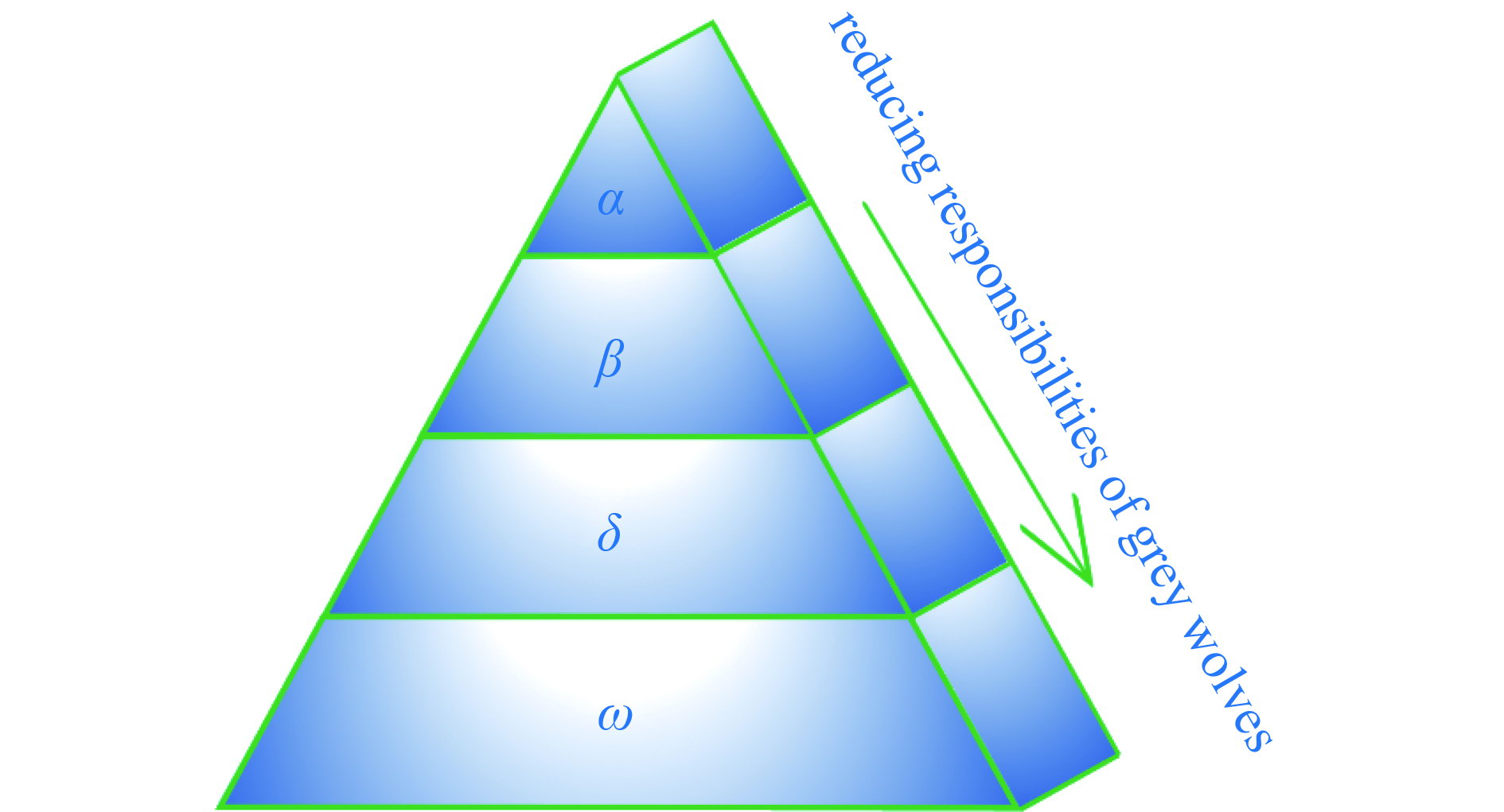
S MirjaliliS M MirjaliliA Lewis. Grey wolf optimizer. Advances in Engineering Software, 2014, 69: 46–61
51
B Li, H Yan, J Zhang, N Zhou. Compaction property prediction of mixed gangue backfill materials using hybrid intelligence models: A new approach. Construction & Building Materials, 2020, 247: 118633 https://doi.org/10.1016/j.conbuildmat.2020.118633
52
A Behnood, E M Golafshani. Predicting the compressive strength of silica fume concrete using hybrid artificial neural network with multi-objective grey wolves. Journal of Cleaner Production, 2018, 202: 54–64 https://doi.org/10.1016/j.jclepro.2018.08.065
53
E M Golafshani, A Behnood, M Arashpour. Predicting the compressive strength of normal and high-performance concretes using ANN and ANFIS hybridized with Grey Wolf Optimizer. Construction & Building Materials, 2020, 232: 117266 https://doi.org/10.1016/j.conbuildmat.2019.117266
54
R Gettu, J Izquierdo, G Pcc, A Josa. Development of high-strength self compacting concrete with fly ash: A four-step experimental methodology. In: Proceedings of 27th Conference on Our World in Concrete & Structures. Singapore CI-Premier Pte Ltd., 2002, 217–224
55
R Patel. Development of statistical models to simulate and optimize self-consolidating concrete mixes incorporating high volumes of fly ash. Thesis for the Master’s Degree. Toronto: Toronto Metropolitan University, 2004, 1802–1802
56
M Uysal, K Yilmaz. Effect of mineral admixtures on properties of self-compacting concrete. Cement and Concrete Composites, 2011, 33(7): 771–776 https://doi.org/10.1016/j.cemconcomp.2011.04.005
57
B Mahalingam, K Nagamani. Effect of processed fly ash on fresh and hardened properties of self compacting concrete. International Journal of Earth Sciences and Engineering, 2011, 4: 930–940
58
A F Bingöl, İ Tohumcu. Effects of different curing regimes on the compressive strength properties of self compacting concrete incorporating fly ash and silica fume. Materials & Design, 2013, 51: 12–18 https://doi.org/10.1016/j.matdes.2013.03.106
59
R Siddique, P Aggarwal, Y Aggarwal. Influence of water/powder ratio on strength properties of self-compacting concrete containing coal fly ash and bottom ash. Construction & Building Materials, 2012, 29: 73–81 https://doi.org/10.1016/j.conbuildmat.2011.10.035
60
M C Nepomuceno, L A Pereira-de-Oliveira, S M R Lopes. Methodology for the mix design of self-compacting concrete using different mineral additions in binary blends of powders. Construction & Building Materials, 2014, 64: 82–94 https://doi.org/10.1016/j.conbuildmat.2014.04.021
61
E Güneyisi, M Gesoğlu, E Özbay. Strength and drying shrinkage properties of self-compacting concretes incorporating multi-system blended mineral admixtures. Construction & Building Materials, 2010, 24(10): 1878–1887 https://doi.org/10.1016/j.conbuildmat.2010.04.015
62
P Krishnapal, R K Yadav, C Rajeev. Strength characteristics of self compacting concrete containing fly ash. Research Journal of Engineering Sciences, 2013, 9472: 1–5
63
S Dhiyaneshwaran, P Ramanathan, I Baskar, R Venkatasubramani. Study on durability characteristics of self-compacting concrete with fly ash. Jordan Journal of Civil Engineering, 2013, 7: 342–352
64
M Şahmaran, İ Ö Yaman, M Tokyay. Transport and mechanical properties of self consolidating concrete with high volume fly ash. Cement and Concrete Composites, 2009, 31(2): 99–106 https://doi.org/10.1016/j.cemconcomp.2008.12.003
65
I H Witten, E Frank. Data mining: Practical machine learning tools and techniques with Java implementations. SIGMOD Record, 2002, 31(1): 76–77 https://doi.org/10.1145/507338.507355
66
S Menard. Coefficients of determination for multiple logistic regression analysis. The American Statistician, 2000, 54(1), 17–24
67
C Willmott, K Matsuura. Advantages of the mean absolute error (mae) over the root mean square error (RMSE) in assessing average model performance. Climate Research, 2005, 30: 79–82 https://doi.org/10.3354/cr030079
68
J H Friedman. Greedy function approximation: A gradient boosting machine. Annals of Statistics, 2001, 29(5): 1189–1232 https://doi.org/10.1214/aos/1013203451
69
G Cybenko. Approximation by superpositions of a sigmoidal function. Mathematics of Control, Signals, and Systems, 1989, 2(4): 303–314 https://doi.org/10.1007/BF02551274
70
L Bounds, W Mathew. A multilayer perceptron network for the diagnosis of low back pain. In: Proceedings of IEEE 1988 International Conference on Neural Networks. New York: IEEE, 1988, 481–489
71
E T Mohamad, R S Faradonbeh, D J Armaghani, M Monjezi, M Z A Majid. An optimized ANN model based on genetic algorithm for predicting ripping production. Neural Computing & Applications, 2017, 28(S1): 393–406 https://doi.org/10.1007/s00521-016-2359-8
72
F SternM MusteM BeninatiW E Eichinger. Summary of Experimental Uncertainty Assessment Methodology with Example. No. 406. IIHR Report. 1999
73
N Vu-Bac, T Lahmer, X Zhuang, T Nguyen-Thoi, T Rabczuk. A software framework for probabilistic sensitivity analysis for computationally expensive models. Advances in Engineering Software, 2016, 100: 19–31 https://doi.org/10.1016/j.advengsoft.2016.06.005
74
N Vu-Bac, X Zhuang, T Rabczuk. Uncertainty quantification for mechanical properties of polyethylene based on fully atomistic model. Materials (Basel), 2019, 12(21): 3613 https://doi.org/10.3390/ma12213613
75
B Liu, N Vu-Bac, X Zhuang, T Rabczuk. Stochastic multiscale modeling of heat conductivity of Polymeric clay nanocomposites. Mechanics of Materials, 2020, 142: 103280 https://doi.org/10.1016/j.mechmat.2019.103280
76
H B Ly, L M Le, H T Duong, T C Nguyen, T A Pham, T T Le, V M Le, L Nguyen-Ngoc, B T Pham. Hybrid artificial intelligence approaches for predicting critical buckling load of structural members under compression considering the influence of initial geometric imperfections. Applied Sciences (Basel, Switzerland), 2019, 9(11): 2258 https://doi.org/10.3390/app9112258