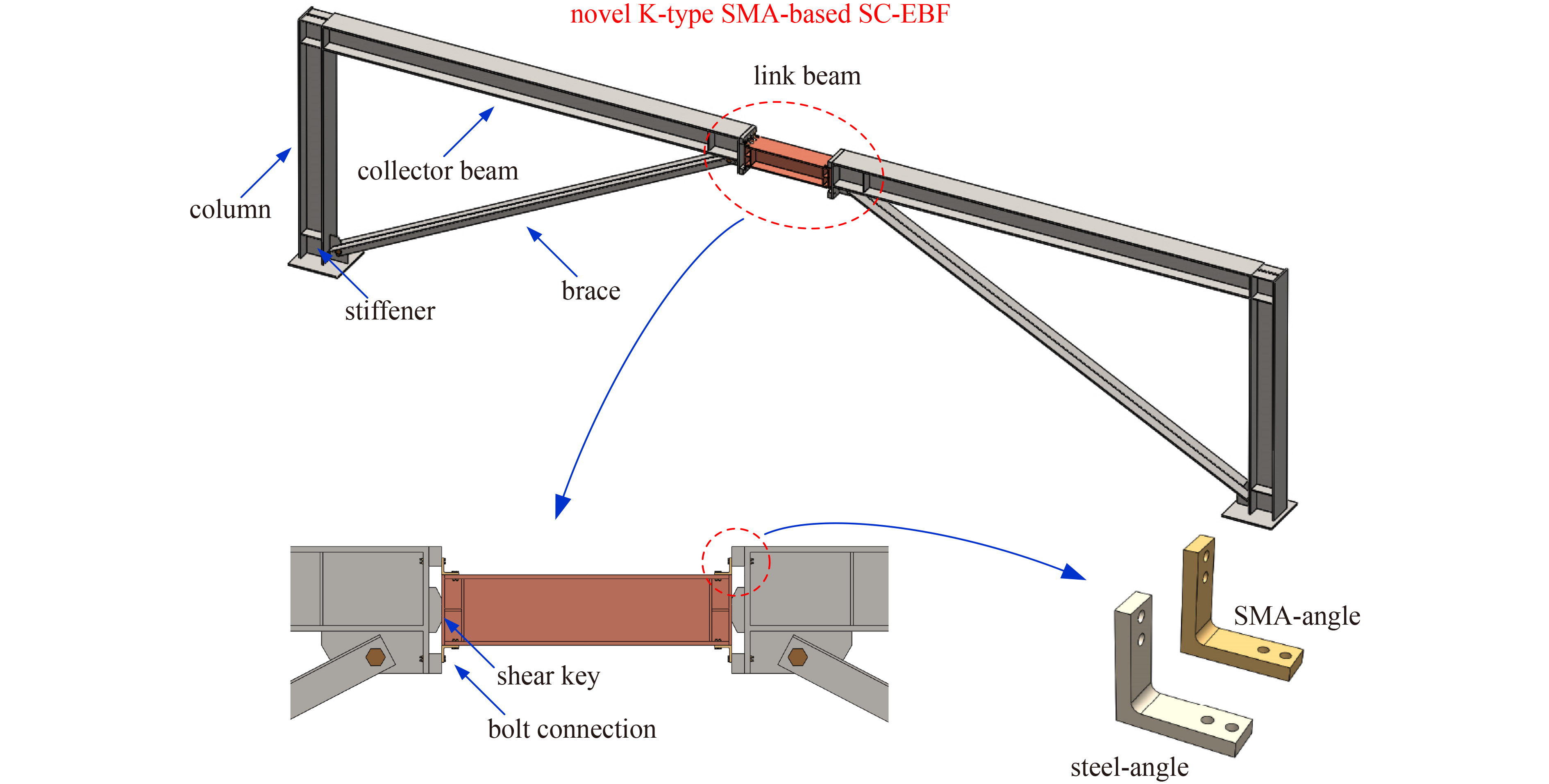
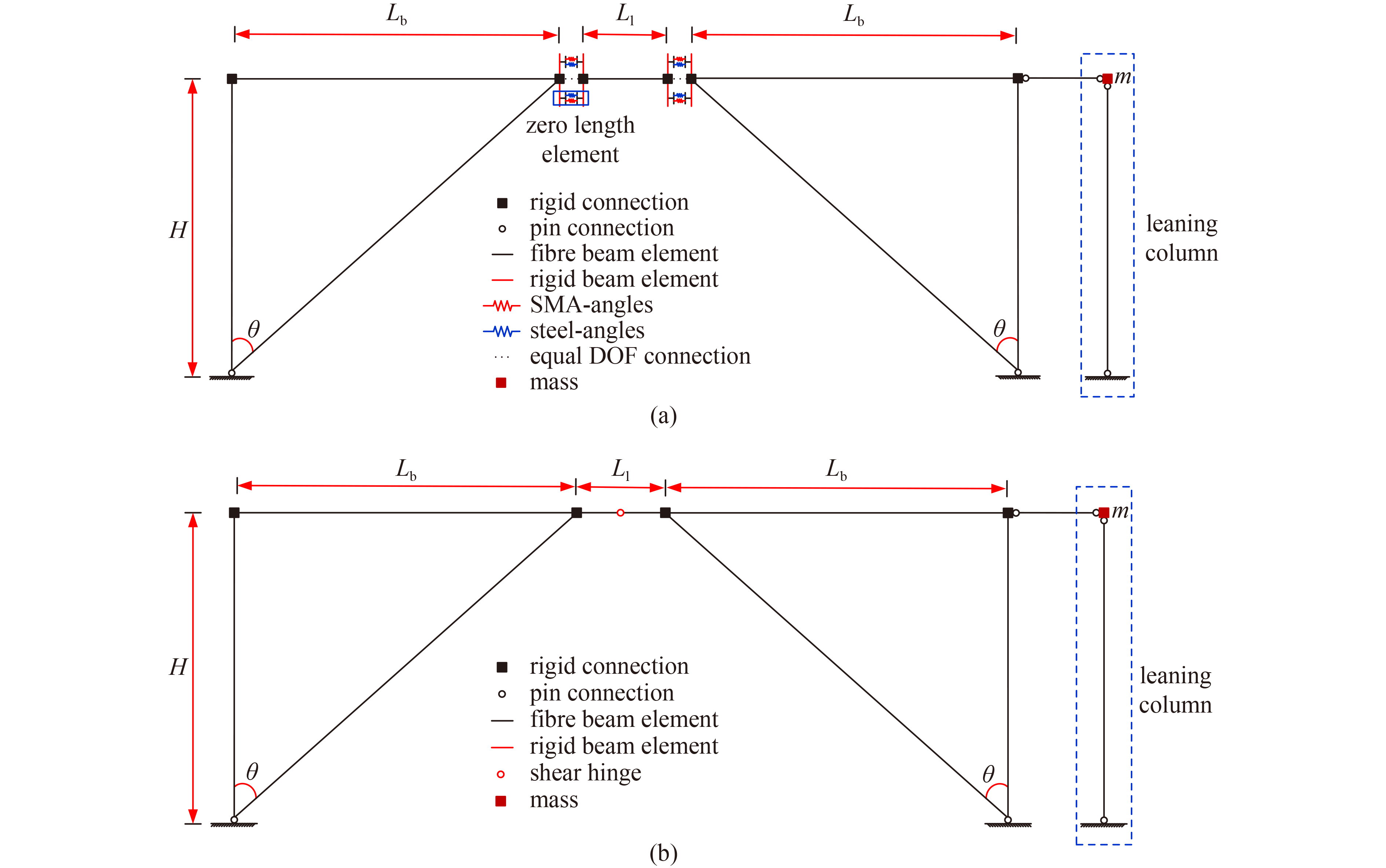
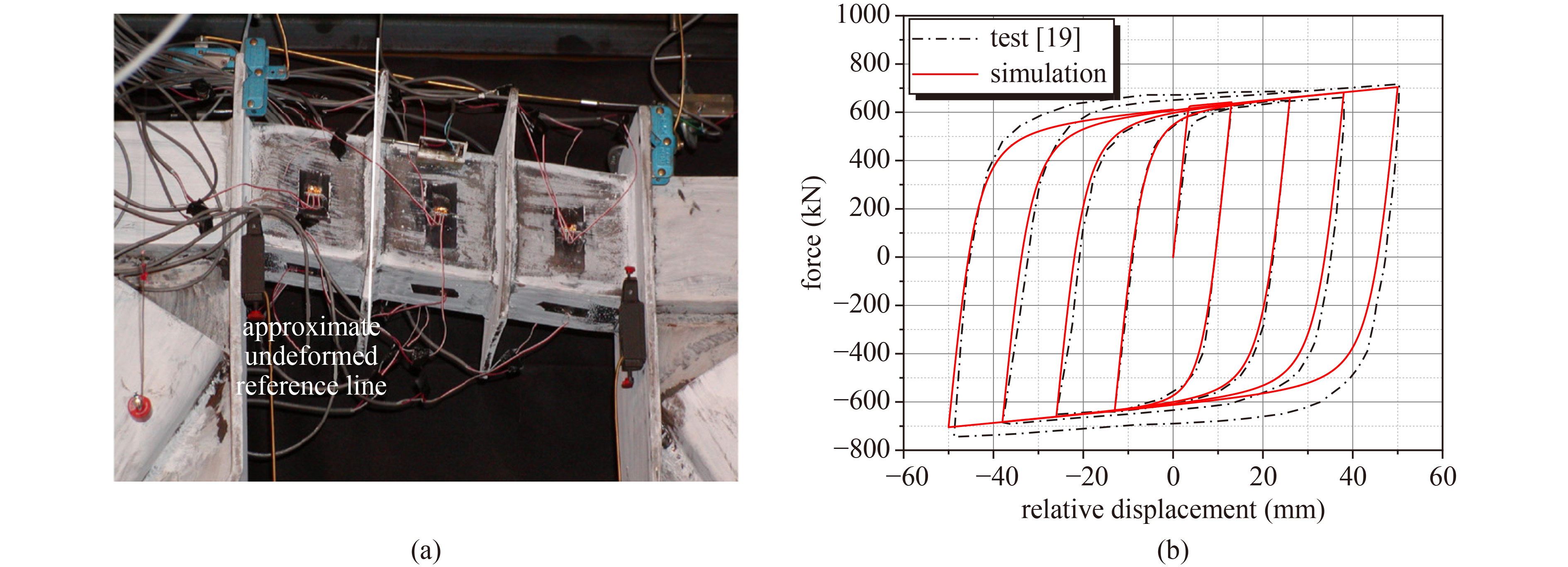
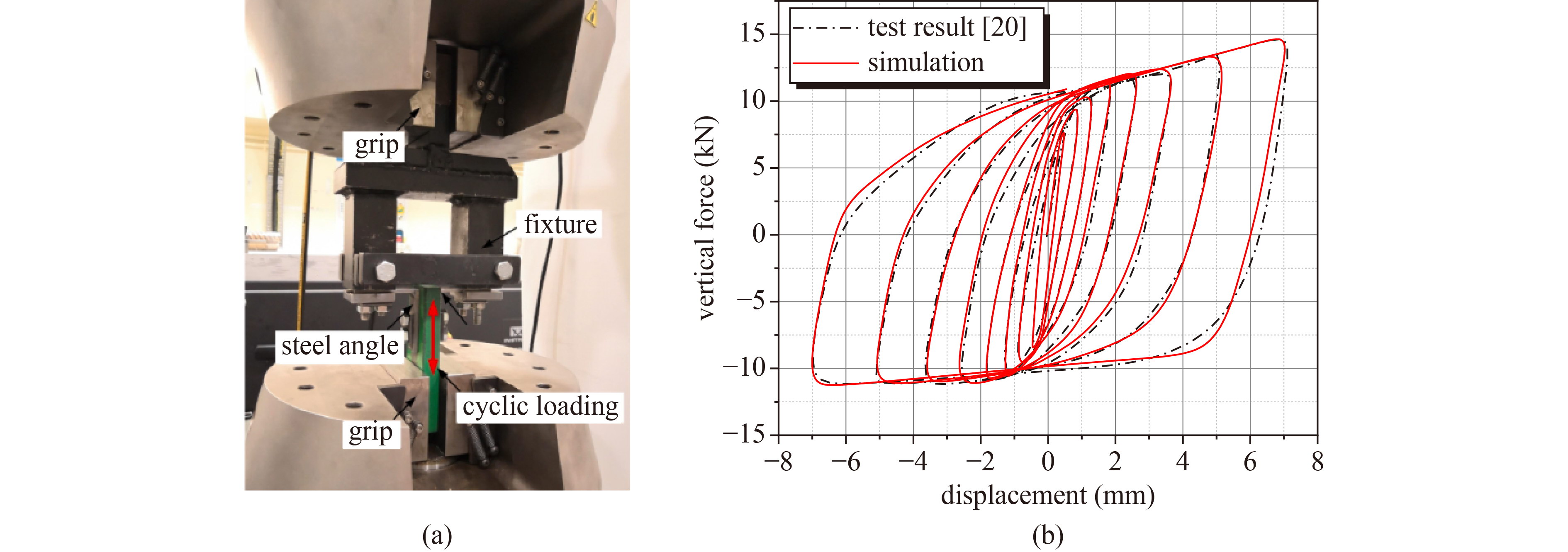
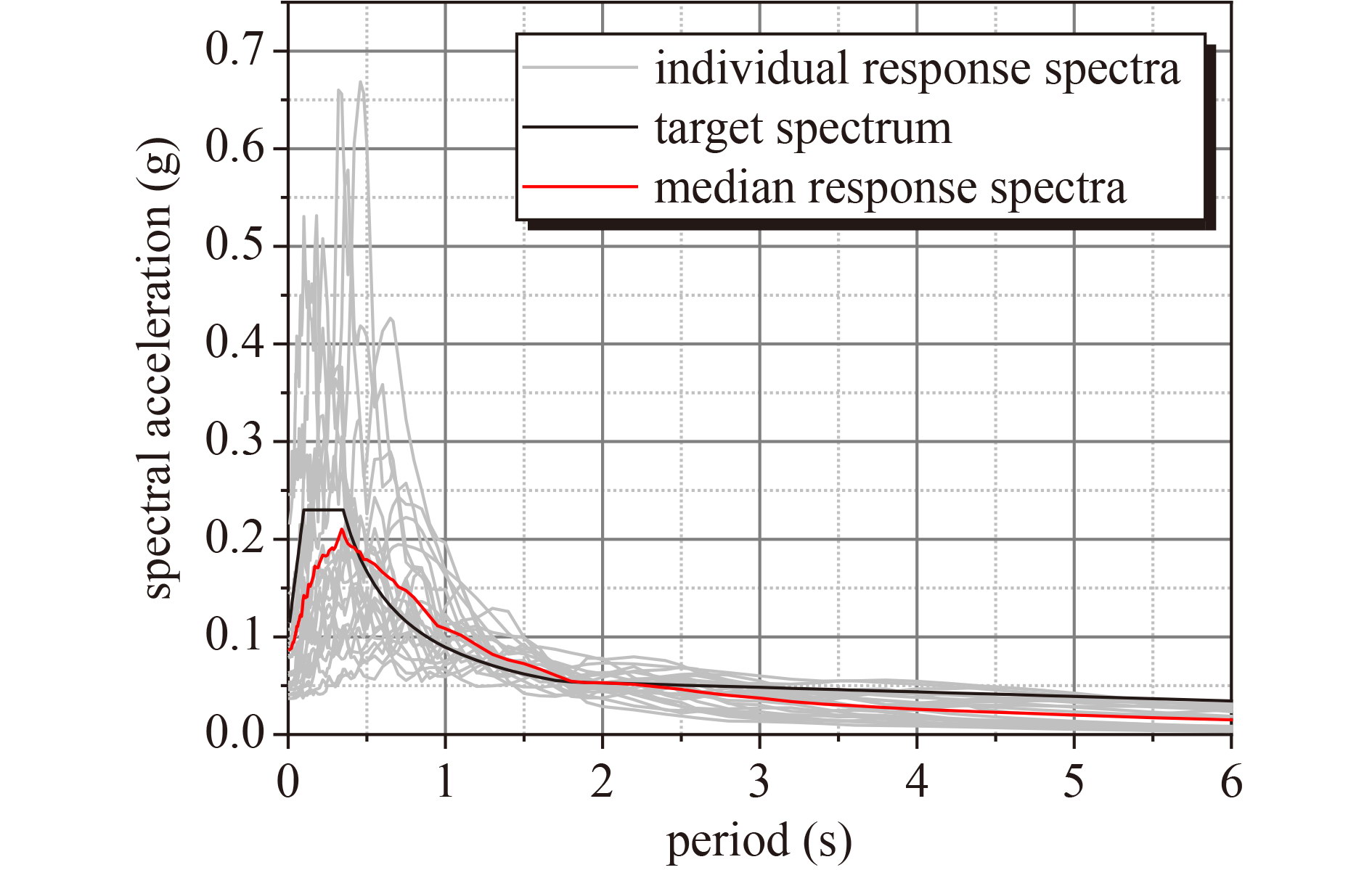
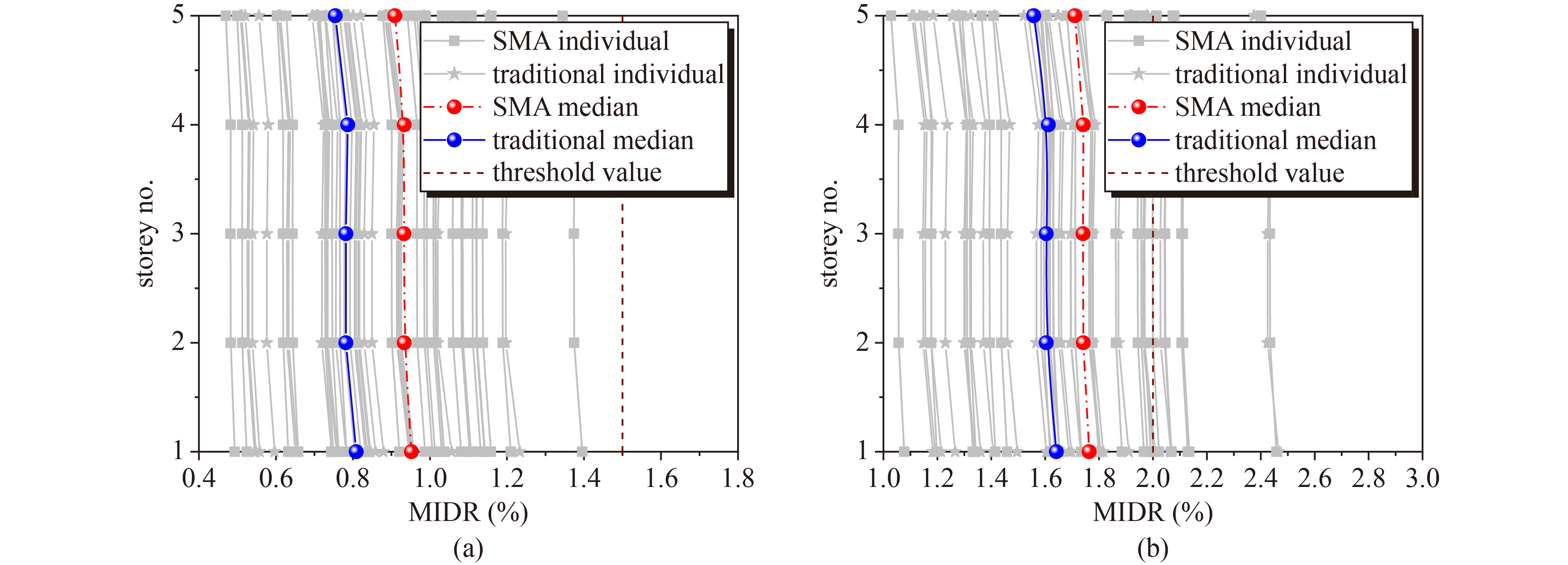
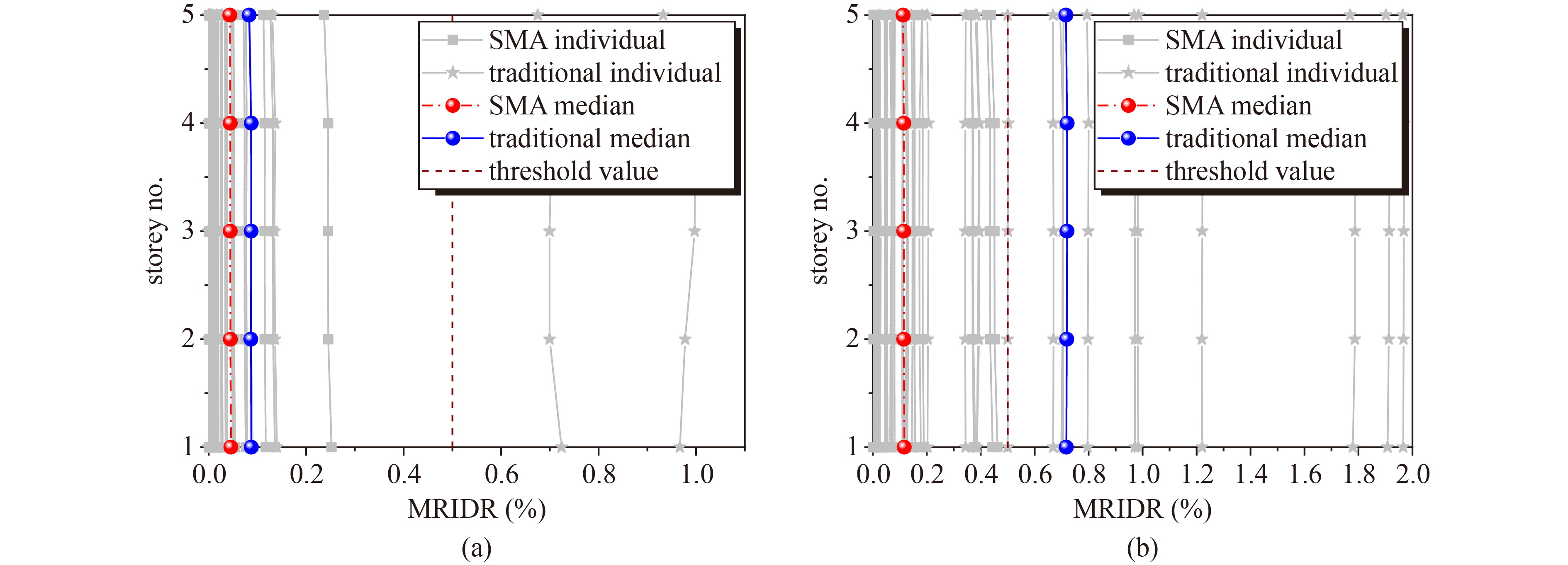
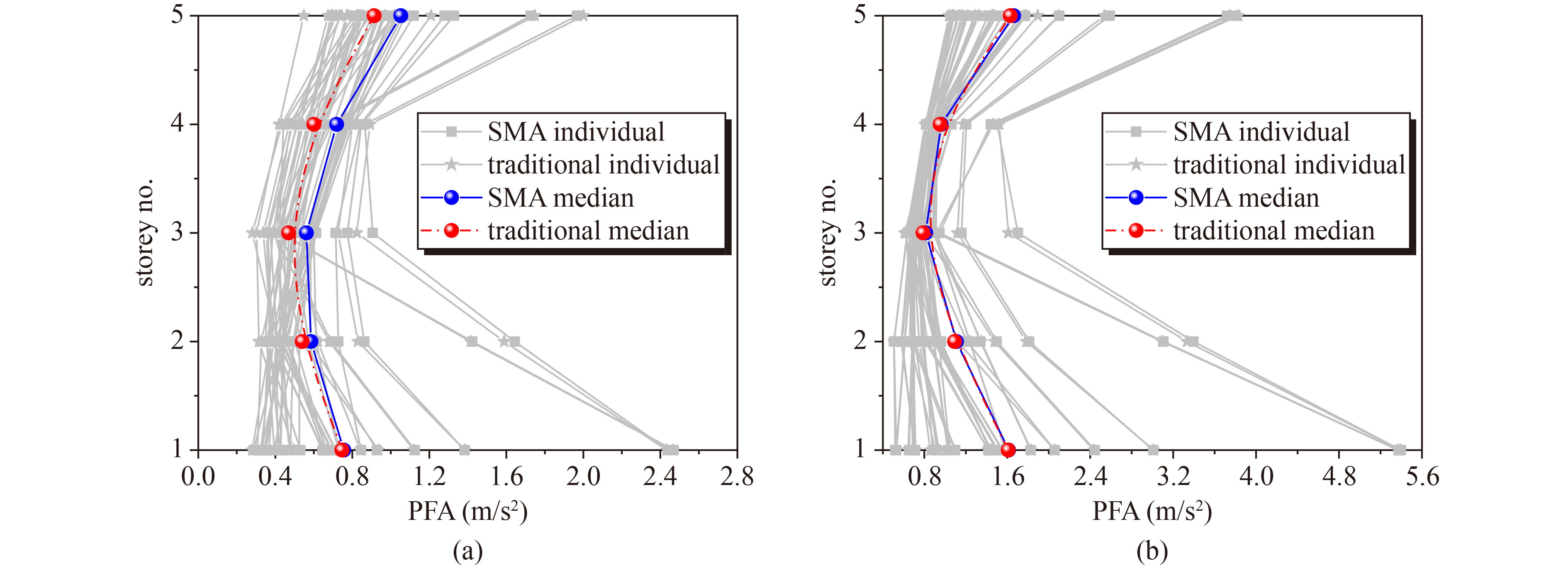
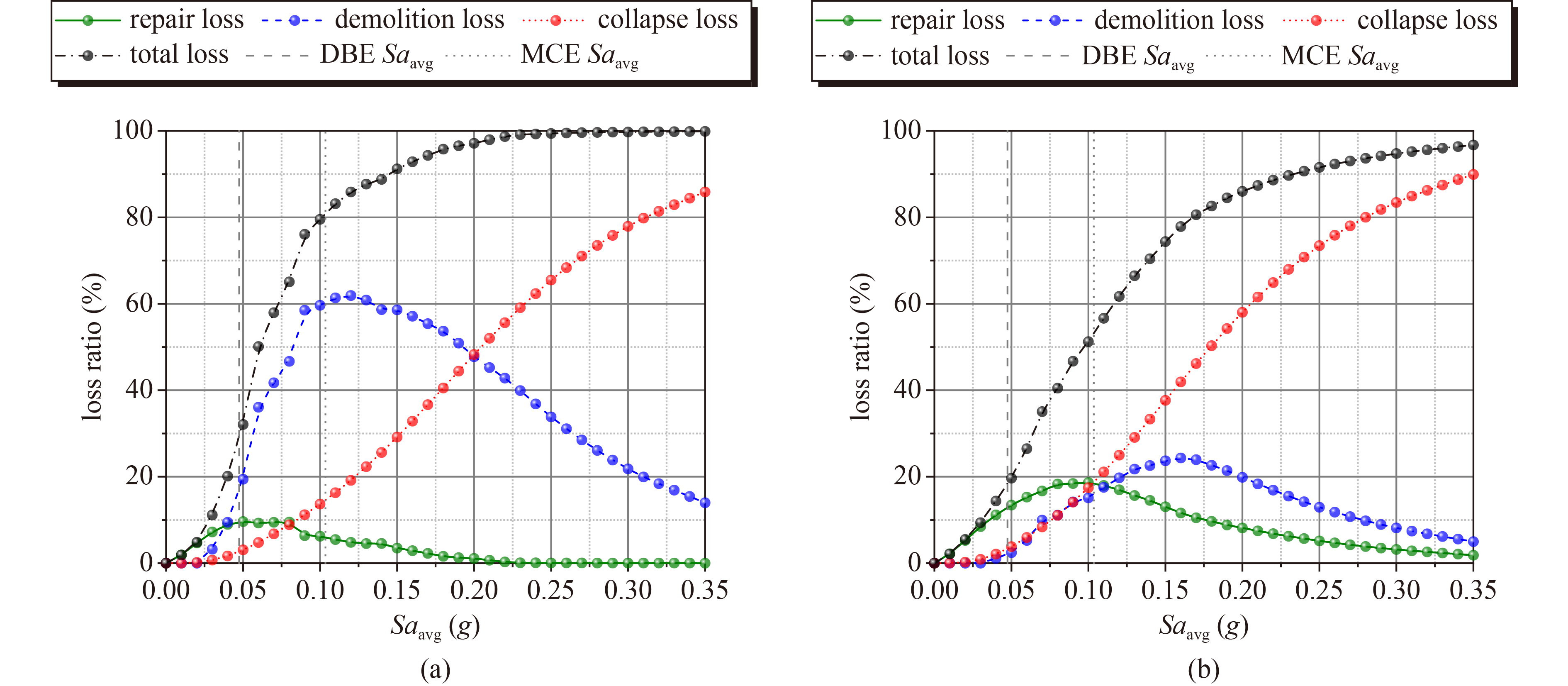
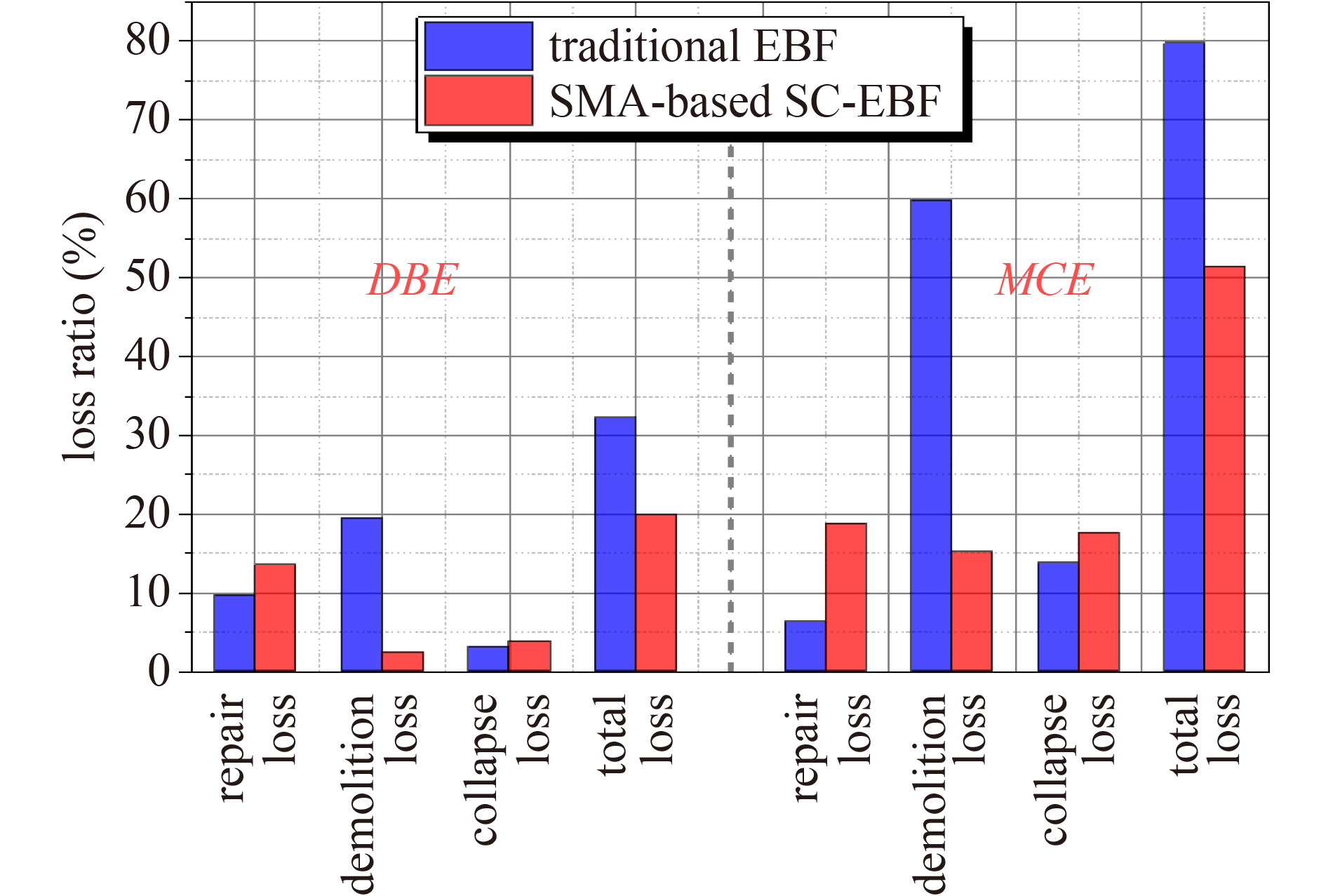
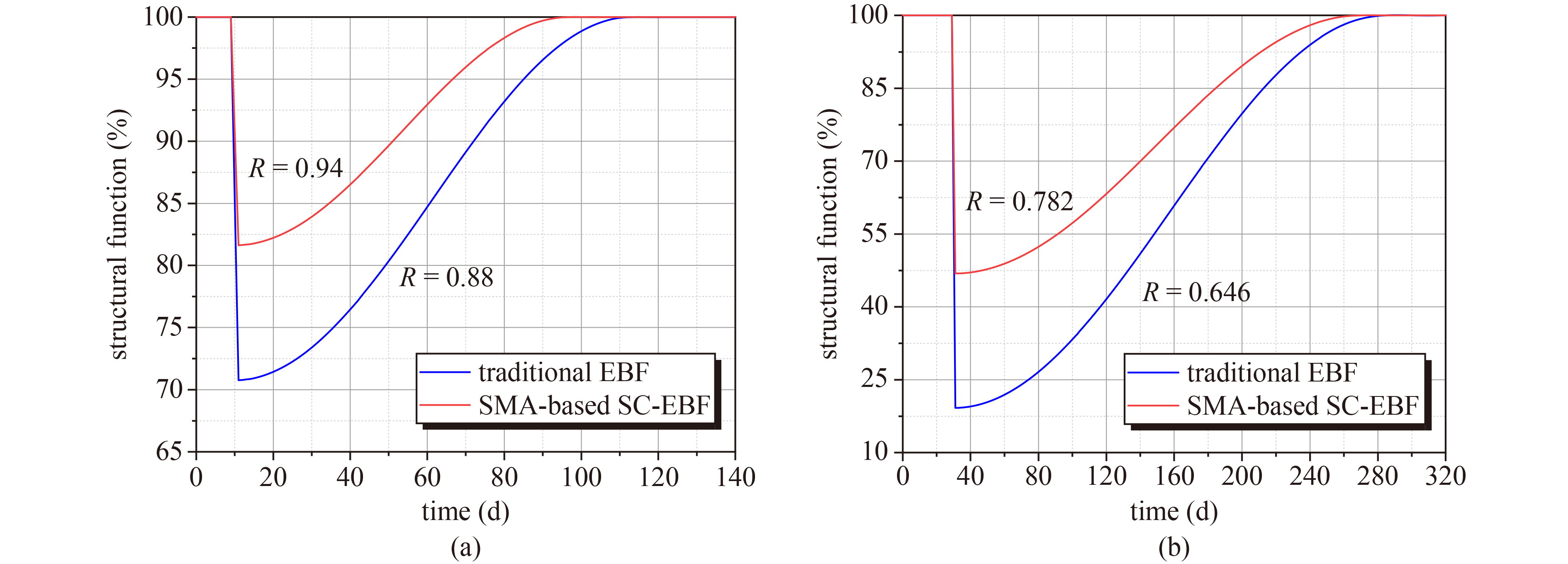
In this paper, the seismic responses and resilience of a novel K-type superelastic shape memory alloy (SMA) self-centring (SC) eccentrically braced frame (EBF) are investigated. The simulation models of the SMA-based SC-EBF and a corresponding equal-stiffness traditional EBF counterpart are first established based on some existing tests. Then twenty-four near-fault ground motions are used to examine the seismic responses of both EBFs under design basis earthquake (DBE) and maximum considered earthquake (MCE) levels. Structural fragility and loss analyses are subsequently conducted through incremental dynamic analyses (IDA), and the resilience of the two EBFs are eventually estimated. The resilience assessment basically follows the framework proposed by Federal Emergency and Management Agency (FEMA) with the additional consideration of the maximum residual inter-storey drift ratio (MRIDR). The novel SMA-based SC-EBF shows a much better resilience in the study and represents a promising attractive alternative for future applications.
J C Wilson, M J Wesolowsky. Shape memory alloys for seismic response modification: A state-of-the-art review. Earthquake Spectra, 2005, 21(2): 569–601 https://doi.org/10.1193/1.1897384
2
M Fujimoto, T Aoyagi, K Ukai, A Wada, K Saito. Structural characteristics of eccentric K-braced frames. Journal of Environmental Engineering, 1972, 195: 39–49
C Qiu, S Zhu. Shake table test and numerical study of self-centering steel frame with SMA braces. Earthquake Engineering & Structural Dynamics, 2017, 46(1): 117–137 https://doi.org/10.1002/eqe.2777
6
K L Deng, P Pan, S J Wu. Experimental study on a self-centering coupling beam eliminating the beam elongation effect. Structural Design of Tall and Special Buildings, 2016, 25(6): 265–277 https://doi.org/10.1002/tal.1257
7
L Tong, Y Zhang, X Zhou, A Keivan, R Li. Experimental and analytical investigation of D-type self-centering steel eccentrically braced frames with replaceable hysteretic damping devices. Journal of Structural Engineering, 2019, 145(1): 04018229 https://doi.org/10.1061/(ASCE)ST.1943-541X.0002235
8
M Aied Qissab Al-Janabi, T Y Yang. Seismic performance assessment of novel self-centering friction-based eccentrically braced frames. Engineering Structures, 2021, 241: 112456 https://doi.org/10.1016/j.engstruct.2021.112456
9
Z P Chen, S Zhu, H Yu, B Wang. Development of novel SMA-based D-type self-centering eccentrically braced frames. Engineering Structures, 2022, 260: 114228 https://doi.org/10.1016/j.engstruct.2022.114228
10
B Wang, S Y Zhu, H J Jiang. Earthquake resilient RC walls using shape memory alloy bars and replaceable energy dissipating devices. Smart Materials and Structures, 2019, 28(6): 065021 https://doi.org/10.1088/1361-665X/ab1974
11
B Wang, S Y Zhu. Seismic behavior of self-centering reinforced concrete wall enabled by superelastic shape memory alloy bars. Bulletin of Earthquake Engineering, 2018, 16(1): 479–502 https://doi.org/10.1007/s10518-017-0213-8
12
E P Prpov, K Kasai, M Engelhardt. Advances in design of eccentrically braced frames. Earthquake Spectra, 1987, 3(1): 43–55 https://doi.org/10.1193/1.1585418
13
C W Roeder, E P Popov. Eccentrically braced steel frames for earthquakes. Journal of the Structural Division, 1978, 104(3): 391–412 https://doi.org/10.1061/JSDEAG.0004875
J Erochko, C Christopoulos, R Tremblay, H Choi. Residual drift response of SMRFs and BRB frames in steel buildings designed according to ASCE 7-05. Journal of Structural Engineering, 2011, 137(5): 589–599 https://doi.org/10.1061/(ASCE)ST.1943-541X.0000296
16
J Xu, G Wu, D Feng, J J Fan. Probabilistic multi-hazard fragility analysis of RC bridges under earthquake-tsunami sequential events. Engineering Structures, 2021, 238: 112250 https://doi.org/10.1016/j.engstruct.2021.112250
17
X Cao, G Wu, D C Feng, Z Wang, H R Cui. Research on the seismic retrofitting performance of RC frames using SC-PBSPC BRBF substructures. Earthquake Engineering & Structural Dynamics, 2020, 49(8): 794–816 https://doi.org/10.1002/eqe.3265
18
C X Qiu, S Y Zhu. Performance-based seismic design of self-centering steel frames with SMA-based braces. Engineering Structures, 2017, 130: 67–82 https://doi.org/10.1016/j.engstruct.2016.09.051
19
J W Berman, M Bruneau. Experimental and analytical investigation of tubular links for eccentrically braced frames. Engineering Structures, 2007, 27: 1929–1938
20
B Wang, M Nishiyama, S Zhu, M Tani, H Jiang. Development of novel self-centering steel coupling beams without beam elongation for earthquake resilience. Engineering Structures, 2021, 232: 111827 https://doi.org/10.1016/j.engstruct.2020.111827
21
W Bin, S Zhu, K Chen, J Huang. Development of superelastic SMA angles as seismic-resistant self-centering devices. Engineering Structures, 2020, 218: 110836 https://doi.org/10.1016/j.engstruct.2020.110836
22
V Bertero, S A Mahin, R A Herrera. A seismic design implications of near fault San Fernando earthquake records. Earthquake Engineering & Structural Dynamics, 1978, 6(1): 31–42 https://doi.org/10.1002/eqe.4290060105
23
B A Bolt. Sesimic input motions for nonlinear structural analysis. ISET Journal of Earthquake Technology, 2004, 41: 223–232
24
P G Somerville, N F Smith, R W Graves, N A Abrahamson. Modification of empirical strong ground motion attenuation relations to include the amplitude and duration effects of rupture directivity. Seismological Research Letters, 1997, 68(1): 199–222 https://doi.org/10.1785/gssrl.68.1.199
25
F Mazza, A Vulcano. A nonlinear dynamic response of RC framed structures subjected to near-fault fround motions. Bulletin of Earthquake Engineering, 2010, 8(6): 1331–1350 https://doi.org/10.1007/s10518-010-9180-z
26
E Liossatou, M Fardis. Near-fault effects on residual displacements of RC structures. Earthquake Engineering & Structural Dynamics, 2016, 45(9): 1391–1409 https://doi.org/10.1002/eqe.2712
27
K Du, F Cheng, J Bai, S Jin. Seismic performance quantification of buckling-restrained braced RC frame structure under near-fault ground motions. Engineering Structures, 2020, 211: 110447 https://doi.org/10.1016/j.engstruct.2020.110447
28
S Hu, W Wang. Seismic design and performance evaluation of low-rise steel buildings with self-centering energy-absorbing dual rocking core systems under far-field and near-fault ground motions. Journal of Constructional Steel Research, 2021, 179: 106545 https://doi.org/10.1016/j.jcsr.2021.106545
29
50011–2010 GB. Code for Seismic Design of Buildings. Beijing: Ministry of Housing and Urban-Rural Development of the People’s Republic of China, 2010 (in Chinese)
30
X Cao, D Feng, G Wu. Pushover-based probabilistic seismic capacity assessment of RCFs retrofitted with PBSPC BRBF sub-structures. Engineering Structures, 2021, 234: 111919 https://doi.org/10.1016/j.engstruct.2021.111919
31
M Bruneau, S E Chang, R T Eguchi, G C Lee, T D O’rourke, A M Reinhorn, M Shinozuka, K Tierney, W A Wallace, Winterfeldt D von. A framework to quantitatively assess and enhance the seismic resilience of communities. Earthquake Spectra, 2003, 19(4): 733–752 https://doi.org/10.1193/1.1623497
32
G P Cimellaro, A M Reinhorn, M Bruneau. Framework for analytical quantification of disaster resilience. Engineering Structures, 2010, 32(11): 3639–3649 https://doi.org/10.1016/j.engstruct.2010.08.008
33
G P Cimellaro, A M Reinhorn, M Bruneau. Seismic resilience of a hospital system. Structure and Infrastructure Engineering, 2010, 6: 127–144 https://doi.org/10.1080/15732470802663847
34
M H Hazus. Multi-Hazard Loss Estimation Methodology-Earthquake Model. Washington, D.C.: Federal Emergency Management Agency, 2003
35
S Hu, W Wang, B Qu. Seismic economic losses in mid-rise steel buildings with conventional and emerging lateral force resisting systems. Engineering Structures, 2020, 204: 110021 https://doi.org/10.1016/j.engstruct.2019.110021
36
J Xu, G Wu, D Feng. Near fault ground motion effects on seismic resilience of frame structures damaged in Wenchuan earthquake. Structure and Infrastructure Engineering, 2020, 16(10): 1347–1363 https://doi.org/10.1080/15732479.2019.1704801
37
C A Cornell, F Jalayer, R O Hamburger, D A Foutch. Probabilistic basis for 2000 SAC federal emergency management agency steel moment frame guidelines. Journal of Structural Engineering, 2002, 128(4): 526–533 https://doi.org/10.1061/(ASCE)0733-9445(2002)128:4(526
38
Zp Chen, Dc Feng, G Wu. Seismic performance and design process majorization of a reinforced concrete grid frame wall. Journal of Earthquake Engineering, 2022, 26(5): 2381–2410
39
Z P Chen, S Zhu, K J Ma, G Wu. Probabilistic seismic capacity analysis of a novel mid-rise large-span cassette structure using multidirectional pushover method. Journal of Earthquake Engineering, 2021, 1–26 https://doi.org/10.1080/13632469.2021.1999343
40
Zh Ye, D Feng, G Wu. Seismic control of modularized suspended structures with optimal vertical distributions of the secondary structure parameters. Engineering Structures, 2019, 183: 160–179 https://doi.org/10.1016/j.engstruct.2018.12.099
41
Zh Ye, A Shafieezadeh, H Sezen, G Wu, D C Feng. Cross-level fragility analysis of modularized suspended buildings based on experimentally validated numerical models. Structural Design of Tall and Special Buildings, 2020, 29(14): e1778
42
Z P ChenS Y ZhuK J MaG Wu, Probabilistic seismic capacity analysis of a novel mid-rise large-span cassette structure using multidirectional pushover method. Journal of Earthquake Engineering, 2021: 199343
43
J Qian, Y Dong. Multi-criteria decision making for seismic intensity measure selection considering uncertainty. Earthquake Engineering & Structural Dynamics, 2020, 49(11): 1095–1114 https://doi.org/10.1002/eqe.3280