|
|
|
Effects of time-varying liquid bridge forces on rheological properties, and resulting extrudability and constructability of three-dimensional printing mortar |
Peng ZHI1, Yu-Ching WU1( ), Timon RABCZUK2 ), Timon RABCZUK2 |
1. Department of Structural Engineering, Tongji University, Shanghai 200092, China
2. Institute of Structural Mechanics, Bauhaus University of Weimar, Weimar 99423, Germany |
|
|
|
|
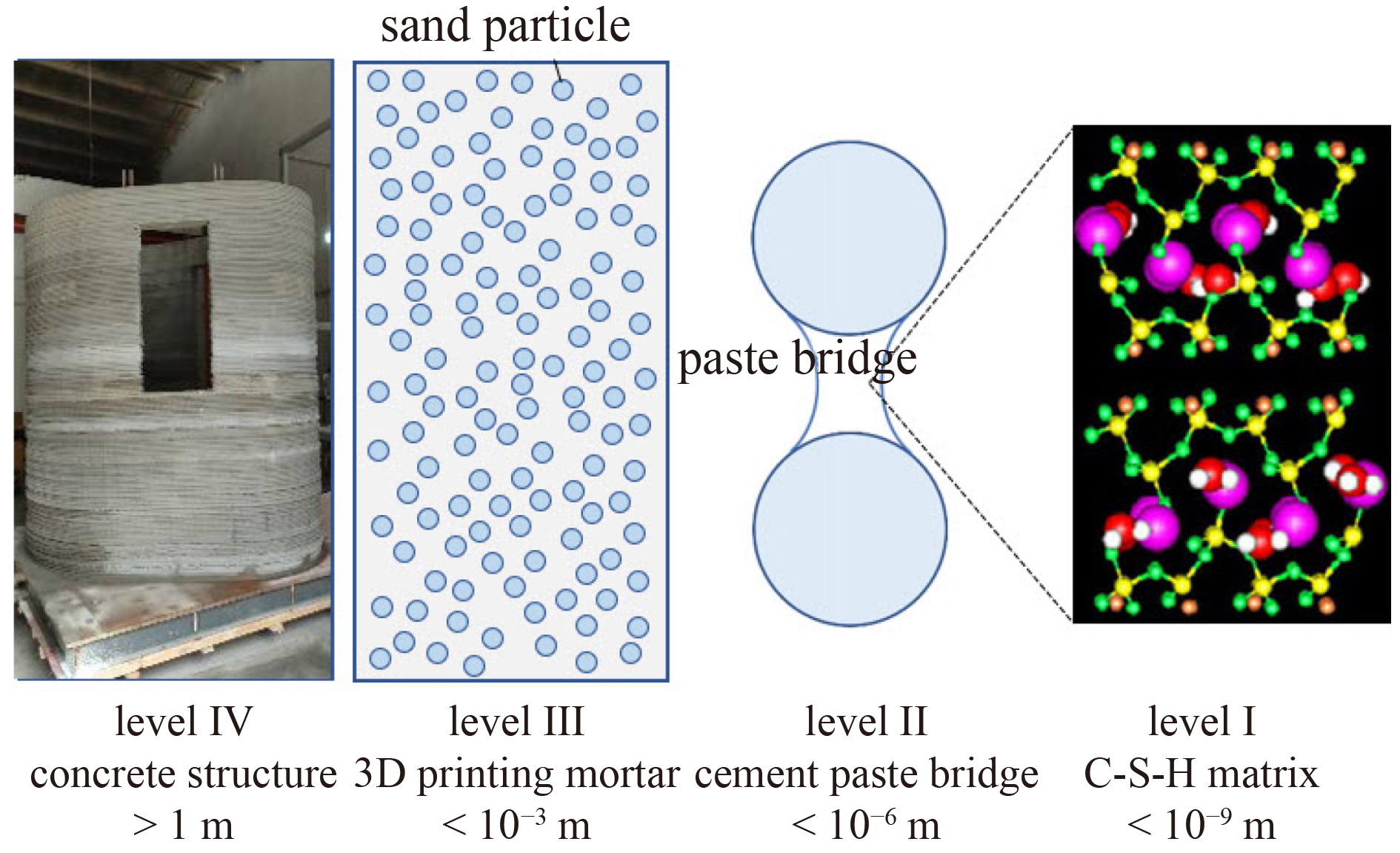
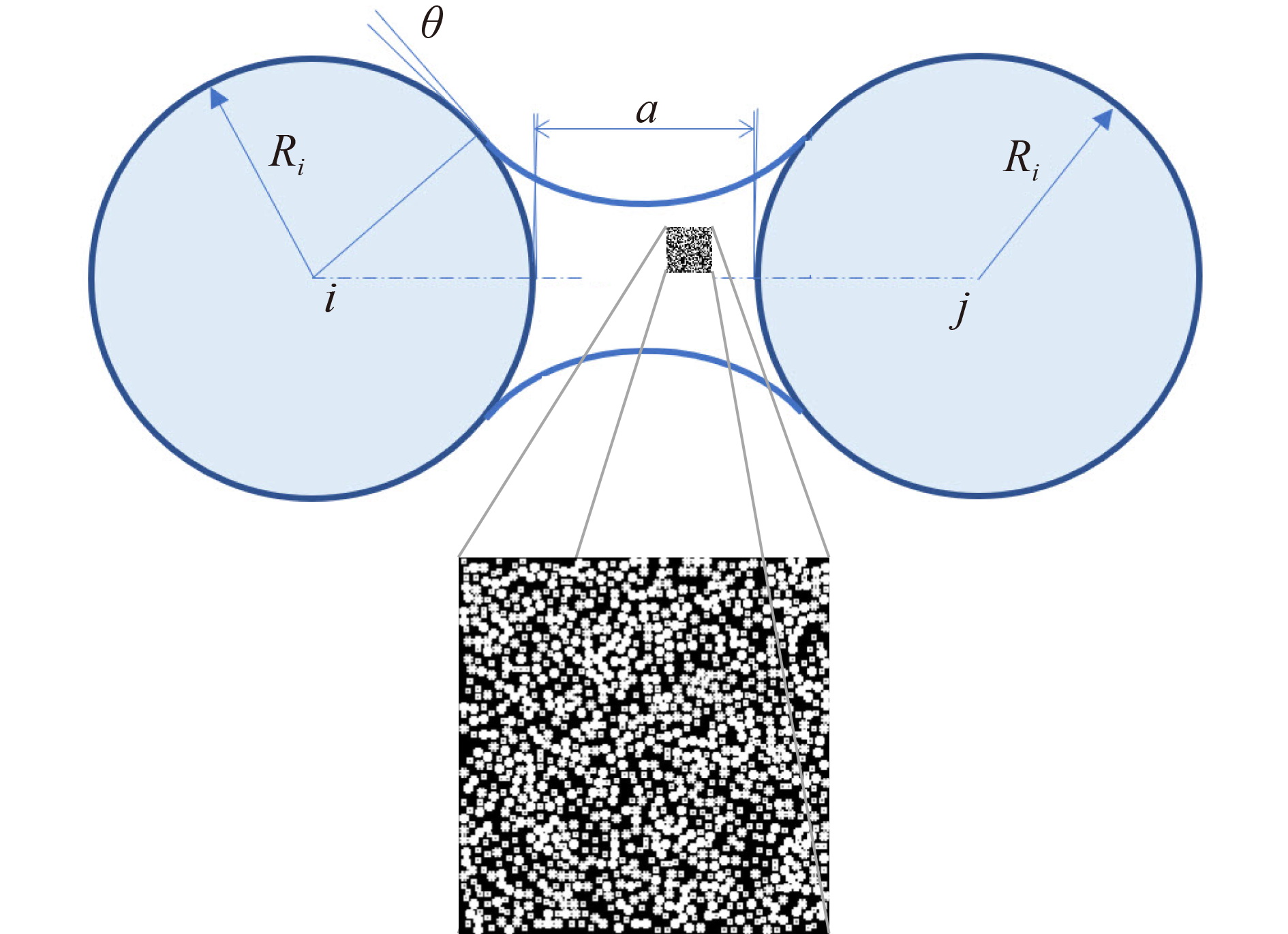
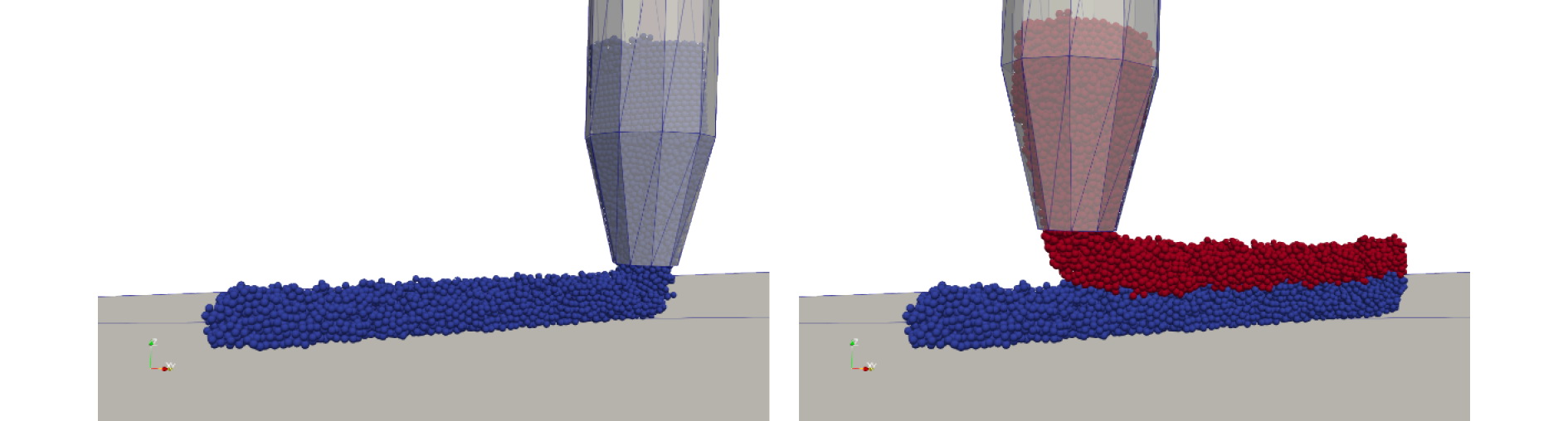
Abstract Extrudability and constructability are two important, yet contradictory issues pertaining to the construction of three-dimensional (3D) printing concrete. Extrudability is easily achieved when 3D printing cement mortar has a high water content and low cohesion, but the printed structure is easily collapsible. However, a 3D printing cement mortar with a low water content and high cohesion has a relatively stable printed structure although the cement mortar might not be extrudable. This study proposes a particle-based method to simulate 3D printing mortar extrusion and construction as an overall planning tool for building design. First, a discrete element model with time-varying liquid bridge forces is developed to investigate the microscopic effects of these forces on global rheological properties. Next, a series of numerical simulations relevant to 3D printable mortar extrudability and constructability are carried out. The study demonstrates that the effects of time-varying liquid bridge forces on rheological properties and the resulting extrudability and constructability of 3D printing mortar are considerable. Furthermore, an optimized region that satisfies both the extrusion and construction requirements is provided for 3D printing industry as a reference.
|
| Keywords
particle-based simulation
liquid bridge force
rheological property
3D printing mortar
extrudability
constructability
|
|
Corresponding Author(s):
Yu-Ching WU
|
|
Just Accepted Date: 04 July 2023
Online First Date: 27 November 2023
Issue Date: 21 December 2023
|
|
| 1 |
I Vizotto. Computational generation of free-form shells in architectural design and civil engineering. Automation in Construction, 2010, 19(8): 1087–1105
https://doi.org/10.1016/j.autcon.2010.09.004
|
| 2 |
B Khoshnevis, R Russell, H Kwon, S Bukkapatnam. Crafting large prototypes. IEEE Robotics & Automation Magazine, 2001, 8(3): 33–42
https://doi.org/10.1109/100.956812
|
| 3 |
B Khoshnevis, S Bukkapatnam, H Kwon, J Saito. Experimental investigation of contour crafting using ceramics materials. Rapid Prototyping Journal, 2001, 7(1): 32–42
https://doi.org/10.1108/13552540110365144
|
| 4 |
B Khoshnevis. Automated construction by contour crafting—Related robotics and information technologies. Automation in Construction, 2004, 13(1): 5–19
https://doi.org/10.1016/j.autcon.2003.08.012
|
| 5 |
B Khoshnevis, X Yuan, B Zahiri, J Zhang, B Xia. Construction by contour crafting using sulfur concrete with planetary applications. Rapid Prototyping Journal, 2016, 22(5): 848–856
https://doi.org/10.1108/RPJ-11-2015-0165
|
| 6 |
B Zareiyan, B Khoshnevis. Interlayer adhesion and strength of structures in Contour Crafting—Effects of aggregate size, extrusion rate, and layer thickness. Automation in Construction, 2017, 81: 112–121
https://doi.org/10.1016/j.autcon.2017.06.013
|
| 7 |
A Kazemian, X Yuan, E Cochran, B Khoshnevis. Cementitious materials for construction-scale 3D printing: Laboratory testing of fresh printing mixture. Construction & Building Materials, 2017, 145: 639–647
https://doi.org/10.1016/j.conbuildmat.2017.04.015
|
| 8 |
S Lim, R A Buswell, T T Le, S A Austin, A G F Gibb, T Thorpe. Developments in construction-scale additive manufacturing processes. Automation in Construction, 2012, 21: 262–268
https://doi.org/10.1016/j.autcon.2011.06.010
|
| 9 |
P Bosscher, R L II Williams, L S Bryson, D Castro-Lacouture. Cable-suspended robotic contour crafting system. Automation in Construction, 2007, 17(1): 45–55
https://doi.org/10.1016/j.autcon.2007.02.011
|
| 10 |
R Soar, D Andreen. The role of additive manufacturing and physiomimetic computational design for digital construction. Architectural Design, 2012, 82(2): 126–135
https://doi.org/10.1002/ad.1389
|
| 11 |
T T Le, S A Austin, S Lim, R A Buswell, A G F Gibb, T Thorpe. Mix design and fresh properties for high-performance printing concrete. Materials and Structures, 2012, 45(8): 1221–1232
https://doi.org/10.1617/s11527-012-9828-z
|
| 12 |
G W Ma, L Wang, Y Ju. State-of-the-art of 3D printing technology of cementitious material—An emerging technique for construction. Science China Technological Sciences, 2018, 61(4): 475–495
https://doi.org/10.1007/s11431-016-9077-7
|
| 13 |
B Berman. 3-D printing: The new industrial revolution. Business Horizons, 2012, 55(2): 155–162
https://doi.org/10.1016/j.bushor.2011.11.003
|
| 14 |
G Cesaretti, E Dini, X De Kestelier, V Colla, L Pambaguian. Building components for an outpost on the Lunar soil by means of a novel 3D printing technology. Acta Astronautica, 2014, 93: 430–450
https://doi.org/10.1016/j.actaastro.2013.07.034
|
| 15 |
R Bogue. 3D printing: The dawn of a new era in manufacturing? Assembly Automation, 2013, 33(4): 307–311
|
| 16 |
F Bos, R Wolfs, Z Ahmed, T Salet. Additive manufacturing of concrete in construction: Potentials and challenges of 3D concrete printing. Virtual and Physical Prototyping, 2016, 11(3): 209–225
https://doi.org/10.1080/17452759.2016.1209867
|
| 17 |
R J M Wolfs, F P Bos, T A M Salet. Early age mechanical behavior of 3D printed concrete: Numerical modeling and experimental testing. Cement and Concrete Research, 2018, 106: 103–116
https://doi.org/10.1016/j.cemconres.2018.02.001
|
| 18 |
C B Costanzi, Z Y Ahmed, H R Schipper, F P Bos, U Knaack, R J M Wolfs. 3D printing concrete on temporary surfaces: The design and fabrication of a concrete shell structure. Automation in Construction, 2018, 94: 395–404
https://doi.org/10.1016/j.autcon.2018.06.013
|
| 19 |
D Asprone, C Menna, F P Bos, T A M Salet, J Mata-Falcón, W Kaufmann. Rethinking reinforcement for digital fabrication with concrete. Cement and Concrete Research, 2018, 112: 111–121
https://doi.org/10.1016/j.cemconres.2018.05.020
|
| 20 |
T A M Salet, Z Y Ahmed, F P Bos, H L M Laagland. Design of a 3D printed concrete bridge by testing. Virtual and Physical Prototyping, 2018, 13(3): 222–236
https://doi.org/10.1080/17452759.2018.1476064
|
| 21 |
K Krenzer, V Mechtcherine, U Palzer. Simulating mixing processes of fresh concrete using the discrete element method (DEM) under consideration of water addition and changes in moisture distribution. Cement and Concrete Research, 2019, 115: 274–282
https://doi.org/10.1016/j.cemconres.2018.05.012
|
| 22 |
J Kruger, S Zeranka, G van Zijl. An ab initio approach for thixotropy characterisation of (nanoparticle-infused) 3D printable concrete. Construction & Building Materials, 2019, 224: 372–386
https://doi.org/10.1016/j.conbuildmat.2019.07.078
|
| 23 |
J Kruger, S Cho, S Zeranka, C Viljoen, G van Zijl. 3D concrete printer parameter optimisation for high rate digital construction avoiding plastic collapse. Composites. Part B, Engineering, 2020, 183: 107660
https://doi.org/10.1016/j.compositesb.2019.107660
|
| 24 |
V Mechtcherine, J Grafe, V N Nerella, E Spaniol, M Hertel, U Füssel. 3D-printed steel reinforcement for digital concrete construction—Manufacture, mechanical properties and bond behaviour. Construction & Building Materials, 2018, 179: 125–137
https://doi.org/10.1016/j.conbuildmat.2018.05.202
|
| 25 |
B Nematollahi, P Vijay, J Sanjayan, A Nazari, M Xia, V Naidu Nerella, V Mechtcherine. Effect of polypropylene fibre addition on properties of geopolymers made by 3D printing for digital construction. Materials, 2018, 11(12): 2352
https://doi.org/10.3390/ma11122352
|
| 26 |
Y W D Tay, B Panda, S C Paul, N A N Mhamed, M J Tan, K F Leong. 3D printing trends in building and construction industry: A review. Virtual and Physical Prototyping, 2017, 12(3): 261–276
|
| 27 |
H M Jennings, J W Bullard, J J Thomas, J E Andrade, J J Chen, G W Scherer. Characterization and modeling of pores and surfaces in cement paste: Correlations to processing and properties. Journal of Advanced Concrete Technology, 2008, 6(1): 5–29
https://doi.org/10.3151/jact.6.5
|
| 28 |
A Gladkyy, R Schwarze. Comparison of different capillary bridge models for application in the discrete element method. Granular Matter, 2014, 16(6): 911–920
https://doi.org/10.1007/s10035-014-0527-z
|
| 29 |
S ClavetP BeaudoinP Poulin. Particle-based viscoelastic fluid simulation. In: Proceedings of the 2005 ACM SIGGRAPH/Eurographics Symposium on Computer Animation. New York: Association for Computing Machinery, 2005, 29–31
|
| 30 |
T Takahashi, T Nishita, I Fujishiro. Fast simulation of viscous fluids with elasticity and thermal conductivity using position-based dynamics. Computers & Graphics, 2014, 43: 21–30
https://doi.org/10.1016/j.cag.2014.06.002
|
| 31 |
B Adams, M Pauly, R Keiser, L J Guibas. Adaptively sampled particle fluids. ACM Transactions on Graphics, 2007, 26(3): 48
https://doi.org/10.1145/1276377.1276437
|
| 32 |
N Akinci, M Ihmsen, G Akinci, B Solenthaler, M Teschner. Versatile rigid-fluid coupling for incompressible SPH. ACM Transactions on Graphics, 2012, 31(4): 62
https://doi.org/10.1145/2185520.2185558
|
| 33 |
R Ando, N Thürey, C Wojtan. Highly adaptive liquid simulations on tetrahedral meshes. ACM Transactions on Graphics, 2013, 32(4): 103
https://doi.org/10.1145/2461912.2461982
|
| 34 |
A W Bargteil, C Wojtan, J K Hodgins, G Turk. A finite element method for animating large viscoplastic flow. ACM Transactions on Graphics, 2007, 26(3): 16
https://doi.org/10.1145/1276377.1276397
|
| 35 |
M Becker, H Tessendorf, M Teschner. Direct forcing for Lagrangian rigid−fluid coupling. IEEE Transactions on Visualization and Computer Graphics, 2009, 15(3): 493–503
https://doi.org/10.1109/TVCG.2008.107
|
| 36 |
M Bergou, B Audoly, E Vouga, M Wardetzky, E Grinspun. Discrete viscous threads. ACM Transactions on Graphics, 2010, 29(4): 116
https://doi.org/10.1145/1778765.1778853
|
| 37 |
P Clausen, M Wicke, J R Shewchuk, J F O’Brien. Simulating liquids and solid−liquid interactions with Lagrangian meshes. ACM Transactions on Graphics, 2013, 32(2): 17
https://doi.org/10.1145/2451236.2451243
|
| 38 |
Y C Wu, J Z Xiao, C M Zhu. The compaction of time-dependent viscous granular materials considering inertial forces. Acta Mechanica Solida Sinica, 2011, 24(6): 495–505
https://doi.org/10.1016/S0894-9166(11)60049-9
|
| 39 |
Y C Wu, B Yang. An overview of numerical methods for incompressible viscous flow with moving particles. Archives of Computational Methods in Engineering, 2019, 26(4): 1255–1282
https://doi.org/10.1007/s11831-018-9277-0
|
| 40 |
L Sorelli, G Constantinides, F J Ulm, F Toutlemonde. The nano-mechanical signature of ultra high performance concrete by statistical nanoindentation techniques. Cement and Concrete Research, 2008, 38(12): 1447–1456
https://doi.org/10.1016/j.cemconres.2008.09.002
|
| 41 |
V SmilauerV AngelidakisE CatalanoR CaulkB ChareyreW ChèvremontS DorofeenkoJ DuriezN DyckJ EliasB ErA EulitzA GladkyN GuoC JakobF KneibJ KozickiD MarzouguiR MaurinC ModeneseG PekmeziL ScholtèsL SibilleJ StranskyT SweijenK ThoeniC Yuan. Yade Documentation. 3rd ed. 2021
|
| 42 |
P Yang, S Nair, N Neithalath. Discrete element simulations of rheological response of cementitious binders as applied to 3D printing. In: Wangler T, Flatt R J, eds. The First RILEM International Conference on Concrete and Digital Fabrication–Digital Concrete 2018. Descartes: RILEM Bookseries, 2019, 19: 102–112
https://doi.org/10.1007/978-3-319-99519-9_10
|
| 43 |
V Mechtcherine, A Gram, K Krenzer, J H Schwabe, S Shyshko, N Roussel. Simulation of fresh concrete flow using Discrete Element Method (DEM): Theory and applications. Materials and Structures, 2014, 47(4): 615–630
https://doi.org/10.1617/s11527-013-0084-7
|
| 44 |
V Mechtcherine, S Shyshko. Simulating the behaviour of fresh concrete with the Distinct Element Method–Deriving model parameters related to the yield stress. Cement and Concrete Composites, 2015, 55: 81–90
https://doi.org/10.1016/j.cemconcomp.2014.08.004
|
| 45 |
R Jayathilakage, P Rajeev, J Sanjayan. Extrusion rheometer for 3D concrete printing. Cement and Concrete Composites, 2021, 121: 104075
https://doi.org/10.1016/j.cemconcomp.2021.104075
|
| 46 |
A W Momber. The wettability of some concrete powders. Particulate Science and Technology, 2002, 20(3): 243–246
https://doi.org/10.1080/02726350216092
|
| 47 |
P Zhi, Y C Wu, Q F Yang, X R Kong, J Z Xiao. Effect of spiral blade geometry on 3D-printed concrete rheological properties and extrudability using discrete element modeling. Automation in Construction, 2022, 137: 104199
|
| 48 |
A S J Suiker, R J M Wolfs, S M Lucas, T A M Salet. Elastic buckling and plastic collapse during 3D concrete printing. Cement and Concrete Research, 2020, 135: 106016
https://doi.org/10.1016/j.cemconres.2020.106016
|
| 49 |
A Perrot, D Rangeard, A Pierre. Structural built-up of cement-based materials used for 3D-printing extrusion techniques. Materials and Structures, 2016, 49(4): 1213–1220
https://doi.org/10.1617/s11527-015-0571-0
|
| 50 |
N Roussel, G Ovarlez, S Garrault, C Brumaud. The origins of thixotropy of fresh cement pastes. Cement and Concrete Research, 2012, 42(1): 148–157
https://doi.org/10.1016/j.cemconres.2011.09.004
|
|
Viewed |
|
|
|
Full text
|
|
|
|
|
Abstract
|
|
|
|
|
Cited |
|
|
|
|
| |
Shared |
|
|
|
|
| |
Discussed |
|
|
|
|