|
|
|
Hydration, microstructure and autogenous shrinkage behaviors of cement mortars by addition of superabsorbent polymers |
Beibei SUN1,2, Hao WU1,3, Weimin SONG1( ), Zhe LI1, Jia YU1 ), Zhe LI1, Jia YU1 |
1. School of Civil Engineering, Central South University, Changsha 410075, China
2. Magnel Laboratory for Concrete Research, Department of Structural Engineering, Ghent University, Ghent 9052, Belgium
3. National Engineering Laboratory for High Speed Railway Construction, Central South University, Changsha 410075, China |
|
|
|
|
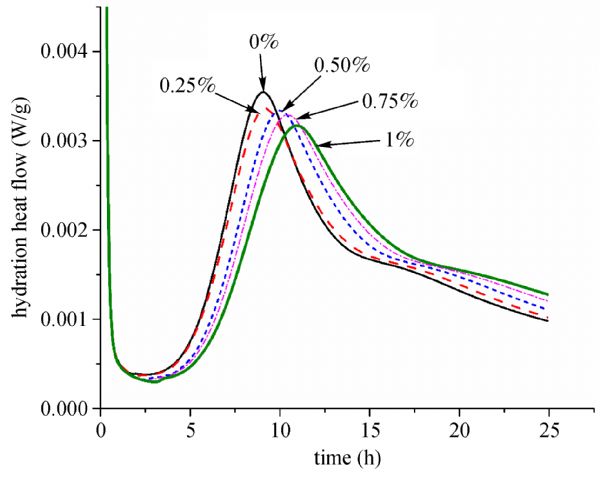
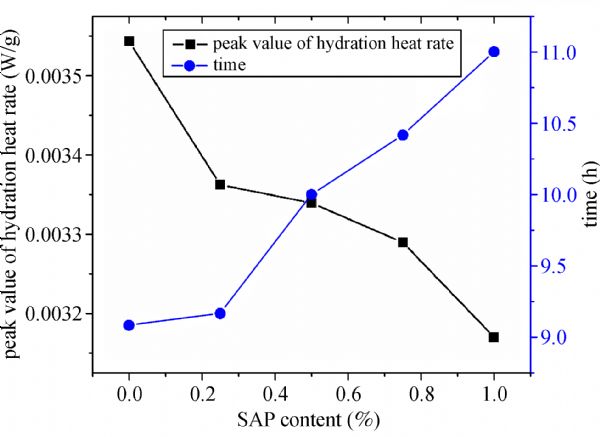
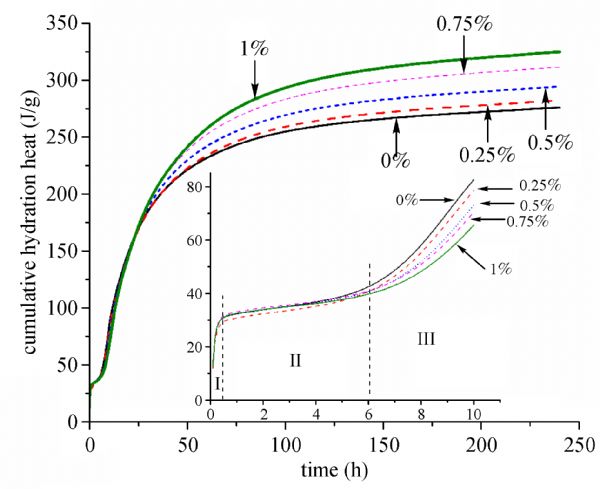
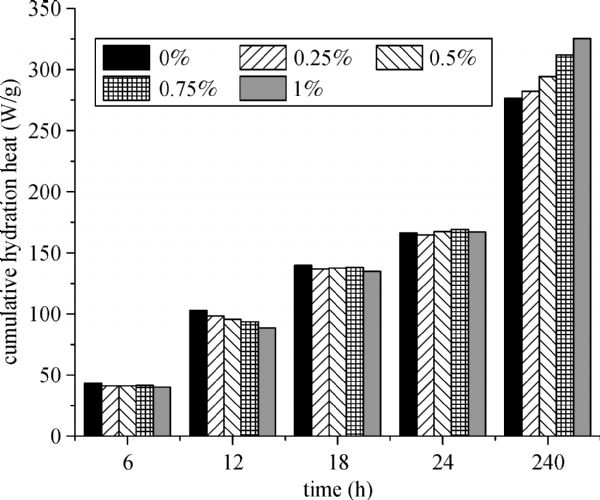
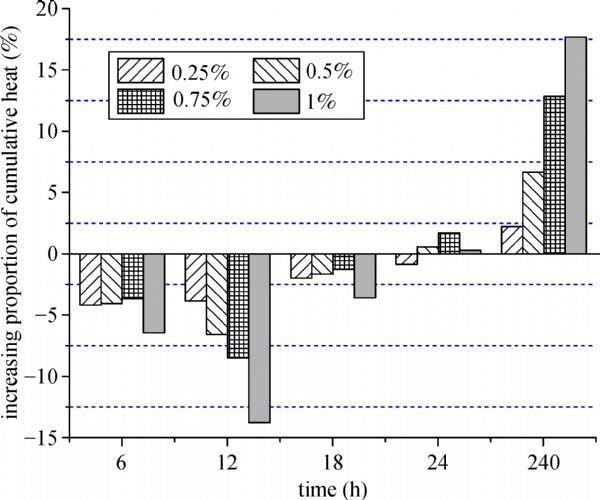
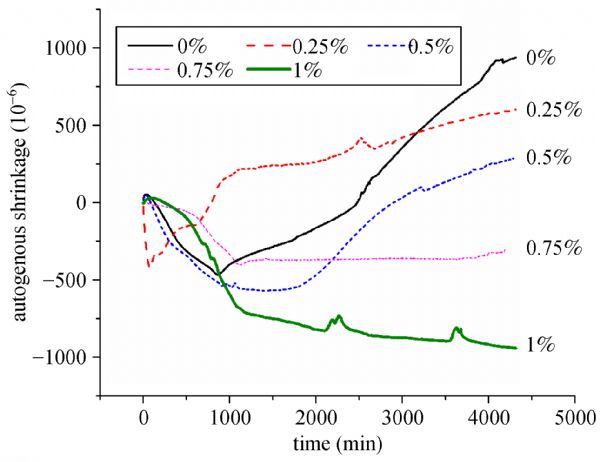
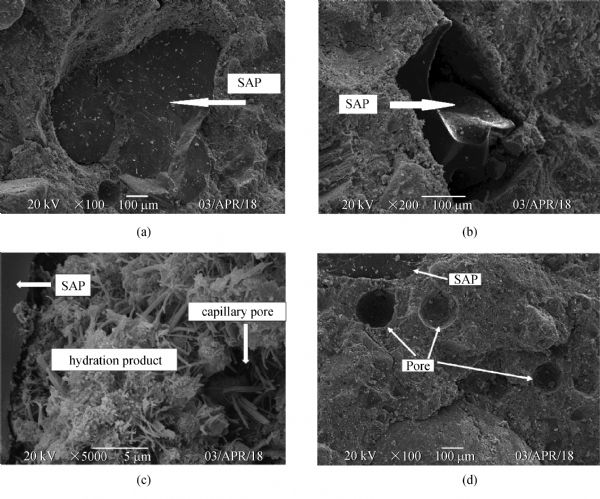
Abstract Superabsorbent Polymer (SAP) has emerged as a topic of considerable interest in recent years. The present study systematically and quantitively investigated the effect of SAP on hydration, autogenous shrinkage, mechanical properties, and microstructure of cement mortars. Influences of SAP on hydration heat and autogenous shrinkage were studied by utilizing TAM AIR technology and a non-contact autogenous shrinkage test method. Scanning Electron Microscope (SEM) was employed to assess the microstructure evolution. Although SAP decreased the peak rate of hydration heat and retarded the hydration, it significantly increased the cumulative heat, indicating SAP helps promote the hydration. Hydration promotion caused by SAP mainly occurred in the deceleration period and attenuation period. SAP can significantly mitigate the autogenous shrinkage when the content ranged from 0 to 0.5%. Microstructure characteristics showed that pores and gaps were introduced when SAP was added. The microstructure difference caused by SAP contributed to the inferior mechanical behaviors of cement mortars treated by SAP.
|
| Keywords
Superabsorbent Polymer
mechanical properties
hydration heat
autogenous shrinkage
microstructure
|
|
Corresponding Author(s):
Weimin SONG
|
|
Just Accepted Date: 14 July 2020
Online First Date: 04 September 2020
Issue Date: 16 November 2020
|
|
| 1 |
P K Mehta, P J M Monteiro. Concrete: Microstructure, Properties and Materials. New York: McGraw-Hill Education, 2013
|
| 2 |
B Lothenbach, G Le Saout, E Gallucci, K Scrivener. Influence of limestone on the hydration of Portland cements. Cement and Concrete Research, 2008, 38(6): 848–860
https://doi.org/10.1016/j.cemconres.2008.01.002
|
| 3 |
M Kaszyńska. Early age properties of high-strength/high-performance concrete. Cement and Concrete Research, 2002, 24(2): 253–261
https://doi.org/10.1016/S0958-9465(01)00014-2
|
| 4 |
A Williams, A Markandeya, Y Stetsko, K Riding, A Zayed. Cracking potential and temperature sensitivity of metakaolin concrete. Construction & Building Materials, 2016, 120: 172–180
https://doi.org/10.1016/j.conbuildmat.2016.05.087
|
| 5 |
D Bentz, M Geiker, K Hansen. Shrinkage-reducing admixtures and early-age desiccation in cement pastes and mortars. Cement and Concrete Research, 2001, 31(7): 1075–1085
https://doi.org/10.1016/S0008-8846(01)00519-1
|
| 6 |
P Lura, O M Jensen, K van Breugel. Autogenous shrinkage in high-performance cement paste: An evaluation of basic mechanisms. Cement and Concrete Research, 2003, 33(2): 223–232
https://doi.org/10.1016/S0008-8846(02)00890-6
|
| 7 |
E I Tazawa, S Miyazawa. Influence of constituents and composition on autogenous shrinkage of cementitious materials. Magazine of Concrete Research, 1997, 49(178): 15–22
https://doi.org/10.1680/macr.1997.49.178.15
|
| 8 |
L Wu, N Farzadnia, C Shi, Z Zhang, H Wang. Autogenous shrinkage of high performance concrete: A review. Construction & Building Materials, 2017, 149: 62–75
https://doi.org/10.1016/j.conbuildmat.2017.05.064
|
| 9 |
D P Bentz, E J Garboczi, C J Haecker, O M Jensen. Effects of cement particle size distribution on performance properties of Portland cement-based materials. Cement and Concrete Research, 1999, 29(10): 1663–1671
https://doi.org/10.1016/S0008-8846(99)00163-5
|
| 10 |
A A Melo Neto, M A Cincotto, W Repette. Drying and autogenous shrinkage of pastes and mortars with activated slag cement. Cement and Concrete Research, 2008, 38(4): 565–574
https://doi.org/10.1016/j.cemconres.2007.11.002
|
| 11 |
W Song, J Yin. Hybrid effect evaluation of steel fiber and carbon fiber on the performance of the fiber reinforced concrete. Materials (Basel), 2016, 9(8): 704
https://doi.org/10.3390/ma9080704
|
| 12 |
J Liu, C Shi, X Ma, K H Khayat, J Zhang, D Wang. An overview on the effect of internal curing on shrinkage of high performance cement-based materials. Construction & Building Materials, 2017, 146: 702–712
https://doi.org/10.1016/j.conbuildmat.2017.04.154
|
| 13 |
M Zhang, C Tam, M Leow. Effect of water-to-cementitious materials ratio and silica fume on the autogenous shrinkage of concrete. Cement and Concrete Research, 2003, 33(10): 1687–1694
https://doi.org/10.1016/S0008-8846(03)00149-2
|
| 14 |
E Ghafari, S A Ghahari, H Costa, E Júlio, A Portugal, L Durães. Effect of supplementary cementitious materials on autogenous shrinkage of ultra-high performance concrete. Construction & Building Materials, 2016, 127: 43–48
https://doi.org/10.1016/j.conbuildmat.2016.09.123
|
| 15 |
D P Bentz. Mixture proportioning for internal curing. Concrete International, 2005, 27(2): 35–40
|
| 16 |
V Mechtcherine, C Schröfl, M Wyrzykowski, M Gorges, P Lura, D Cusson, J Margeson, N De Belie, D Snoeck, K Ichimiya, S I Igarashi, V Falikman, S Friedrich, J Bokern, P Kara, A Marciniak, H W Reinhardt, S Sippel, A Bettencourt Ribeiro, J Custódio, G Ye, H Dong, J Weiss. Effect of superabsorbent polymers (SAP) on the freeze-thaw resistance of concrete: Results of a RILEM interlaboratory study. Materials and Structures, 2017, 50(1): 14–19
https://doi.org/10.1617/s11527-016-0868-7
|
| 17 |
C Schröfl, V Mechtcherine, M Gorges. Relation between the molecular structure and the efficiency of superabsorbent polymers (SAP) as concrete admixture to mitigate autogenous shrinkage. Cement and Concrete Research, 2012, 42(6): 865–873
https://doi.org/10.1016/j.cemconres.2012.03.011
|
| 18 |
Y Yang, M D Lepech, E H Yang, V C Li. Autogenous healing of engineered cementitious composites under wet-dry cycles. Cement and Concrete Research, 2009, 39(5): 382–390
https://doi.org/10.1016/j.cemconres.2009.01.013
|
| 19 |
B Sun, H Wu, W Song, Z Li, J Yu. Design methodology and mechanical properties of Superabsorbent Polymer (SAP) cement-based materials. Construction & Building Materials, 2019, 204: 440–449
https://doi.org/10.1016/j.conbuildmat.2019.01.206
|
| 20 |
M Wyrzykowski, P Lura, F Pesavento, D Gawin. Modeling of water migration during internal curing with superabsorbent polymers. Journal of Materials in Civil Engineering, 2012, 24(8): 1006–1016
https://doi.org/10.1061/(ASCE)MT.1943-5533.0000448
|
| 21 |
N Vu-Bac, M Bessa, T Rabczuk, W K. Liu A multiscale model for the quasi-static thermo-plastic behavior of highly cross-linked glassy polymers. Macromolecules, 2015, 48(18): 6713–6723
|
| 22 |
D Snoeck, N de Belie. Repeated autogenous healing in strain-hardening cementitious composites by using superabsorbent polymers. Journal of Materials in Civil Engineering, 2016, 28(1): 04015086
https://doi.org/10.1061/(ASCE)MT.1943-5533.0001360
|
| 23 |
S I Igarashi, A Watanabe. Experimental study on prevention of autogenous deformation by internal curing using super-absorbent polymer particles. In: International RILEM Conference on Volume Changes of Hardening Concrete: Testing and Mitigation. Lyngby: RILEM, 2006
|
| 24 |
N Vu-Bac, R Rafiee, X Zhuang, T Lahmer, T. Rabczuk Uncertainty quantification for multiscale modeling of polymer nanocomposites with correlated parameters. Composites Part B: Engineering, 2015, 68: 446–464
|
| 25 |
N Vu-Bac, M Silani, T Lahmer, X Zhuang, T. Rabczuk A unified framework for stochastic predictions of mechanical properties of polymeric nanocomposites. Computational Materials Science, 2015, 96: 520–535
|
| 26 |
O M Jensen, P F Hansen. Water-entrained cement-based materials. Cement and Concrete Research, 2002, 32(6): 973–978
https://doi.org/10.1016/S0008-8846(02)00737-8
|
| 27 |
P Lura, F Durand, O M Jensen. Autogenous strain of cement pastes with superabsorbent polymers. In: International RILEM Conference on Volume Changes of Hardening Concrete: Testing and Mitigation. Lyngby: RILEM, 2006
|
| 28 |
N Vu-Bac, T Lahmer, Y X Zhang, X Zhuang, T Rabczuk. Stochastic predictions of interfacial characteristic of polymeric nanocomposites (PNCs). Composites Part B: Engineering, 2014, 59: 80–95
|
| 29 |
V Mechtcherine, M Gorges, C Schroefl, A Assmann, W Brameshuber, A B Ribeiro, D Cusson, J Custódio, E F da Silva, K Ichimiya, S Igarashi, A Klemm, K Kovler, A N de Mendonça Lopes, P Lura, V T Nguyen, H W Reinhardt, R D T Filho, J Weiss, M Wyrzykowski, G Ye, S Zhutovsky. Effect of internal curing by using superabsorbent polymers (SAP) on autogenous shrinkage and other properties of a high-performance fine-grained concrete: Results of a RILEM round-robin test. Materials and Structures, 2014, 47(3): 541–562
https://doi.org/10.1617/s11527-013-0078-5
|
| 30 |
J Justs, M Wyrzykowski, D Bajare, P Lura. Internal curing by superabsorbent polymers in ultra-high performance concrete. Cement and Concrete Research, 2015, 76: 82–90
https://doi.org/10.1016/j.cemconres.2015.05.005
|
| 31 |
G Sant, B Lothenbach, P Juilland, G Le Saout, J Weiss, K Scrivener. The origin of early age expansions induced in cementitious materials containing shrinkage reducing admixtures. Cement and Concrete Research, 2011, 41(3): 218–229
https://doi.org/10.1016/j.cemconres.2010.12.004
|
| 32 |
S Oh, Y C Choi. Superabsorbent polymers as internal curing agents in alkali activated slag mortars. Construction & Building Materials, 2018, 159(20): 1–8
https://doi.org/10.1016/j.conbuildmat.2017.10.121
|
|
Viewed |
|
|
|
Full text
|
|
|
|
|
Abstract
|
|
|
|
|
Cited |
|
|
|
|
| |
Shared |
|
|
|
|
| |
Discussed |
|
|
|
|