|
|
|
Numerically investigating the crushing of sandstone by a tooth hob |
Dongning SUN1,2( ), Baoning HONG1,2, Xin LIU1,3, Ke SHENG1,2, Guisen WANG1,2, Zhiwei SHAO1,2, Yunlong YAO1,2 ), Baoning HONG1,2, Xin LIU1,3, Ke SHENG1,2, Guisen WANG1,2, Zhiwei SHAO1,2, Yunlong YAO1,2 |
1. Key Laboratory of Ministry of Education for Geomechanics and Embankment Engineering, Hohai University, Nanjing 210098, China
2. Geotechnical Research Institute, Hohai University, Nanjing 210098, China
3. Institute of Tunnel and Underground Engineering, Hohai University, Nanjing 210098, China |
|
|
|
|
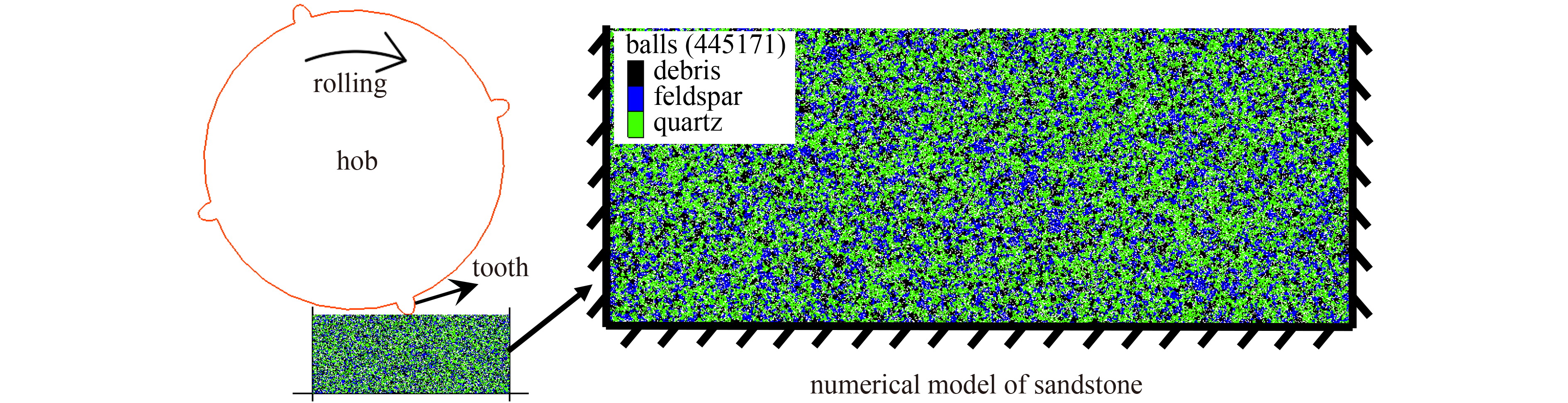
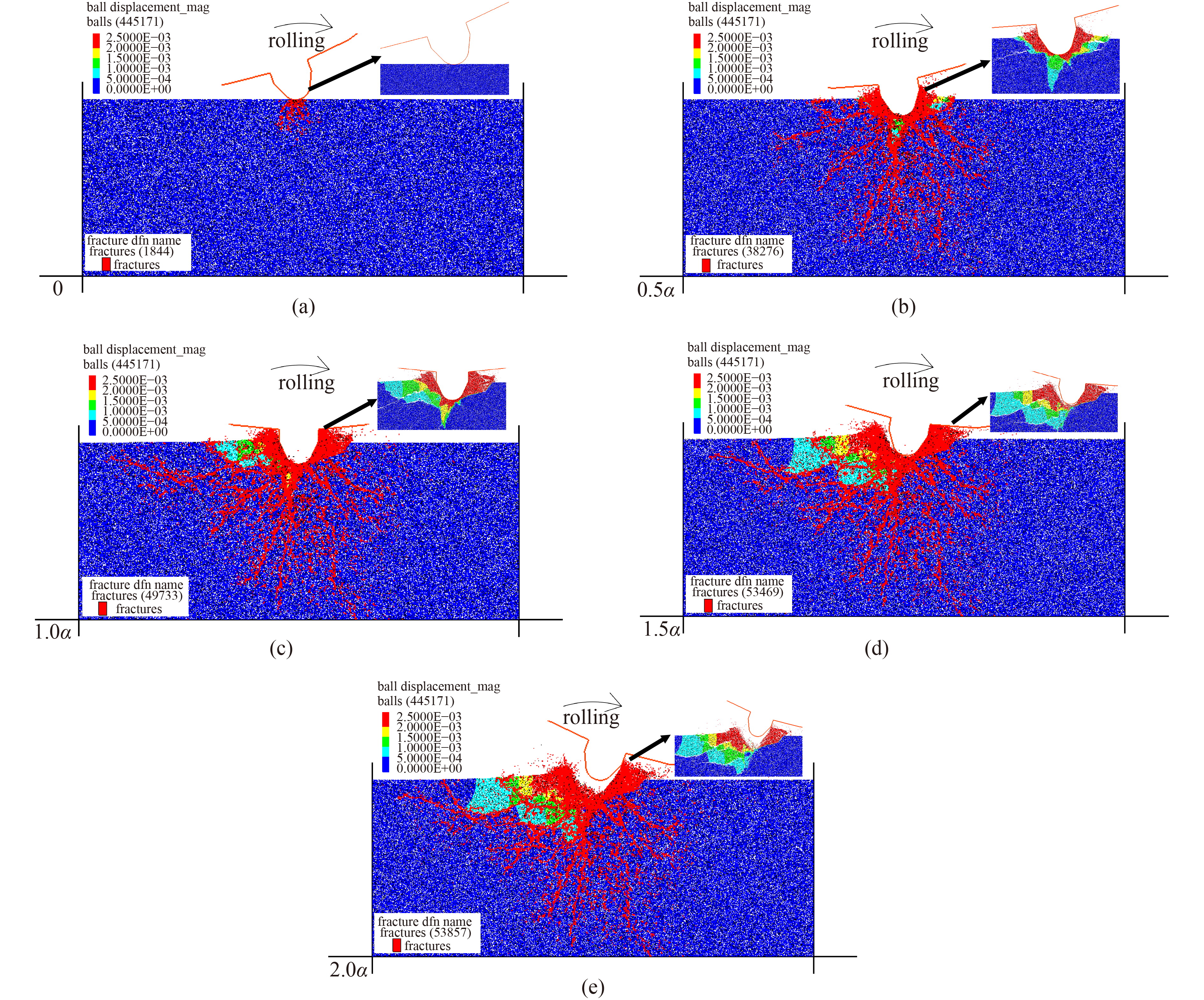
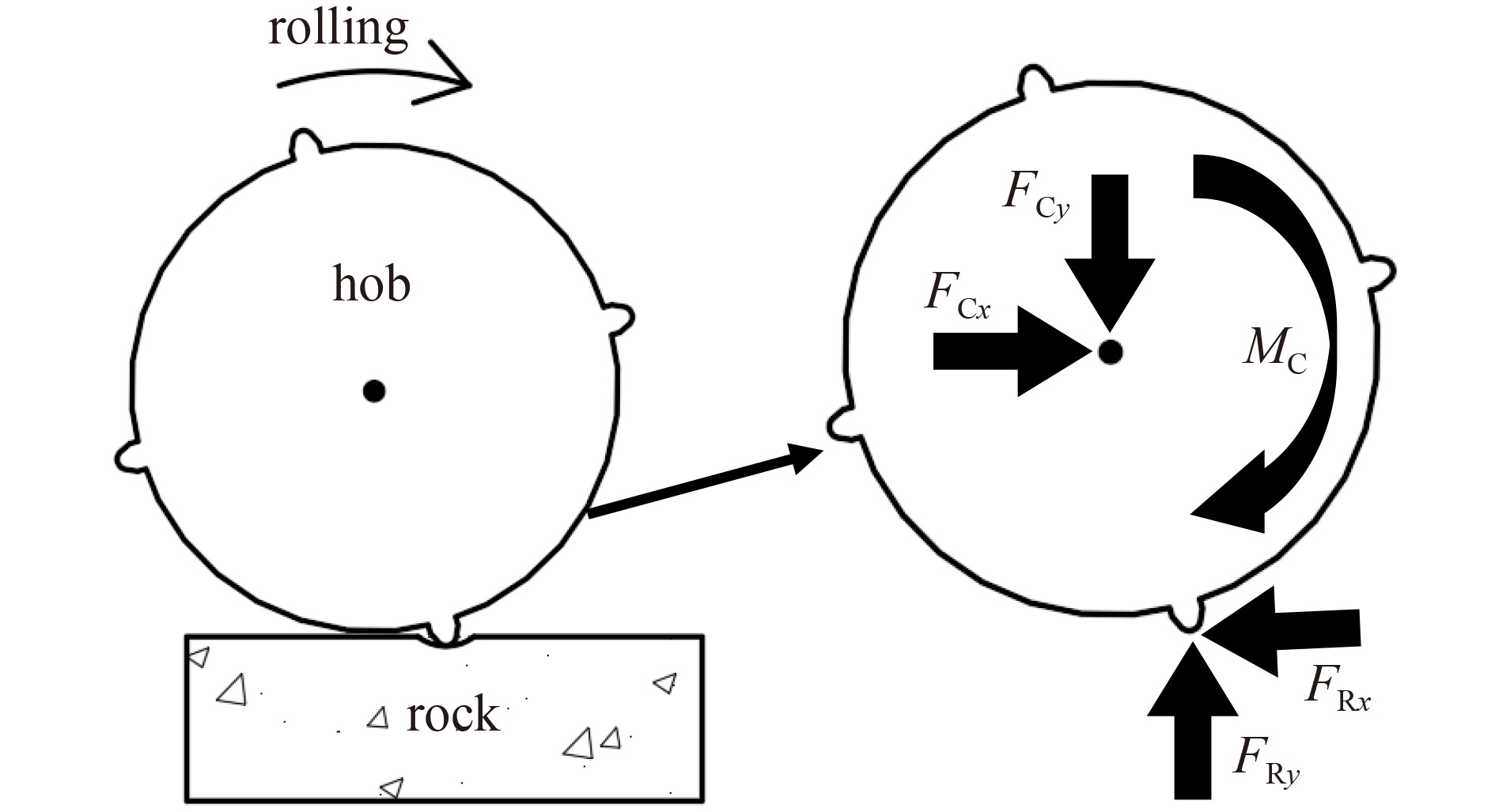
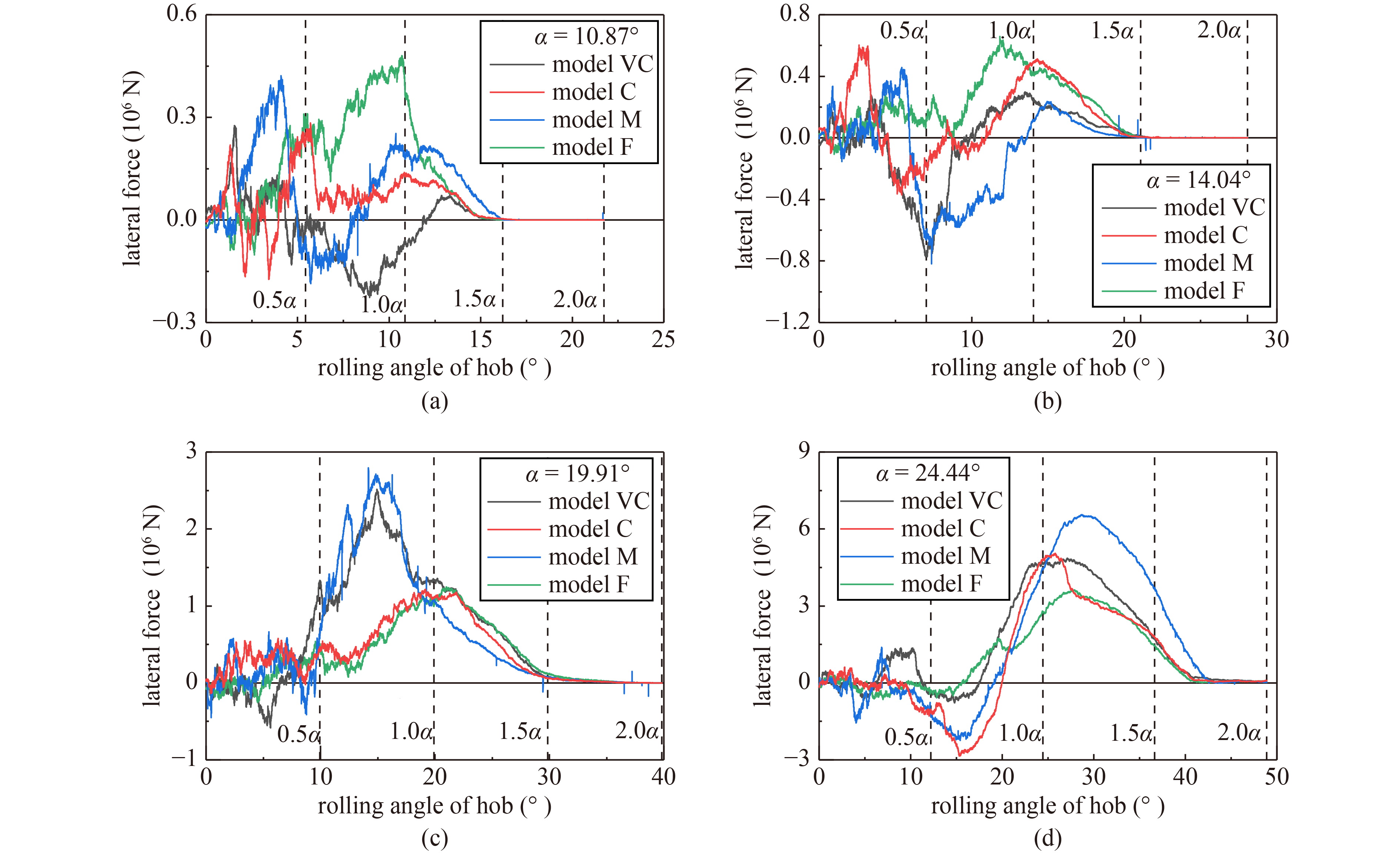
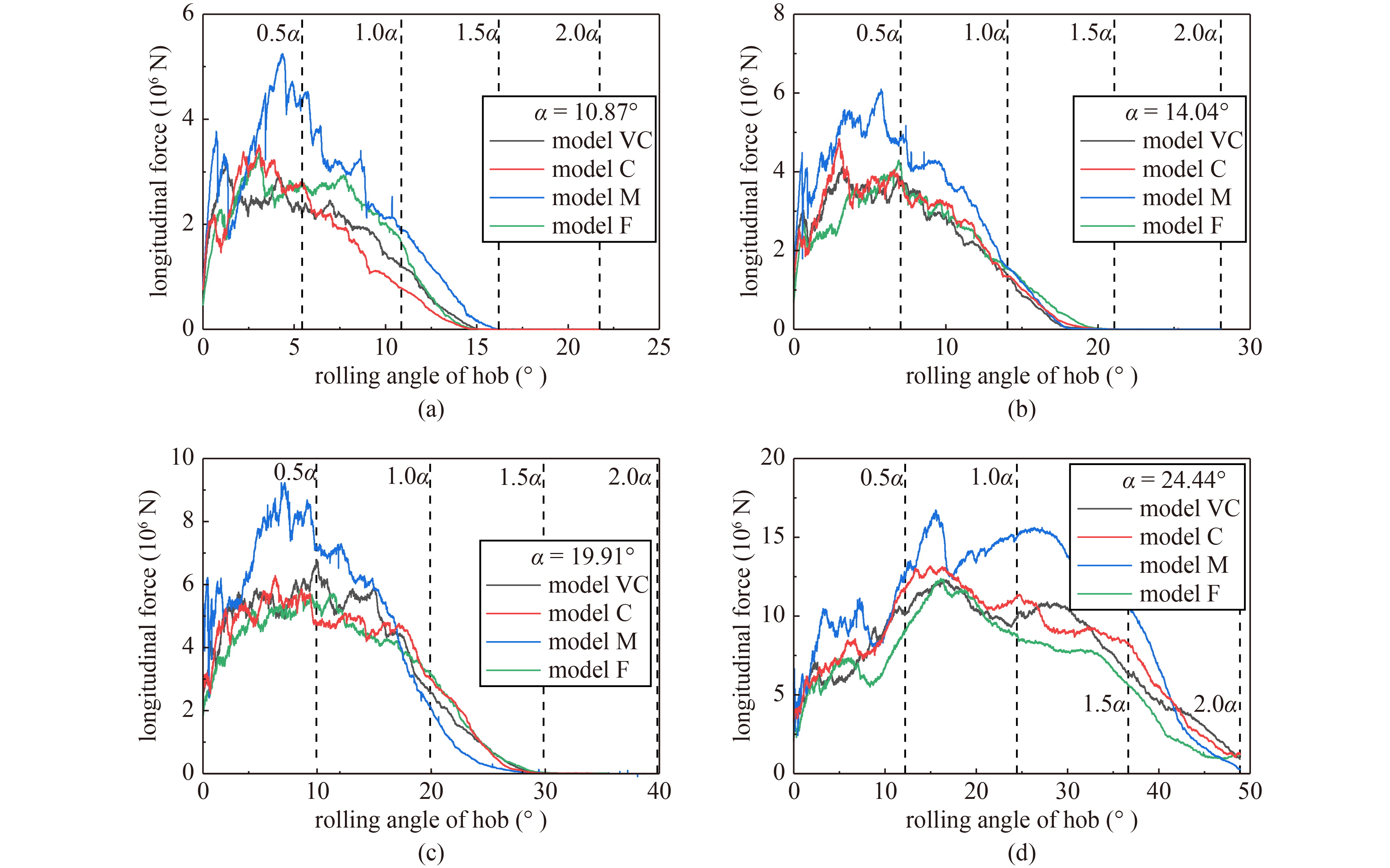
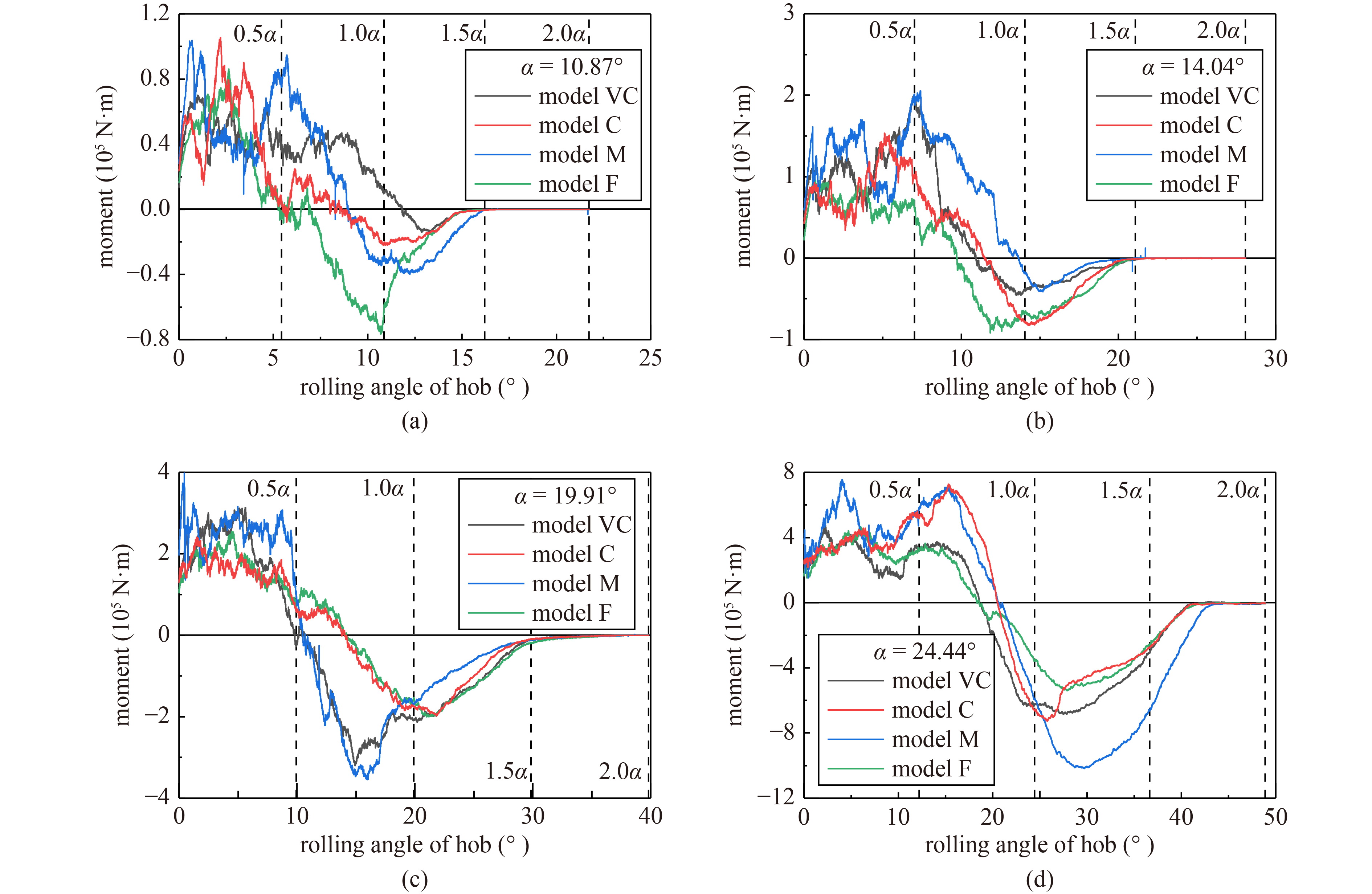
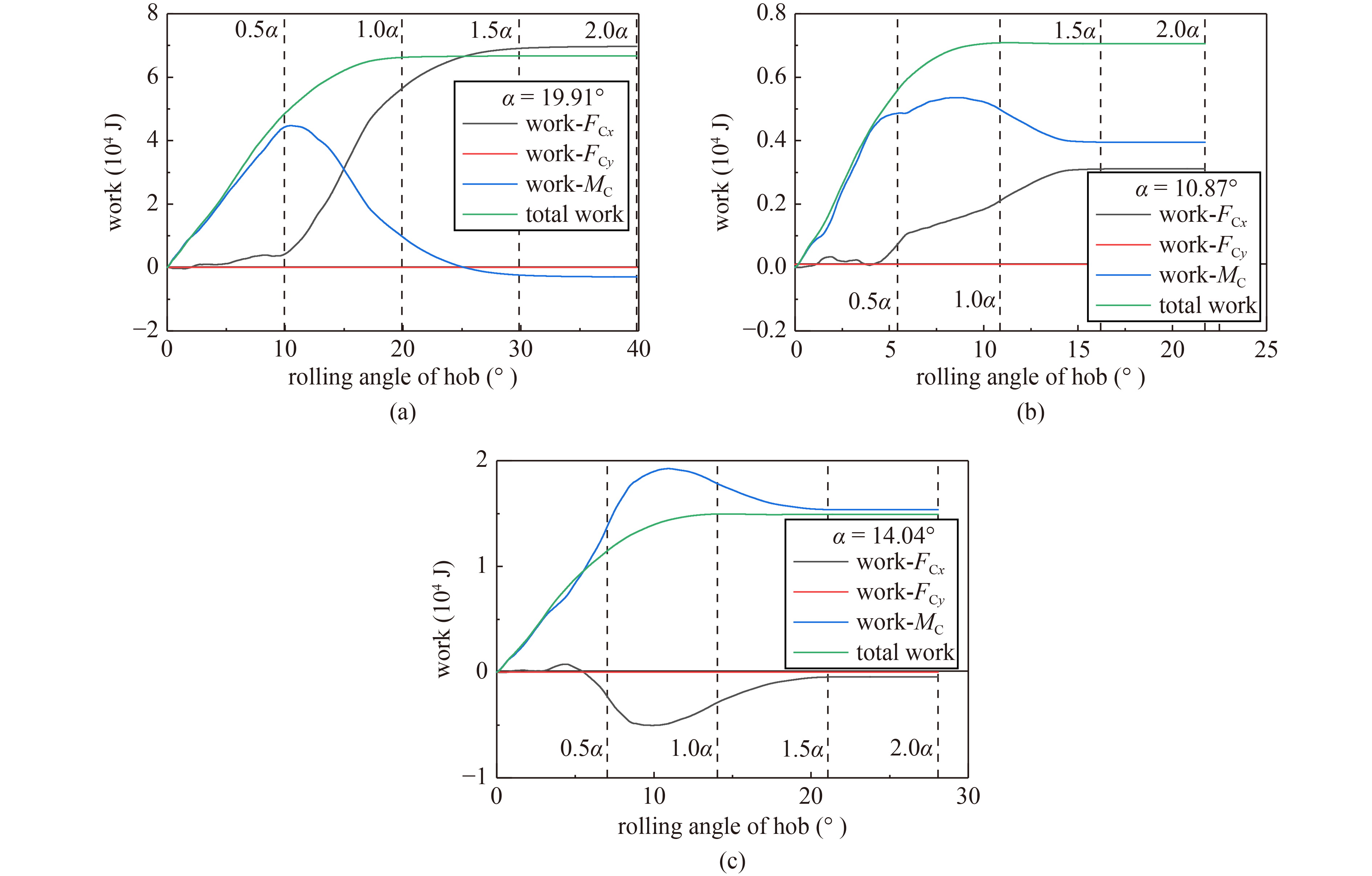
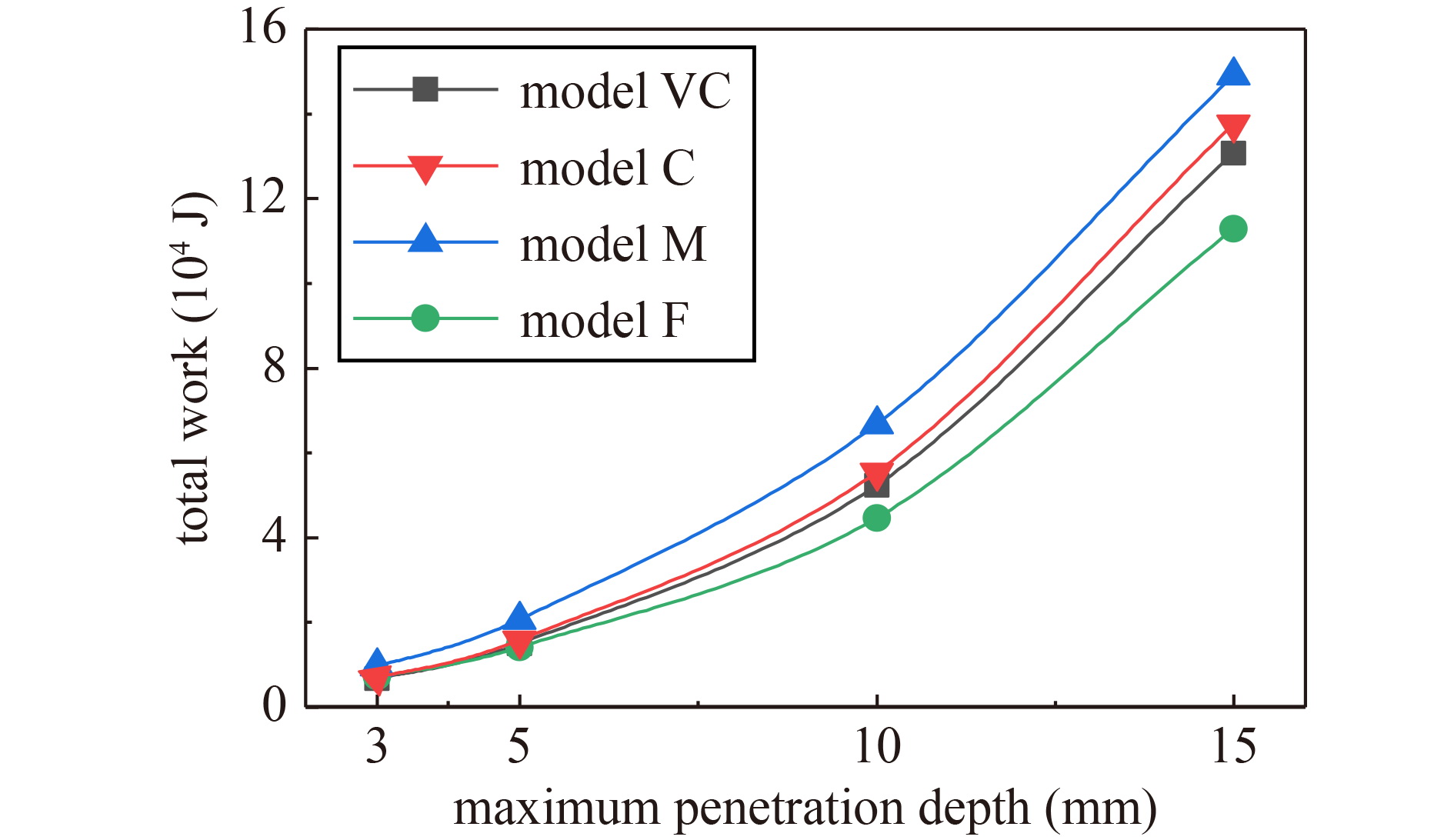
Abstract To investigate the mechanical process that occurs between rocks and tooth hobs, the crushing of sandstone with a tooth hob was simulated using reconstructed multi-mineral mesoscopic numerical models of various grain-sized sandstone samples. When a piece of sandstone is crushed by the tooth of a hob rolling at a constant speed, the resultant reaction forces of the sandstone on the tooth first hinder and then contribute to the rolling of the hob. The absolute value of the longitudinal reaction force is significantly higher than that of the lateral reaction force. Because the tooth was subjected to reaction forces from the sandstone, forces and moments were applied to the hob in order to keep the hob rolling. The applied forces were equal in value and opposite in direction to the reaction forces of the sandstone on the tooth. Three typical curves of the work done by the applied forces and moment were obtained, and the contribution of the applied lateral force and moment to the total work done for crushing sandstones was variable; however, no work was done by the applied longitudinal force. Moreover, the applied longitudinal force and total work were positively correlated with the strength of sandstone samples. The total work, applied forces, and moment increased with the maximum penetration depth of the tooth in the sandstone.
|
| Keywords
sandstone
tooth hob
crushing process
reaction force
numerical simulation
|
|
Corresponding Author(s):
Dongning SUN
|
| About author: * These authors contributed equally to this work. |
|
Just Accepted Date: 01 March 2023
Online First Date: 27 July 2023
Issue Date: 30 August 2023
|
|
| 1 |
K Thuro. Drillability prediction: Geological influences in hard rock drill and blast tunneling. Geologische Rundschau, 1997, 86(2): 426–438
https://doi.org/10.1007/s005310050151
|
| 2 |
S H Hoseinie, H Aghababaei, Y Pourrahimian. Development of a new classification system for assessing of rock mass drillability index (RDi). International Journal of Rock Mechanics and Mining Sciences, 2008, 45(1): 1–10
https://doi.org/10.1016/j.ijrmms.2007.04.001
|
| 3 |
M A Al-Dabbas, J A Al-Jassim, A I Qaradaghi. Diliciclastic deposit of the Nahr Umr formation, sedimentological and depositional environment studies, central and southern Iraq. Arabian Journal of Geosciences, 2013, 6(12): 4771–4783
https://doi.org/10.1007/s12517-012-0747-7
|
| 4 |
M Yang, Y Meng, G Li, L Han, Y Li. Effect of grain size and grain content on the hardness and drillability of rocks. Sains Malaysiana, 2014, 43(1): 81–87
|
| 5 |
H Ma, Z Zhang, Y Fan, B Cao, Z Liu, G Feng. Directional fast drilling technology in Yanchang gas field with quartz sandstone geology. Applied Nanoscience, 2022, 1–11
https://doi.org/10.1007/s13204-021-02210-x
|
| 6 |
G Zhang, K Thuro, H Konietzky, F M Menschik, H Käsling, M Bayerl. In-situ investigation of drilling performance and bit wear on an electrical drill hammer. Tunnelling and Underground Space Technology, 2022, 122: 104348
https://doi.org/10.1016/j.tust.2021.104348
|
| 7 |
Y Han, X Li, Y Feng. A new approach to evaluate rock drillability of polycrystalline diamond compact bits using scratch test data. Energy Exploration & Exploitation., 2020, 38(4): 884–904
https://doi.org/10.1177/0144598719901091
|
| 8 |
G Wang, X Liu, B Hong, K Sheng, X Qian. Assessment of rock drillability by the method of analytic hierarchy process combined with fuzzy comprehensive evaluation. Arabian Journal of Geosciences, 2022, 15(1): 1–14
https://doi.org/10.1007/s12517-021-09270-x
|
| 9 |
Z Yue, S Chen, L Tham. Finite element modeling of geomaterials using digital image processing. Computers and Geotechnics, 2003, 30(5): 375–397
https://doi.org/10.1016/S0266-352X(03)00015-6
|
| 10 |
Y Han, D Hu, L Matzar. Numerical computation of elastic properties for porous rocks based on CT-scanned images using direct mapping method. Journal of Petroleum Science Engineering, 2014, 122: 346–353
https://doi.org/10.1016/j.petrol.2014.07.029
|
| 11 |
Y Lei. Reconstruction and analysis of tight sandstone digital rock combined with X-ray CT scanning and multiple-point geostatistics algorithm. Mathematical Problems in Engineering, 2020, 2020: 9476060
https://doi.org/10.1155/2020/9476060
|
| 12 |
N You, Y Li, A Cheng. 3D carbonate digital rock reconstruction using progressive growing GAN. Journal of Geophysical Research. Solid Earth, 2021, 126(5): 1–17
https://doi.org/10.1029/2021JB021687
|
| 13 |
J Yao, C Wang, Y Yang, R Hu, X Wang. The construction of carbonate digital rock with hybrid superposition method. Journal of Petroleum Science Engineering, 2013, 110: 263–267
https://doi.org/10.1016/j.petrol.2013.10.005
|
| 14 |
D Cao, Z Hou, Q Liu, F Fu. Reconstruction of three-dimension digital rock guided by prior information with a combination of InfoGAN and style-based GAN. Journal of Petroleum Science Engineering, 2022, 208: 109590
https://doi.org/10.1016/j.petrol.2021.109590
|
| 15 |
N Saxena, J Dietderich, F O Alpak, A Hows, M Appel, J Freeman, R Hofmann, B Zhao. Estimating electrical cementation and saturation exponents using digital rock physics. Journal of Petroleum Science Engineering, 2021, 198: 108198
https://doi.org/10.1016/j.petrol.2020.108198
|
| 16 |
W Zhu, R Shan, A Nie, H R Peng. An efficiently dynamic stress strain simulation method on digital rock. Journal of Applied Geophysics, 2017, 147: 10–15
https://doi.org/10.1016/j.jappgeo.2017.10.008
|
| 17 |
L Che, X Gu, H Li. Numerical analysis and experimental research on hard rock fragmentation by high voltage pulse discharge. Minerals Engineering, 2021, 168: 106942
https://doi.org/10.1016/j.mineng.2021.106942
|
| 18 |
J Rojek, E Onate, C Labra, H Kargl. Discrete element simulation of rock cutting. International Journal of Rock Mechanics and Mining Sciences, 2011, 48(6): 996–1010
https://doi.org/10.1016/j.ijrmms.2011.06.003
|
| 19 |
M Xia, K Zhou. Particle simulation of the failure process of brittle rock under triaxial compression. International Journal of Minerals Metallurgy and Materials, 2010, 17(5): 507–513
https://doi.org/10.1007/s12613-010-0350-4
|
| 20 |
J A Vallejos, J M Salinas, A Delonca, D Mas Ivars. Calibration and verification of two bonded-particle models for simulation of intact rock behavior. International Journal of Geomechanics, 2017, 17(4): 06016030
https://doi.org/10.1061/(ASCE)GM.1943-5622.0000773
|
| 21 |
T Moon, J Oh. A study of optimal rock-cutting conditions for hard rock TBM using the discrete element method. Rock Mechanics and Rock Engineering, 2011, 45(5): 837–849
https://doi.org/10.1007/s00603-011-0180-3
|
| 22 |
R I Leine, A Schweizer, M Christen, J Glover, P Bartelt, W Gerber. Simulation of rockfall trajectories with consideration of rock shape. Multibody System Dynamics, 2014, 32(2): 241–271
https://doi.org/10.1007/s11044-013-9393-4
|
| 23 |
T Saksala, D Gomon, M Hokka, V T Kuokkala. Numerical and experimental study of percussive drilling with a triple-button bit on Kuru granite. International Journal of Impact Engineering, 2014, 72: 56–66
https://doi.org/10.1016/j.ijimpeng.2014.05.006
|
| 24 |
D J Kim, J Kim, B Lee, M S Shin, J Y Oh, J W Cho, C Song. Prediction model of drilling performance for percussive rock drilling tool. Advances in Civil Engineering, 2020, 2020: 8865684
https://doi.org/10.1155/2020/8865684
|
| 25 |
C Zhang, Y Yang, Q Qi, H T Ren, J C Wang. Research on numerical drilling technology of mesh-like cutting PDC bit. Energy Reports, 2021, 7(5): 2068–2080
https://doi.org/10.1016/j.egyr.2021.04.013
|
| 26 |
A Fakhimi, M Lanari. DEM–SPH simulation of rock blasting. Computers and Geotechnics, 2014, 55: 158–164
https://doi.org/10.1016/j.compgeo.2013.08.008
|
| 27 |
P L Menezes. Influence of cutter velocity, friction coefficient and rake angle on the formation of discontinuous rock fragments during rock cutting process. International Journal of Advanced Manufacturing Technology, 2017, 90(9–12): 3811–3827
|
| 28 |
H Ren, X Zhuang, Y Cai, T Rabczuk. Dual-horizon peridynamics. International Journal for Numerical Methods in Engineering, 2016, 108(12): 1451–1476
https://doi.org/10.1002/nme.5257
|
| 29 |
H Ren, X Zhuang, T Rabczuk. A higher order nonlocal operator method for solving partial differential equations. Computer Methods in Applied Mechanics and Engineering, 2020, 367: 113132
https://doi.org/10.1016/j.cma.2019.112621
|
| 30 |
X Zhuang, H Ren, T Rabczuk. Nonlocal operator method for dynamic brittle fracture based on an explicit phase field model. European Journal of Mechanics. A, Solids, 2021, 90: 104380
https://doi.org/10.1016/j.euromechsol.2021.104380
|
| 31 |
J Zou, J Han, W Yang. Investigating the influences of indentation hardness and brittleness of rock-like material on its mechanical crushing behavior. Mathematical Problems in Engineering, 2020, 2020(s2): 1–16
https://doi.org/10.1155/2020/4713532
|
| 32 |
D O Potyondy. A grain-based model for rock: Approaching the true microstructure. Proceedings of the Rock Mechanics in the Nordic Countries, 2010, 2010: 225–234
|
| 33 |
C Shi, W Yang, J Yang, X Chen. Calibration of micro-scaled mechanical parameters of granite based on a bonded-particle model with 2D particle flow code. Granular Matter, 2019, 21(2): 1–13
https://doi.org/10.1007/s10035-019-0889-3
|
|
Viewed |
|
|
|
Full text
|
|
|
|
|
Abstract
|
|
|
|
|
Cited |
|
|
|
|
| |
Shared |
|
|
|
|
| |
Discussed |
|
|
|
|